
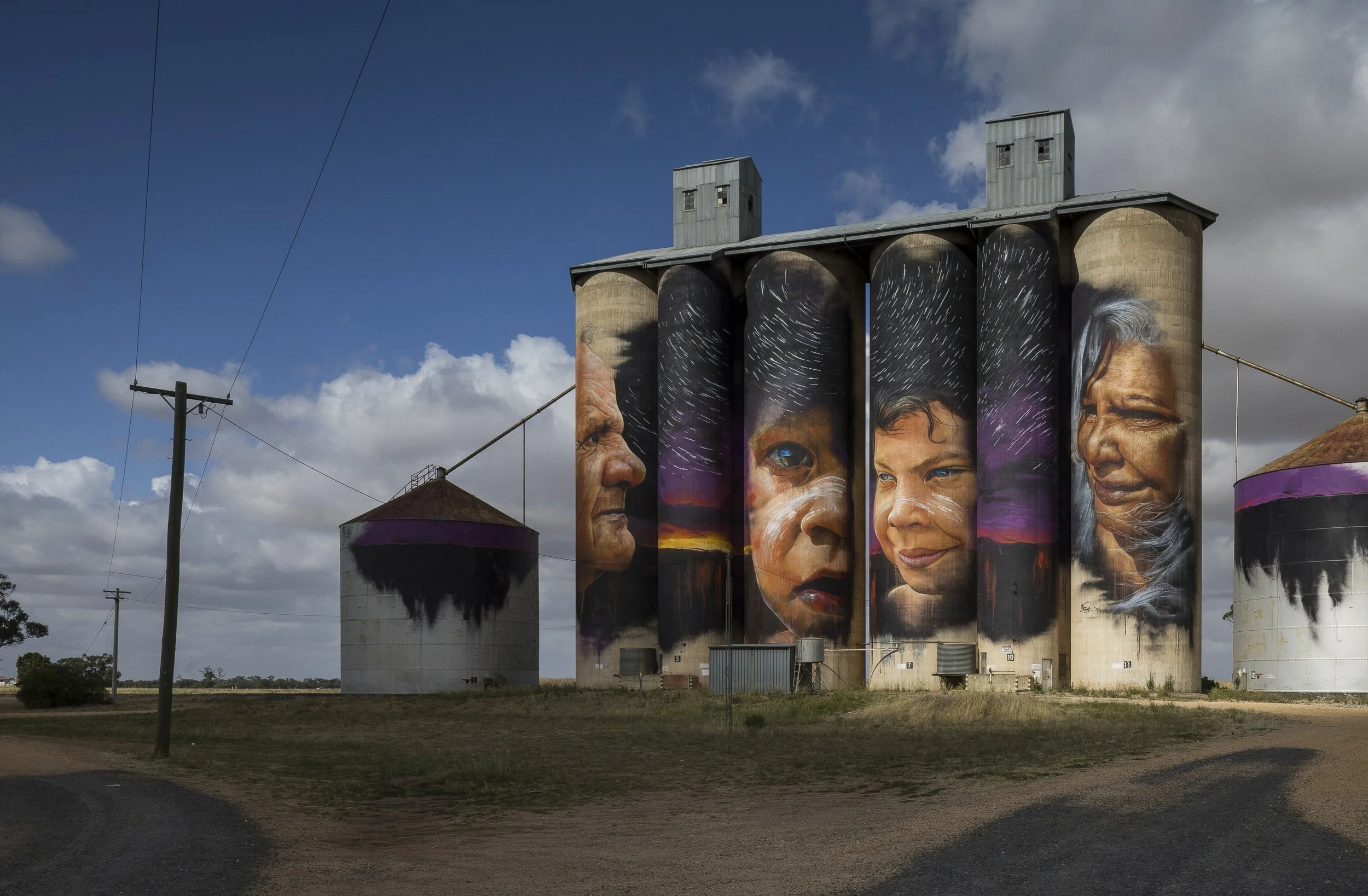
The Silo Art Trail
How One Silo in Brim Sparked Australia’s Silo Art Trail
In 2015, Shaun Hossack, founder and Creative Director of Juddy Roller, believed Australia’s ageing grain silos could become something more than redundant rural infrastructure. They could become permanent cultural landmarks: monumental artworks grounded in the people, histories and working lives of regional towns.
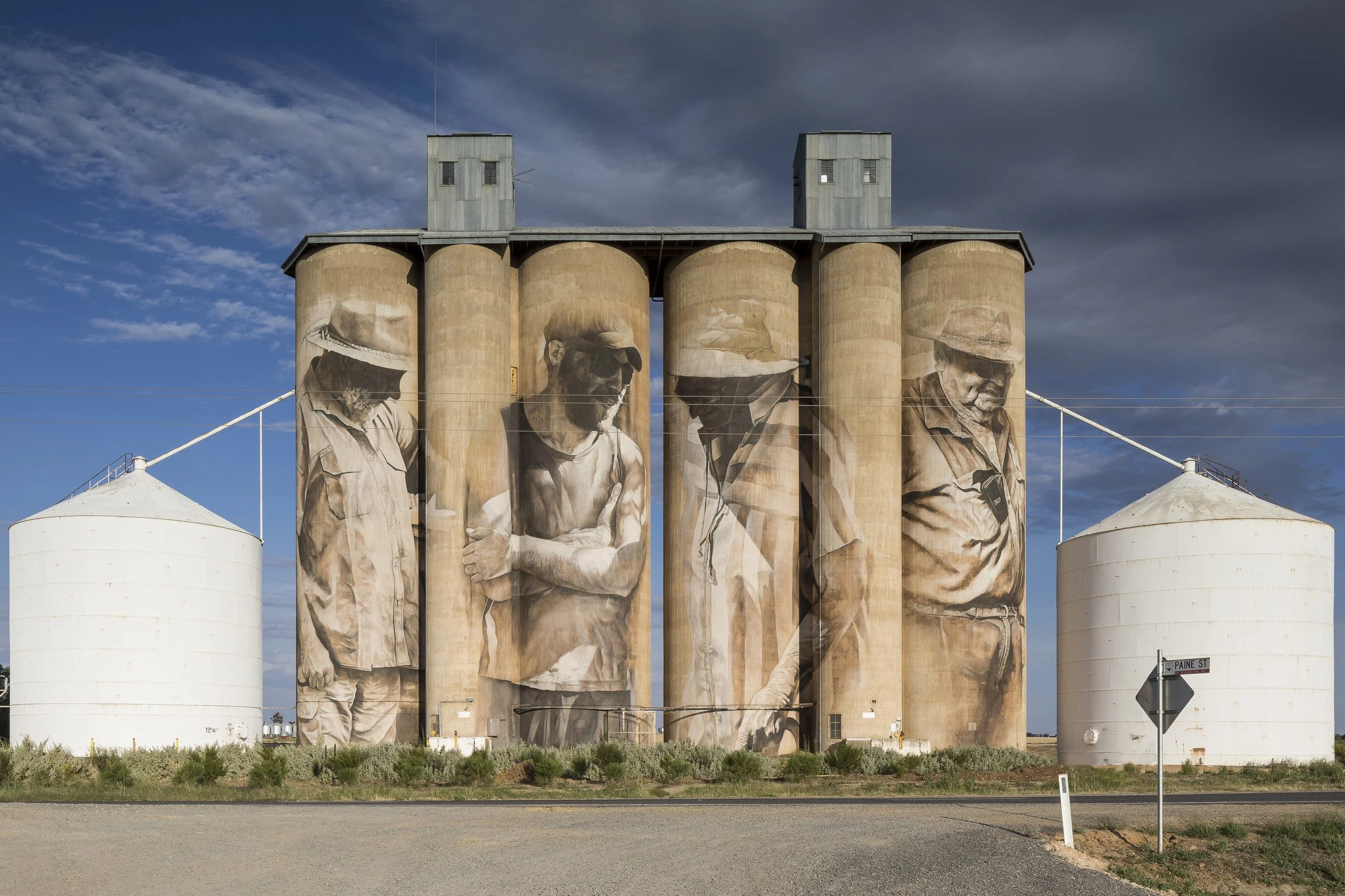
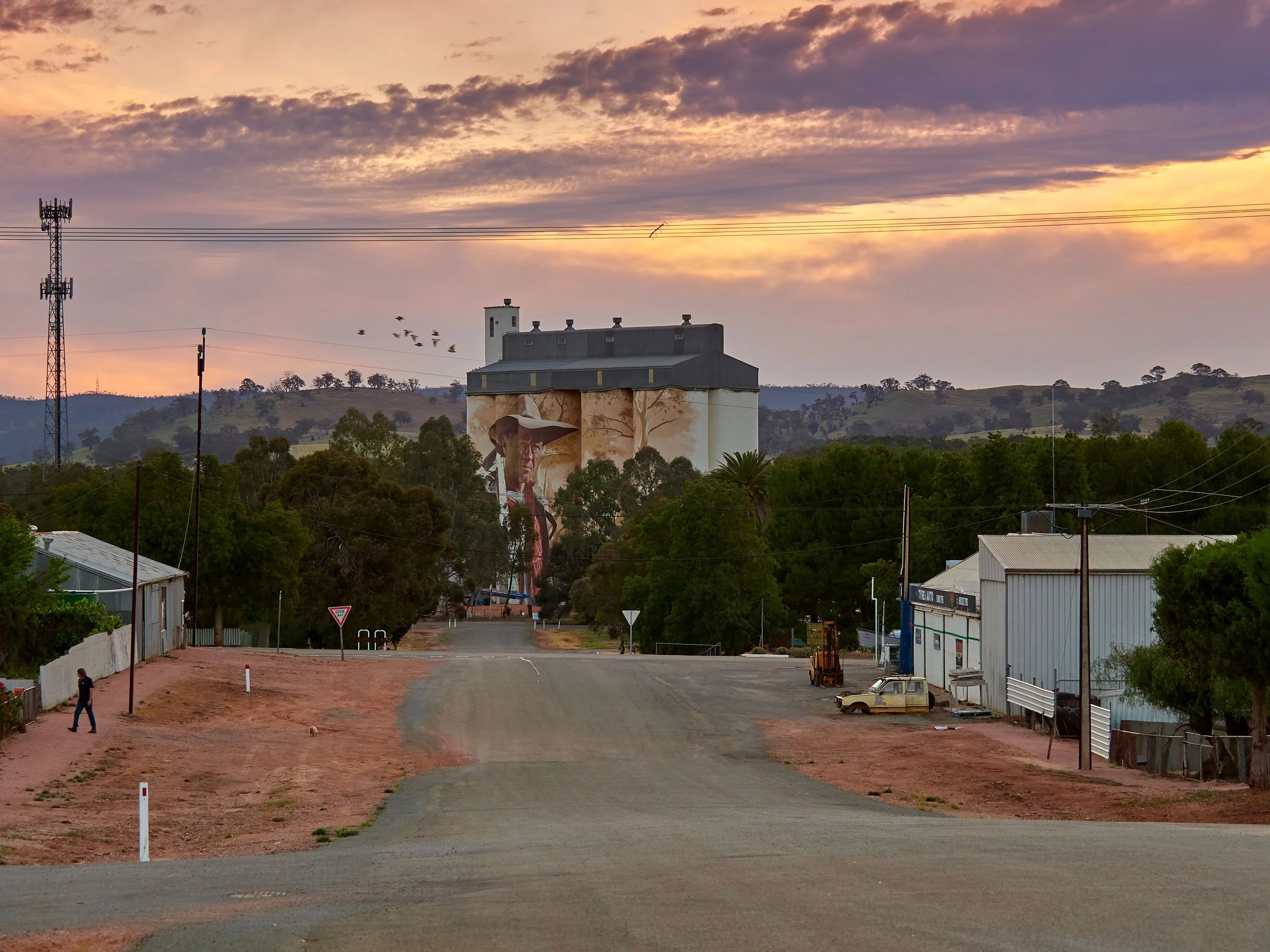
That belief led to a single mural in Brim, Victoria. The response to that first work helped turn an overlooked Wimmera-Mallee town into a destination, created the foundation for a 200-kilometre public art route and sparked a national silo art movement.
Australia’s original Silo Art Trail began not with a masterplan or a large budget, but with an idea that had already been rejected.
Shaun’s first approach to GrainCorp was simple: allow Juddy Roller to commission an artist to transform one of the company’s decommissioned grain silos into a major public artwork. GrainCorp was hesitant. The proposal was declined.
Nine months later, after discovering the work of Australian artist Guido van Helten, Shaun returned to the idea. Guido’s quiet, monumental portraits had a documentary quality that felt right for the scale and history of a grain silo. Rather than decorating the structure, his work could reveal the people and labour connected to it.
Shaun contacted GrainCorp again. This time, the answer was not an immediate yes, but it came with a lead. A community group in Brim had been asking how the town’s ageing silo site might be improved, including planting saltbush and other vegetation around its base. GrainCorp suggested Shaun speak with them.
Australia Wide
REACH40+ Silo Artworks
SCALE150% Growth in Regional Visitation
IMPACTA National Movement
LEGACY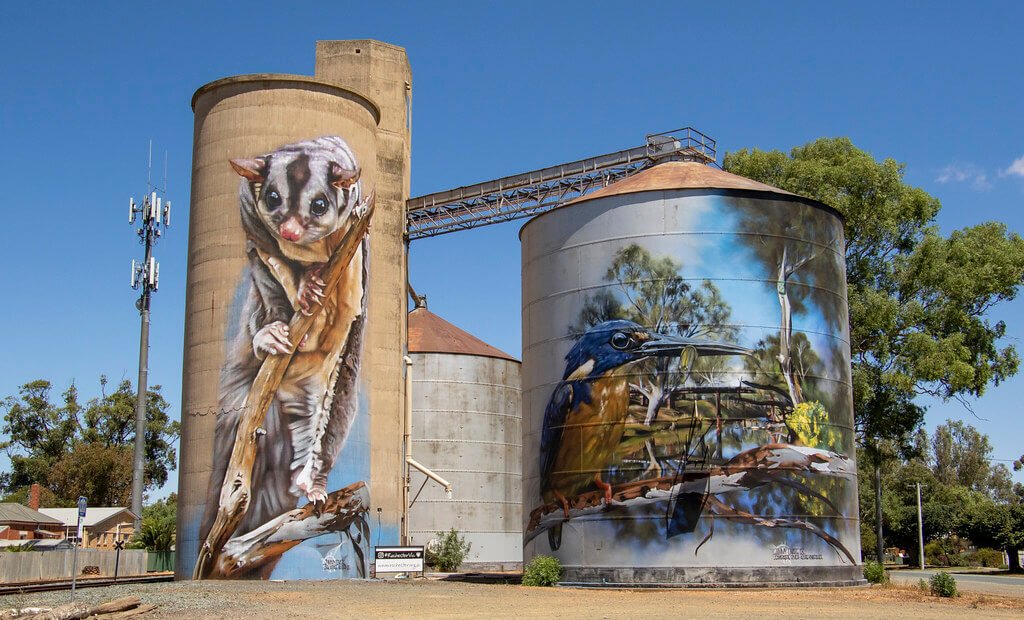

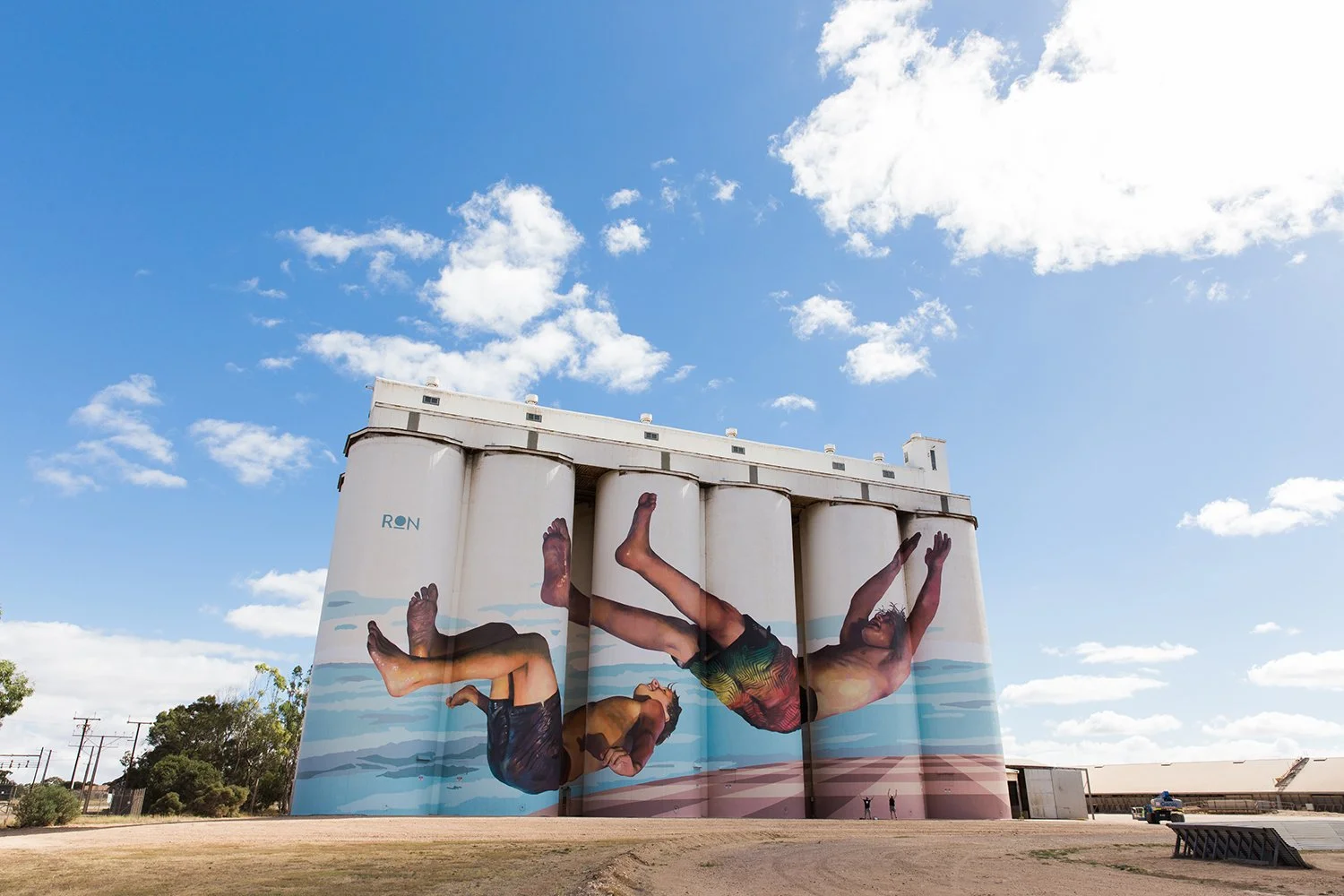
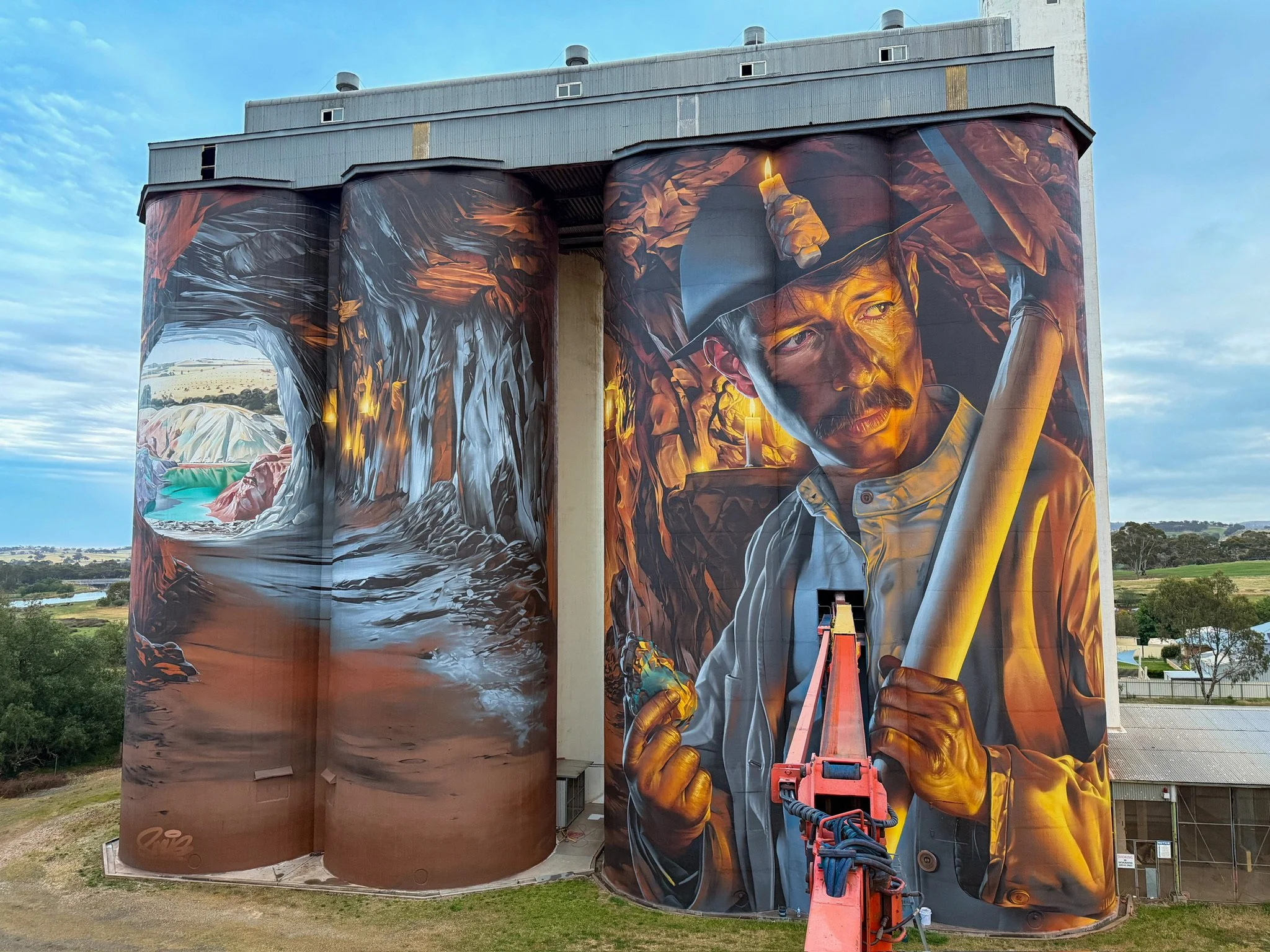


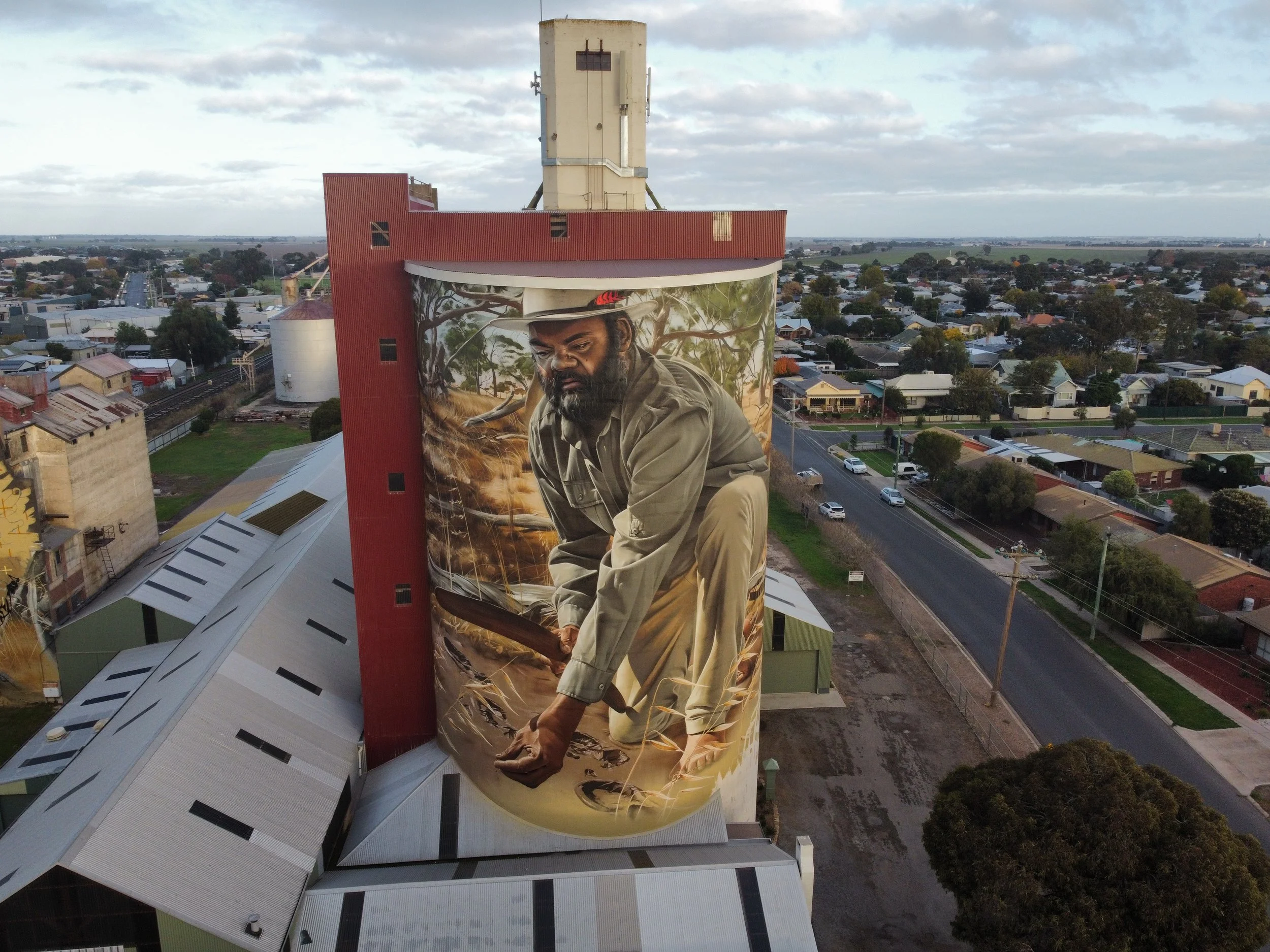
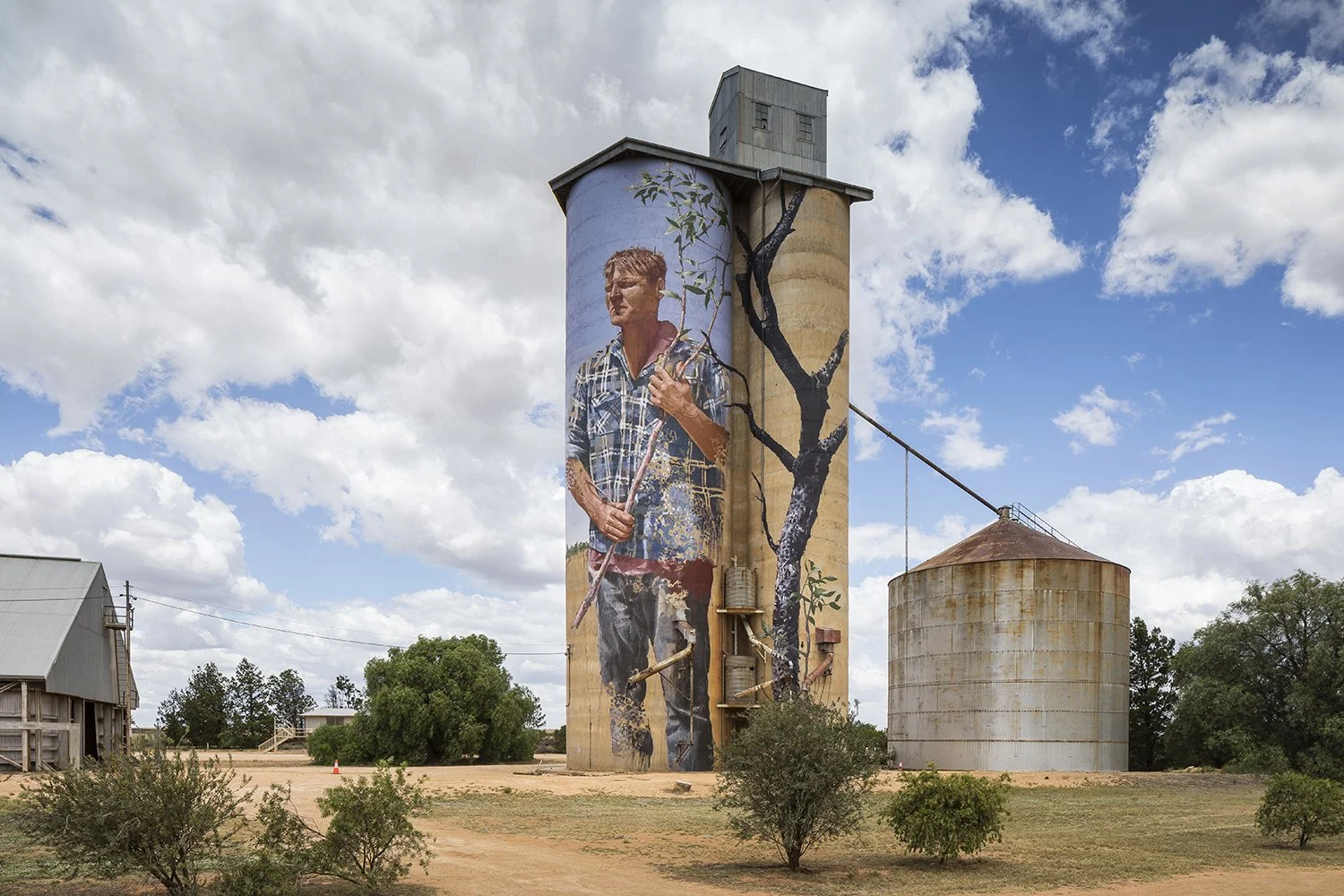
The idea GrainCorp first said no to
Shaun’s first approach to GrainCorp was simple: allow Juddy Roller to commission an artist to transform one of the company’s decommissioned grain silos into a major public artwork. GrainCorp was hesitant. The proposal was declined.
Nine months later, after discovering the work of Australian artist Guido van Helten, Shaun returned to the idea. Guido’s quiet, monumental portraits had a documentary quality that felt right for the scale and history of a grain silo. Rather than decorating the structure, his work could reveal the people and labour connected to it.
Shaun contacted GrainCorp again. This time, the answer was not an immediate yes, but it came with a lead. A community group in Brim had been asking how the town’s ageing silo site might be improved, including planting saltbush and other vegetation around its base. GrainCorp suggested Shaun speak with them.
Brim said yes.
Shaun contacted the Brim Active Community Group and explained the idea plainly: Juddy Roller had very little money, but believed the town and the silo could support an artwork unlike anything regional Victoria had seen.
The community did not wait for perfect conditions. A small $3,000 grant from Regional Arts Victoria helped cover the bare essentials. The community offered Guido and the project team accommodation in a cabin beside Brim’s small lake. Taubmans and Loop Colours donated paint. GrainCorp made the silo available. Everyone contributed what they could.
That spirit mattered. The project was not delivered to Brim from the outside; it was made possible with Brim. Local hospitality, knowledge, trust and practical support became part of the work itself.
“We knew this was bigger than one mural. It could become a national movement.”
Shaun Hossack · Founder and Creative Director, Juddy Roller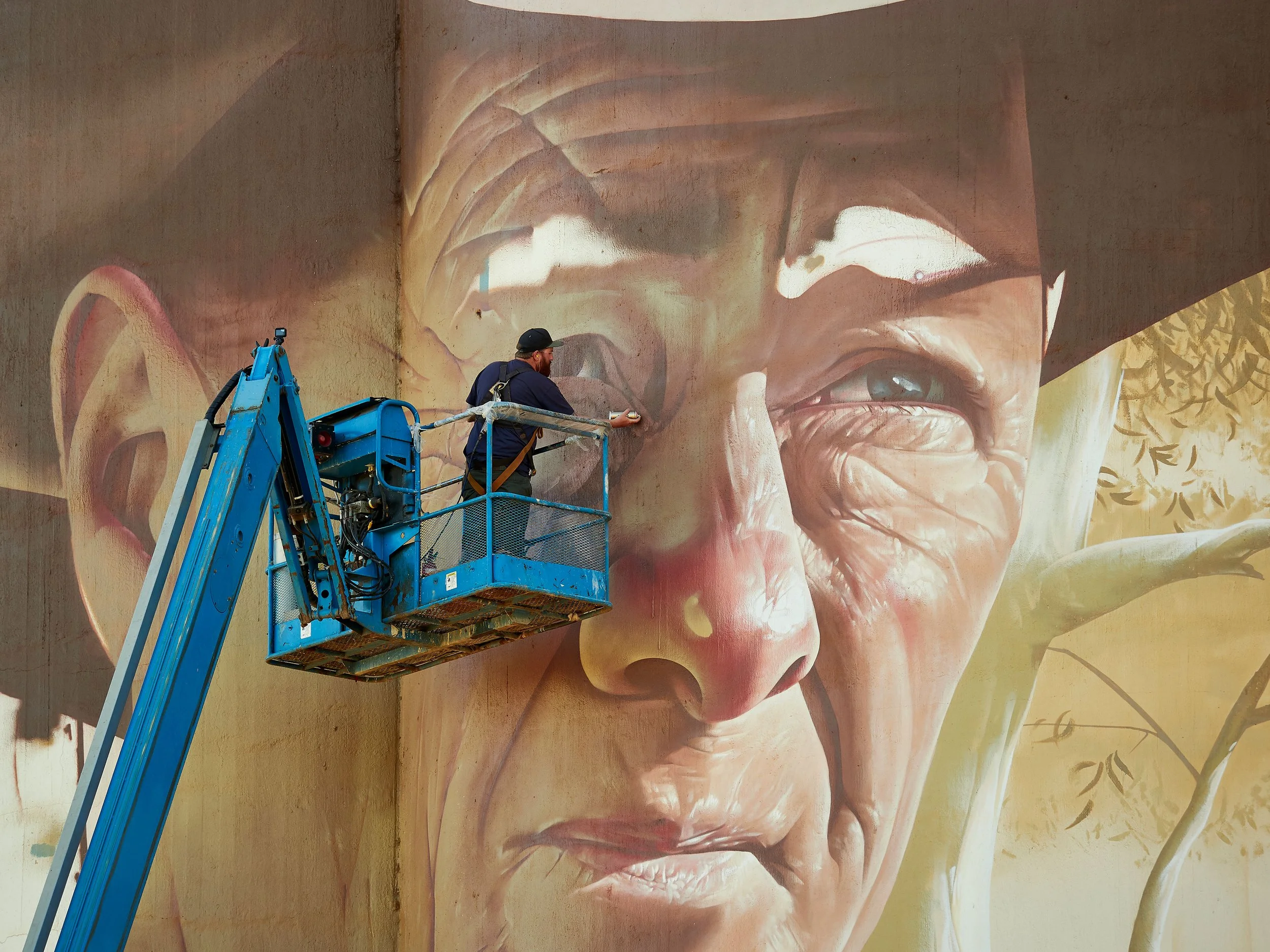
From one mural to Australia’s original Silo Art Trail
With the success of Brim visible, Juddy Roller took the next idea to government and regional partners: do not simply repeat the mural—build a connected cultural route across the Wimmera-Mallee.
A $500,000 delivery partnership made the original trail possible, comprising $200,000 from the Victorian Government, $200,000 from the Australian Government, $50,000 from Yarriambiack Shire Council and $50,000 from GrainCorp. Five further silo artworks were commissioned, linking six small towns across approximately 200 kilometres.
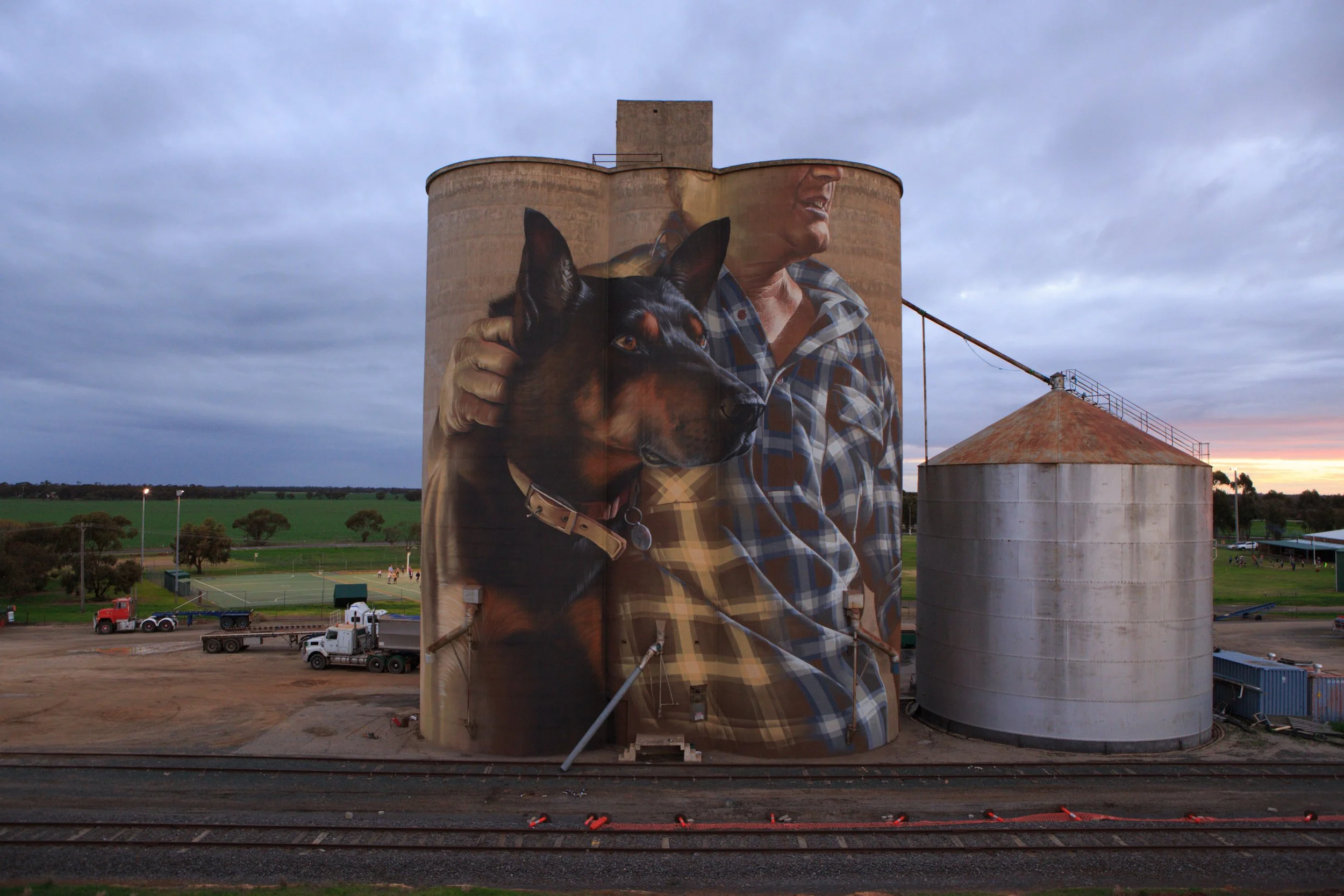
ORIGINAL TRAIL TOWNARTISTBrim
Guido van Helten
Patchewollock
Fintan Magee
Sheep Hills
Adnate
Lascelles
Rone
Rosebery
Kaff-eine
Julia Volchkova
Rupanyup
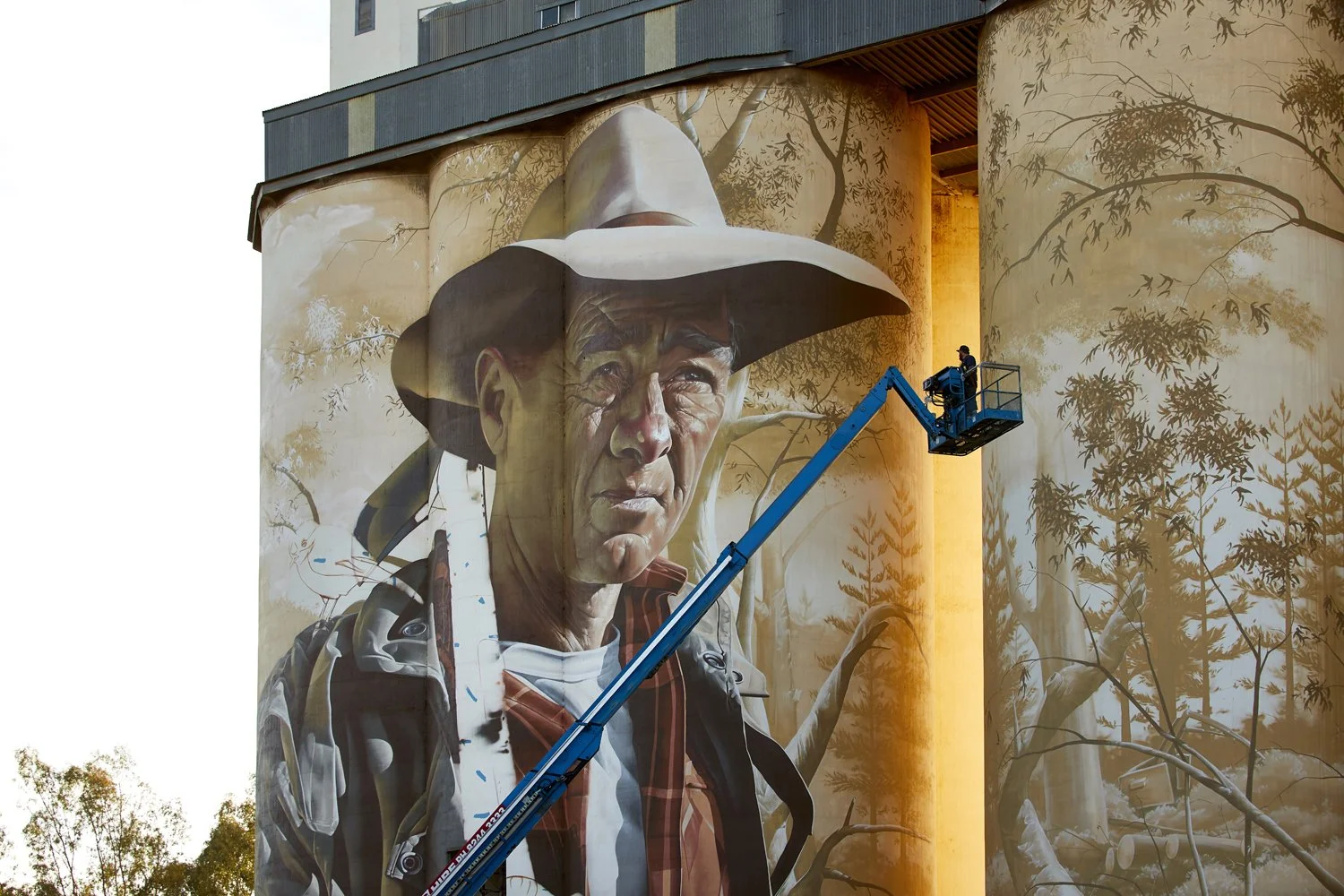
Completed by 2017, the original route brought major Australian and international artists into direct relationship with small regional communities. Each artist spent time in the host town, met local people and developed an artwork from the place itself. The silos formed a trail, but every work was designed to stand on its own as a meaningful and enduring landmark.
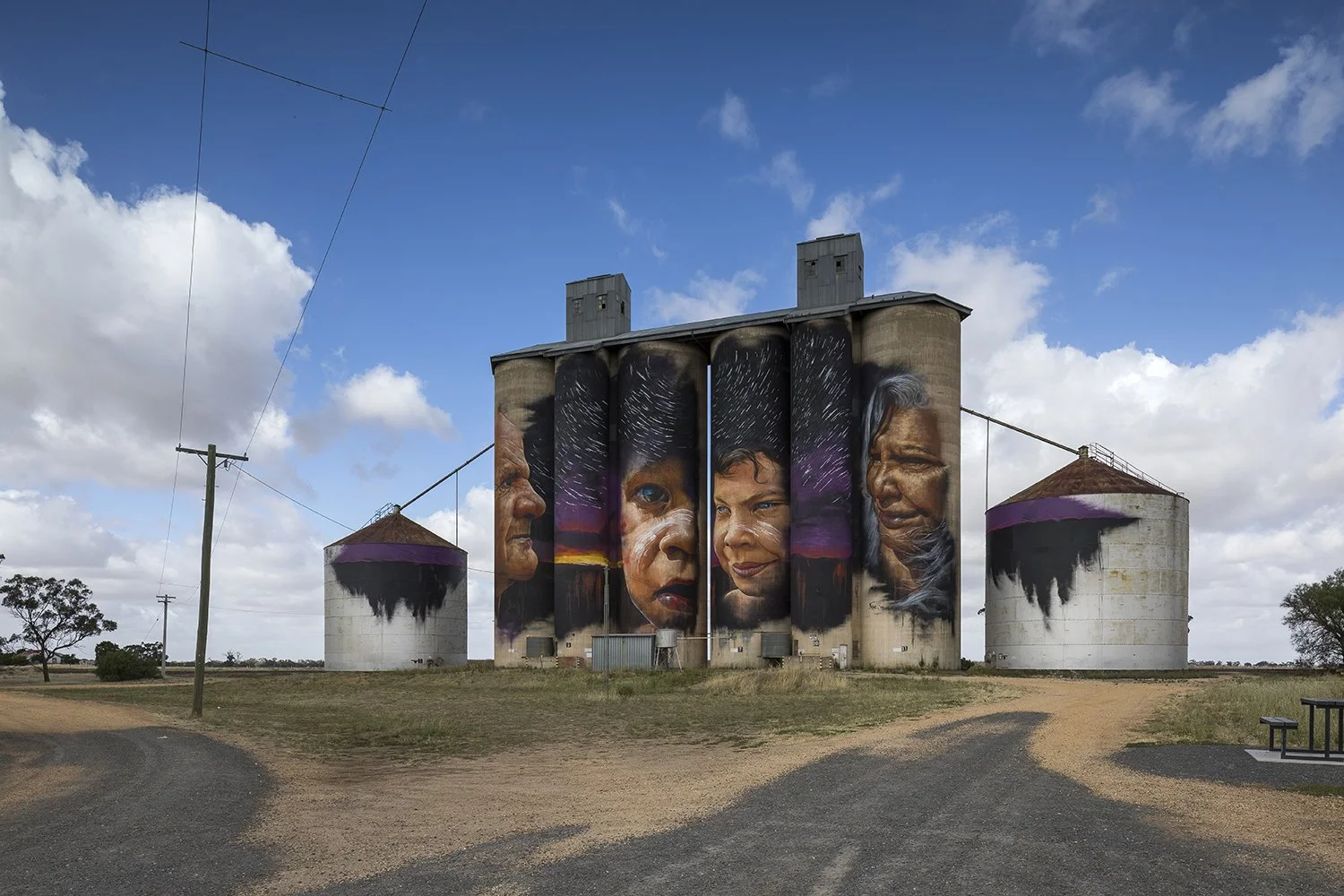
Community engagement as a creative method
The Silo Art Trail was never intended to reproduce the same visual formula from town to town. Its strength came from difference. Each location had its own people, history, landscape, cultural responsibilities and relationship to the silo.
Juddy Roller’s role was to create the conditions for strong work: listening before briefing, selecting artists for both artistic excellence and storytelling ability, involving local communities and Traditional Owners where relevant, and translating local knowledge into an artist-led process without reducing it to a committee-designed image.
That balance is essential. Communities need genuine ownership, but artists also need enough creative authority to make work of lasting cultural value. The goal is not consensus decoration. It is a work that feels inseparable from its place.
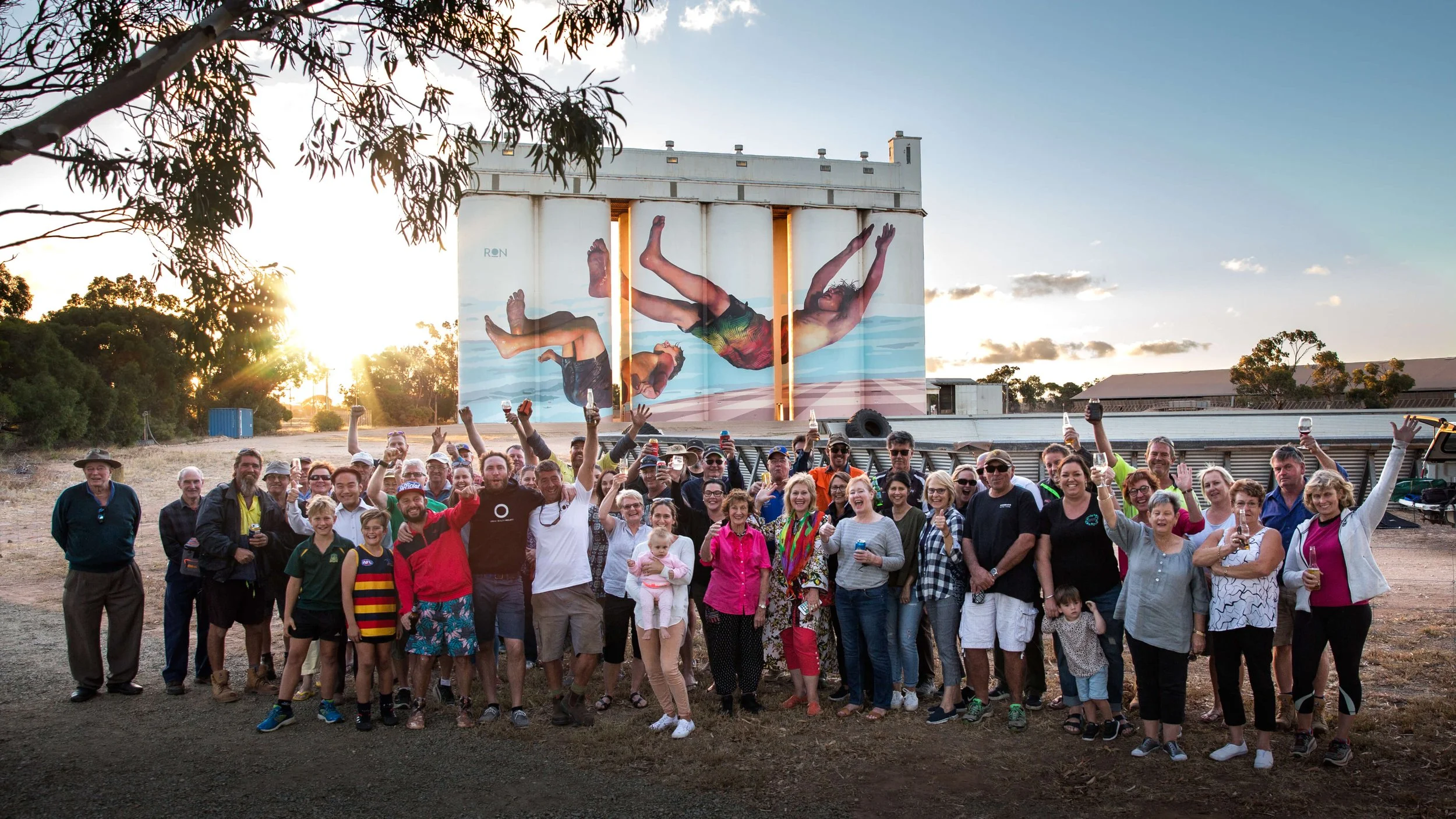
Public art as cultural infrastructure
The original Silo Art Trail demonstrated that public art could operate as cultural infrastructure. A disused industrial structure could become a destination, a navigational marker, a source of local pride and the beginning of a broader tourism and placemaking strategy.
Victorian Government analysis later recorded at least $260,000 in additional visitor spending over 11 months and approximately 576 extra visitors to the region each month. The greater legacy, however, was the model itself: connect strong art with authentic local stories, regional routes, media visibility and reasons for visitors to stop, stay and explore.
A silo mural alone cannot solve every regional economic challenge. But when it is supported by local leadership, visitor infrastructure, careful curation and long-term planning, it can become a powerful catalyst for further investment and confidence.
Planning a silo art or regional public art project?
A silo is not simply a very large wall. It is a landmark, an engineering challenge, a community symbol and a potential regional destination. You usually get one chance to make it worthy of the place.
Juddy Roller provides end-to-end regional public art strategy, feasibility, community engagement, artist curation, stakeholder coordination, access and safety planning, production, installation, documentation and cultural tourism thinking.
-
The original Silo Art Trail is a connected regional public art route established across six Wimmera-Mallee towns in Victoria: Brim, Patchewollock, Sheep Hills, Lascelles, Rosebery and Rupanyup. It grew from the success of Guido van Helten’s Brim silo mural, completed in January 2016.
-
The trail grew from an idea initiated by Shaun Hossack and Juddy Roller and was realised through a partnership involving the Brim Active Community Group, Yarriambiack Shire Council, GrainCorp, the Victorian and Australian governments, participating communities and artists.
-
Australian artist Guido van Helten painted the Brim GrainCorp silos. His monumental mural depicts an anonymous, multigenerational quartet of farmers representing the strength and resilience of the Wimmera-Mallee farming community.
-
The original six works were created by Guido van Helten, Fintan Magee, Adnate, Rone, Kaff-eine and Julia Volchkova.
-
Artists spent time in each town meeting residents, learning local histories and understanding the site before developing their work. This helped ensure the artworks reflected the host communities rather than imposing a generic image of regional Australia.
-
Silo art can attract visitation, media attention and local spending when it is part of a wider place and tourism strategy. The original trail demonstrated the potential, but long-term impact also depends on local businesses, visitor facilities, complementary experiences and ongoing destination planning.
-
Juddy Roller provides strategy and feasibility, artist curation, community and stakeholder engagement, budgeting, approvals, access and safety planning, production, installation, documentation and legacy planning for regional public art projects.