
Wall to Wall Festival: Australia’s ever expanding Outdoor Gallery
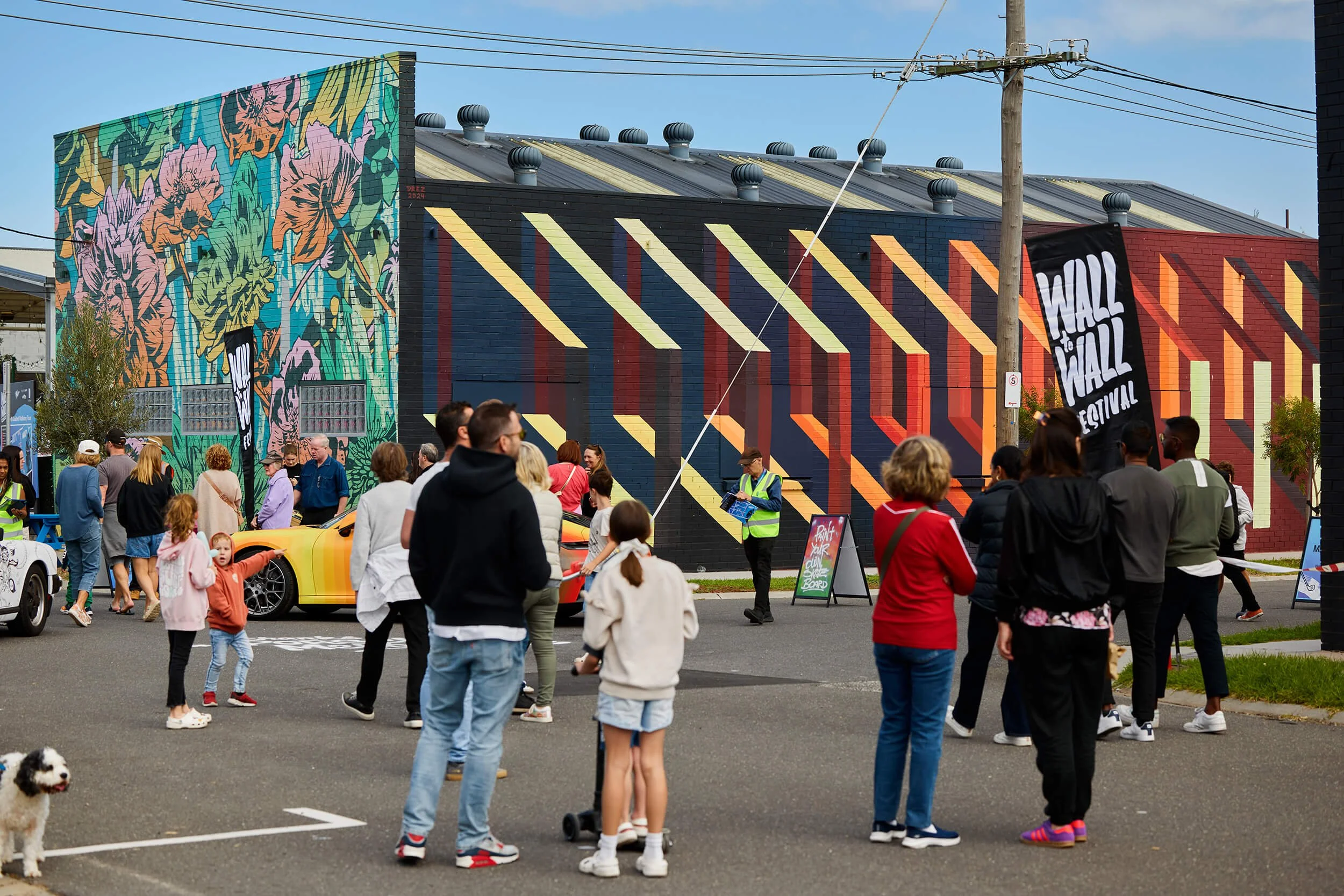
People enjoying the ambience at Wall to Wall Festival Mordi Village
By Shaun Hossack, Founder, Juddy Roller
I started Wall to Wall in 2015 in Benalla, the country town I grew up in. It was an experiment: bring world-class muralists to a small Victorian town and see what happens. Ten years later it's a touring festival that has worked in regional towns and suburban precincts around the country and produced hundreds of permanent murals.
This is how it works, and why councils keep asking for it.
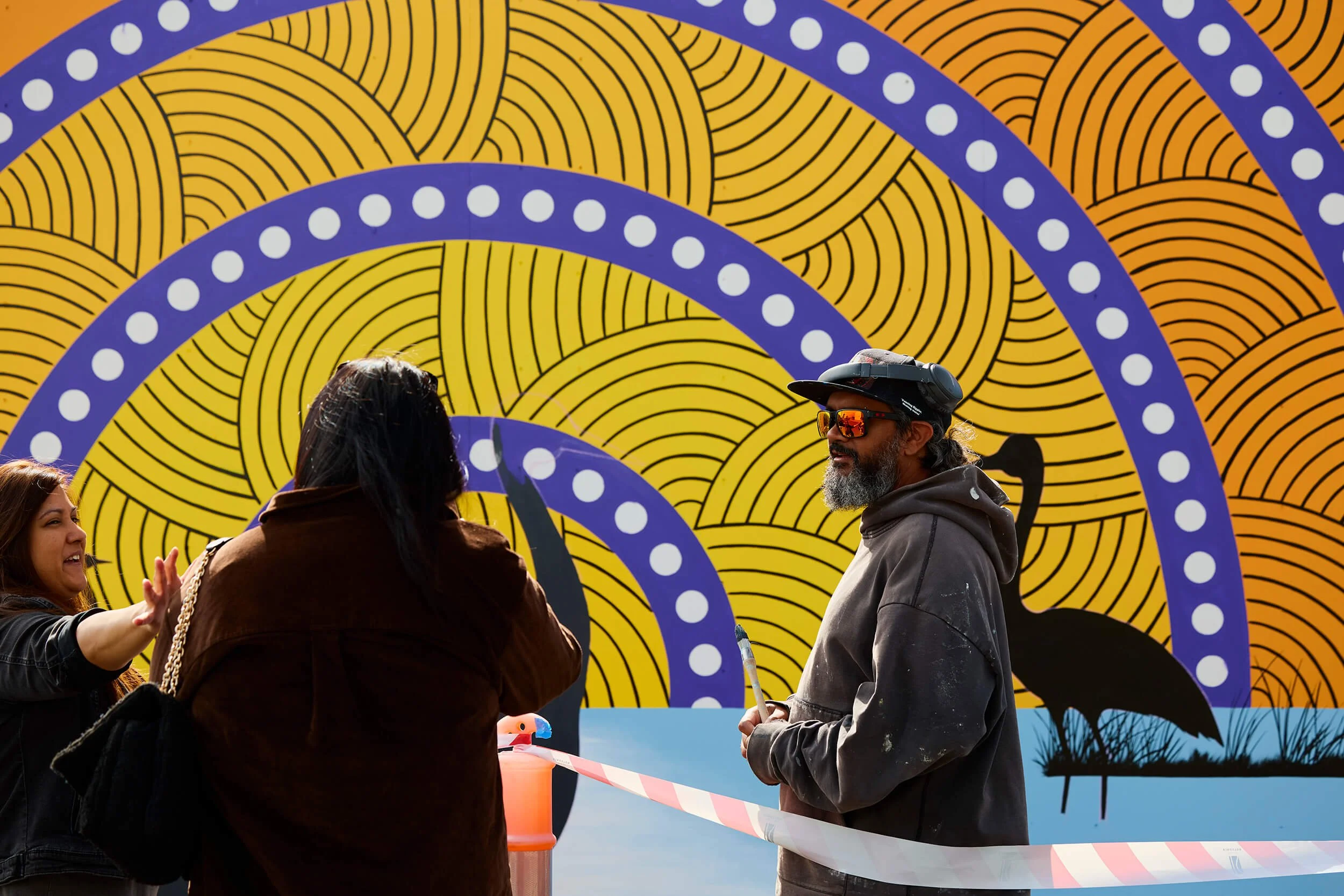
Artist Bidju in front of his mural, speaking with members of the public. The artists always take their time to engage in meaningful ways with community members and festival goers
Made with the community, not delivered to it
We don't parachute art into a town. Every festival is planned with the people who know the place:
the local council
Traditional Owners
community groups
schools and youth organisations
local businesses
residents
That takes longer, but it's why the murals end up meaning something locally. The artists spend real time talking with people during the festival too, and it isn't a formality.
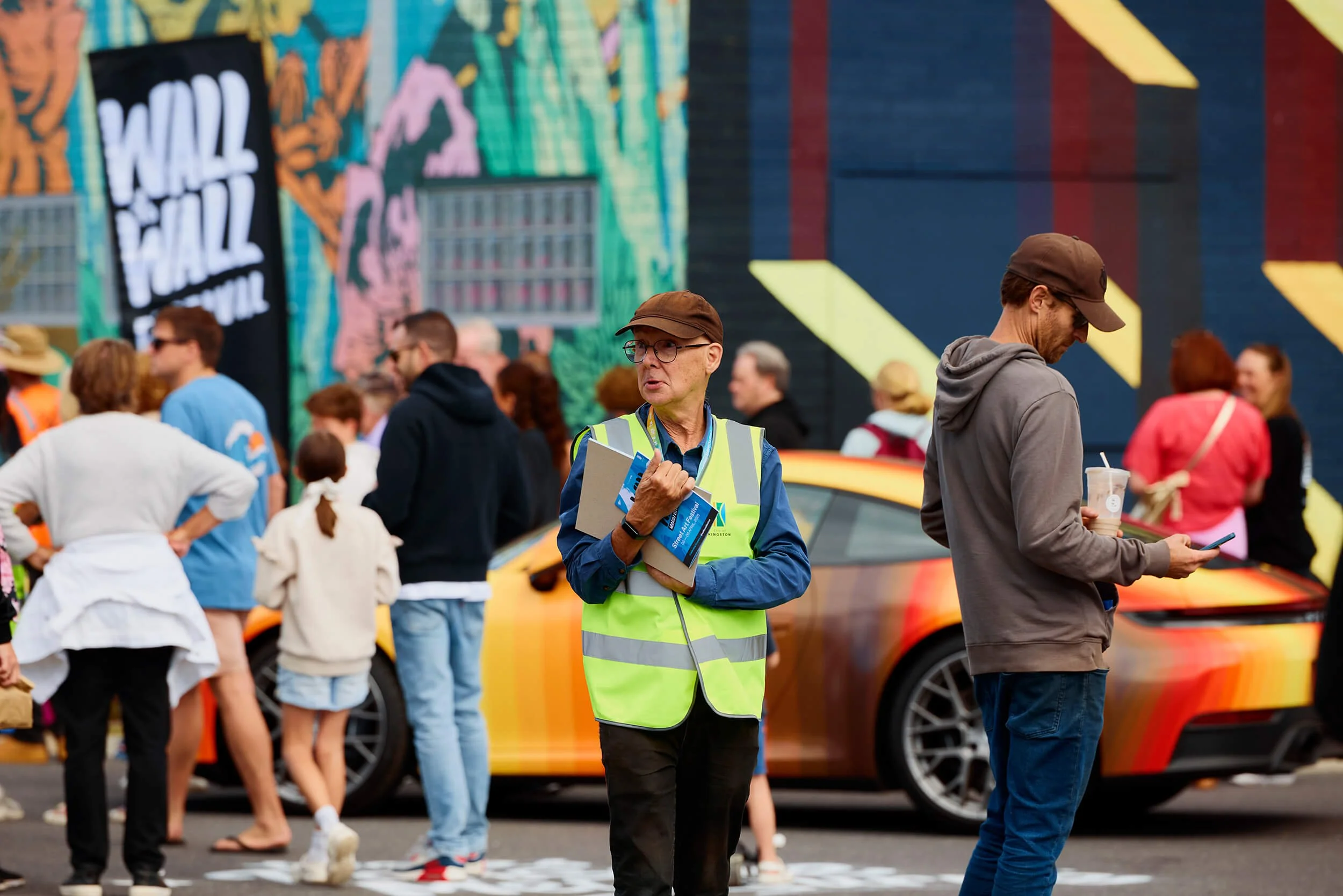
A local volunteer helps visitors get the most out of the festival.
What stays after the festival
A music festival is gone by Monday. Wall to Wall takes months to plan and a couple of weeks to paint, and the murals stay for years. That's where the value comes from.
Visitors. The murals become part of how a town promotes itself, in local media, tourism material and trails like the Silo Art Trail. People travel to see them, and come back.
Local spending. More visitors means more foot traffic for cafes, pubs and shops. Our Wall to Wall economic impact report sets out the numbers.
Young people. Seeing a huge mural go up in your own town changes what you think is possible. Workshops and artist talks give kids in regional areas access to mentors and ideas that can be hard to find there.
Identity. Each mural becomes a landmark and something the town owns. Mordi Village is a good example: the festival turned an industrial precinct into a permanent street art precinct in about two weeks.
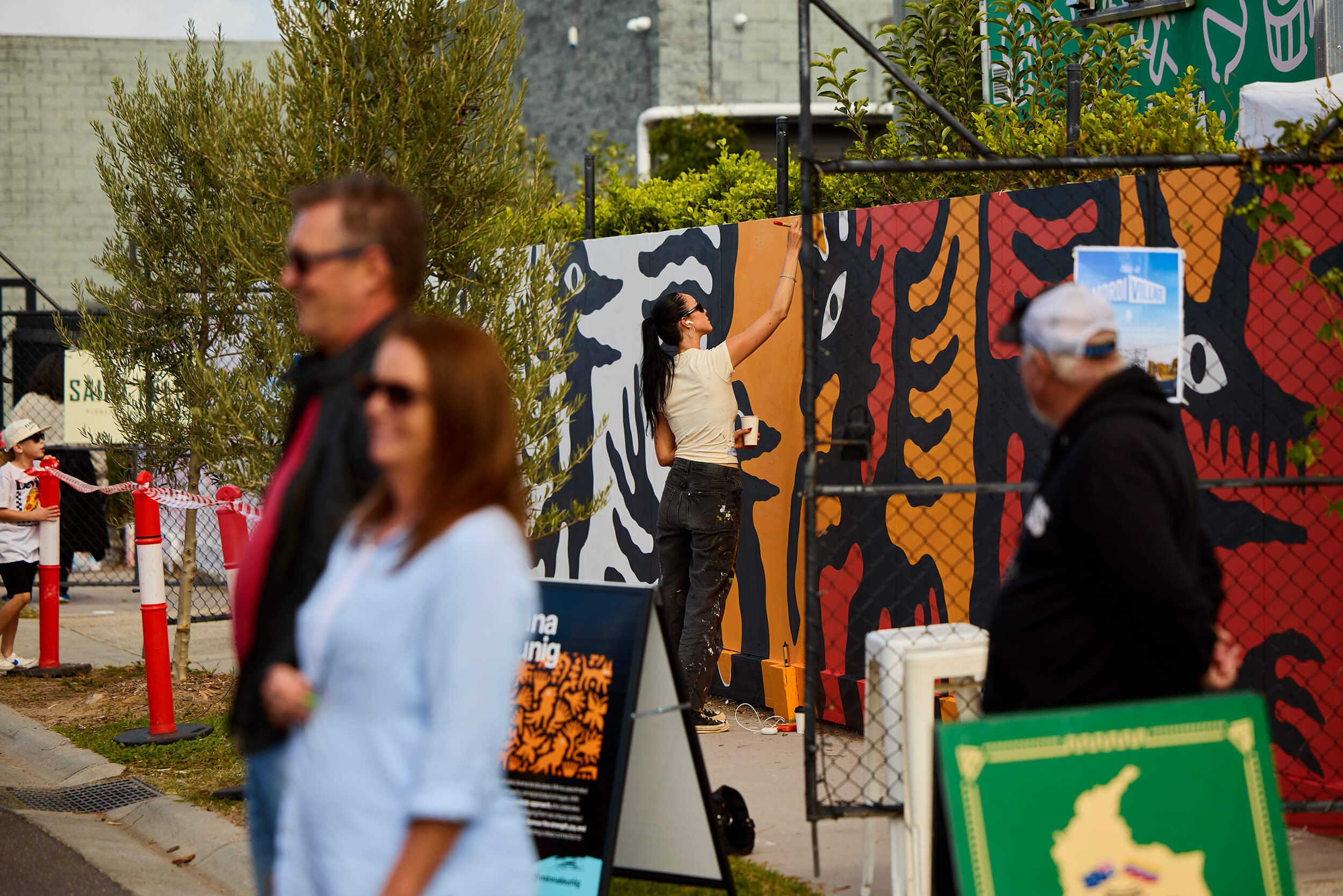
Artist Minna Leunig paints her mural as festival goers look on in awe.
Why it works
Public art fails when it has nothing to do with the people around it, especially in places with little access to contemporary art. Wall to Wall is built on relationships and trust with the community, not just on getting walls painted. It connects local stories with leading Australian and international artists, and it leaves towns with something permanent rather than a one-off event.
It's also repeatable. The same approach has worked in very different towns and suburbs, which is why we now treat it as a model for precinct activation as much as a festival.
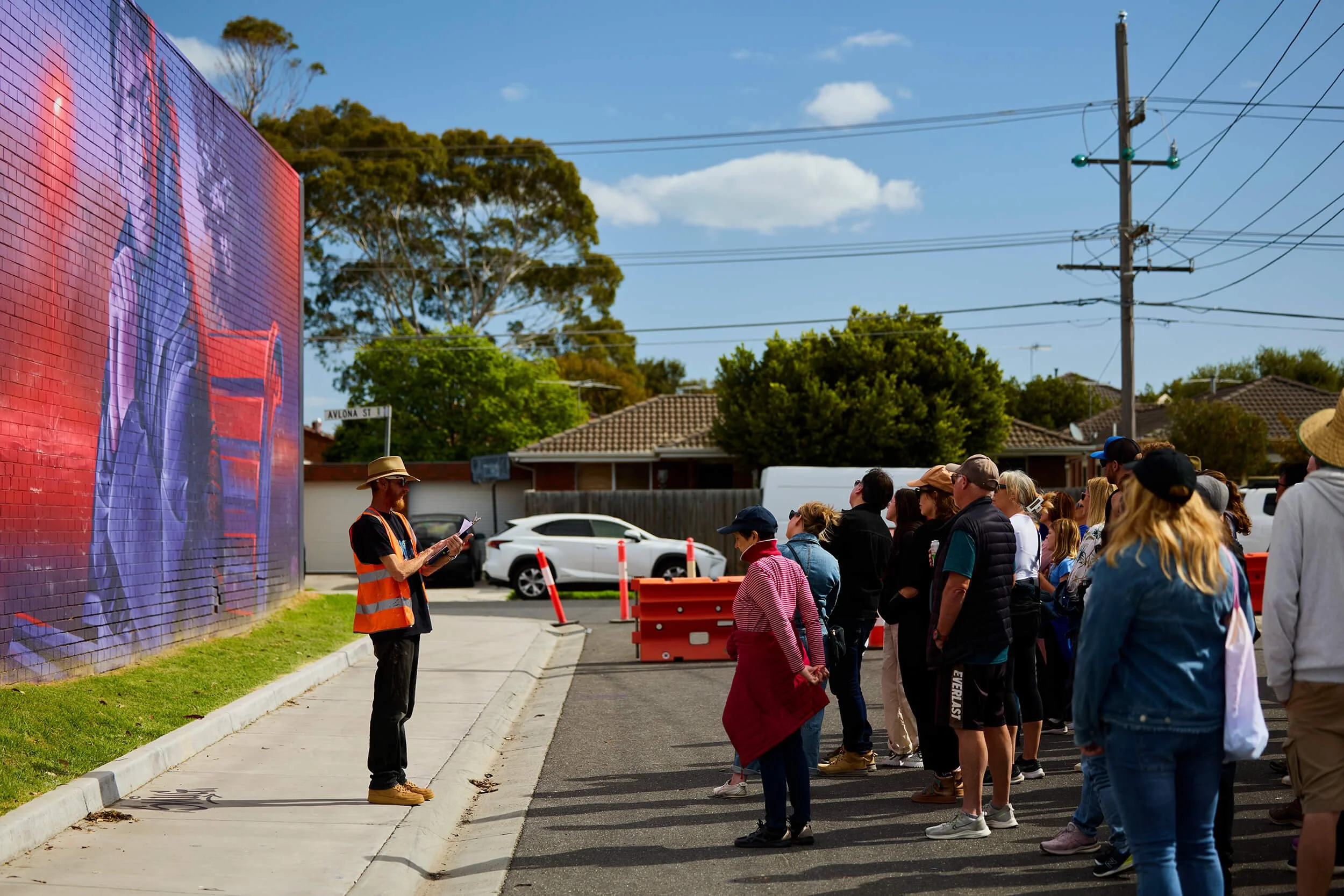
Our award-winning tour guide takes crowds of tour participants through the festival, giving them the inside scoop.
What's next
Growing up in a country town, I always knew art could change a place. Ten years of Wall to Wall has proved it. There's plenty still to do.
If your council or precinct is thinking about a festival or a mural program, talk to us. Our festival planning guide is a good place to start.
More on how public art affects communities: Art Is Infrastructure.
