
Public housing doesn’t need to be visually quiet to belong.
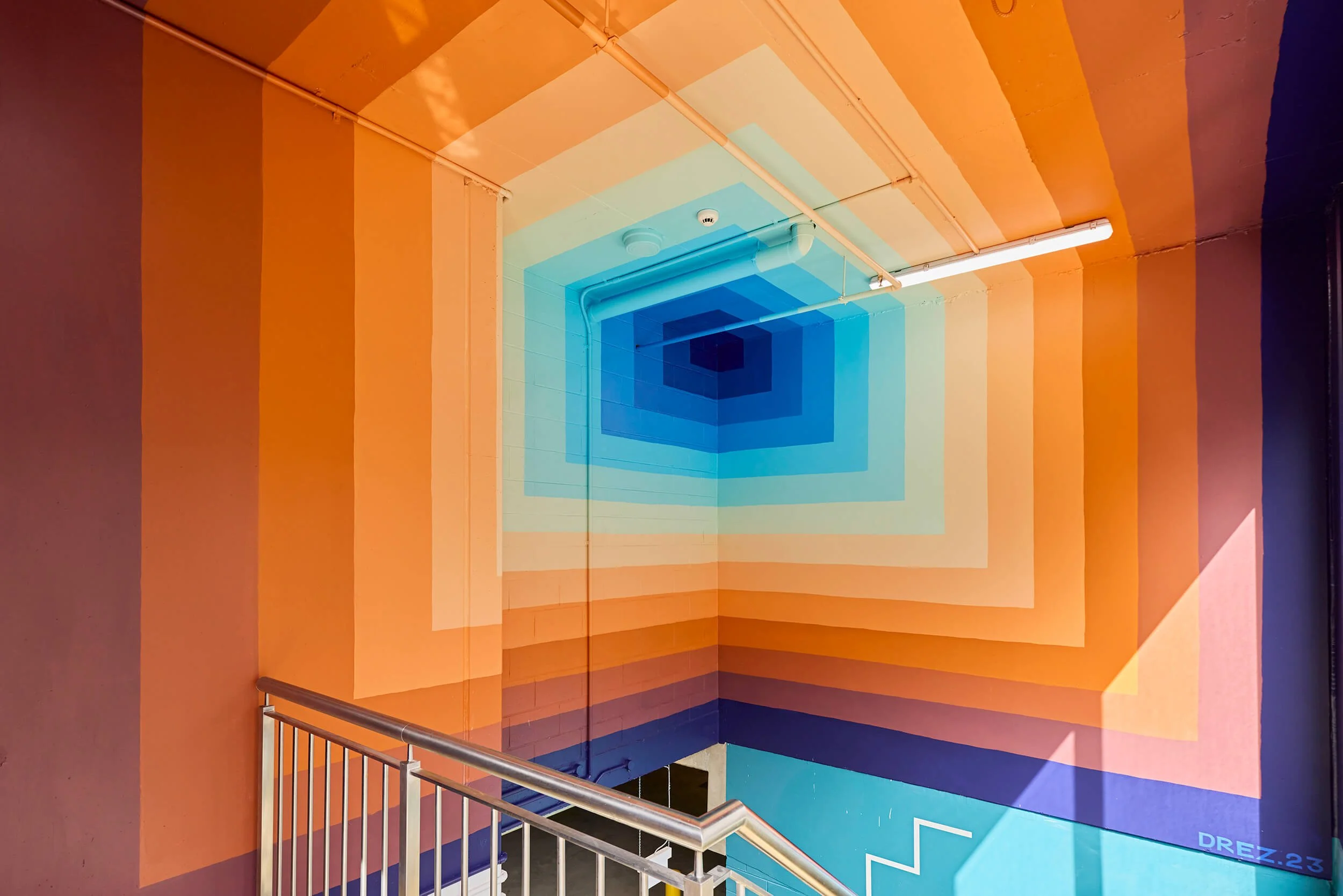
A photo of the rear entrance foyer by Nicole Reed
By Shaun Hossack, Founder, Juddy Roller
A public housing project where public art was treated as part of the city, not as an afterthought or burden
Marlborough Street sits within the City of Port Phillip, a municipality known for progressive housing practice, strong architectural standards, and an expectation that new buildings contribute positively to public life.
The HousingFirst Marlborough Street development was conceived with that same ambition. From the outset, the project rejected the idea that social housing should be visually minimised or softened within the streetscape.
Set along Dianella Lane, the site presented a familiar urban condition, a service laneway designed for movement, not pause. The challenge was not to disguise it, but to acknowledge it.
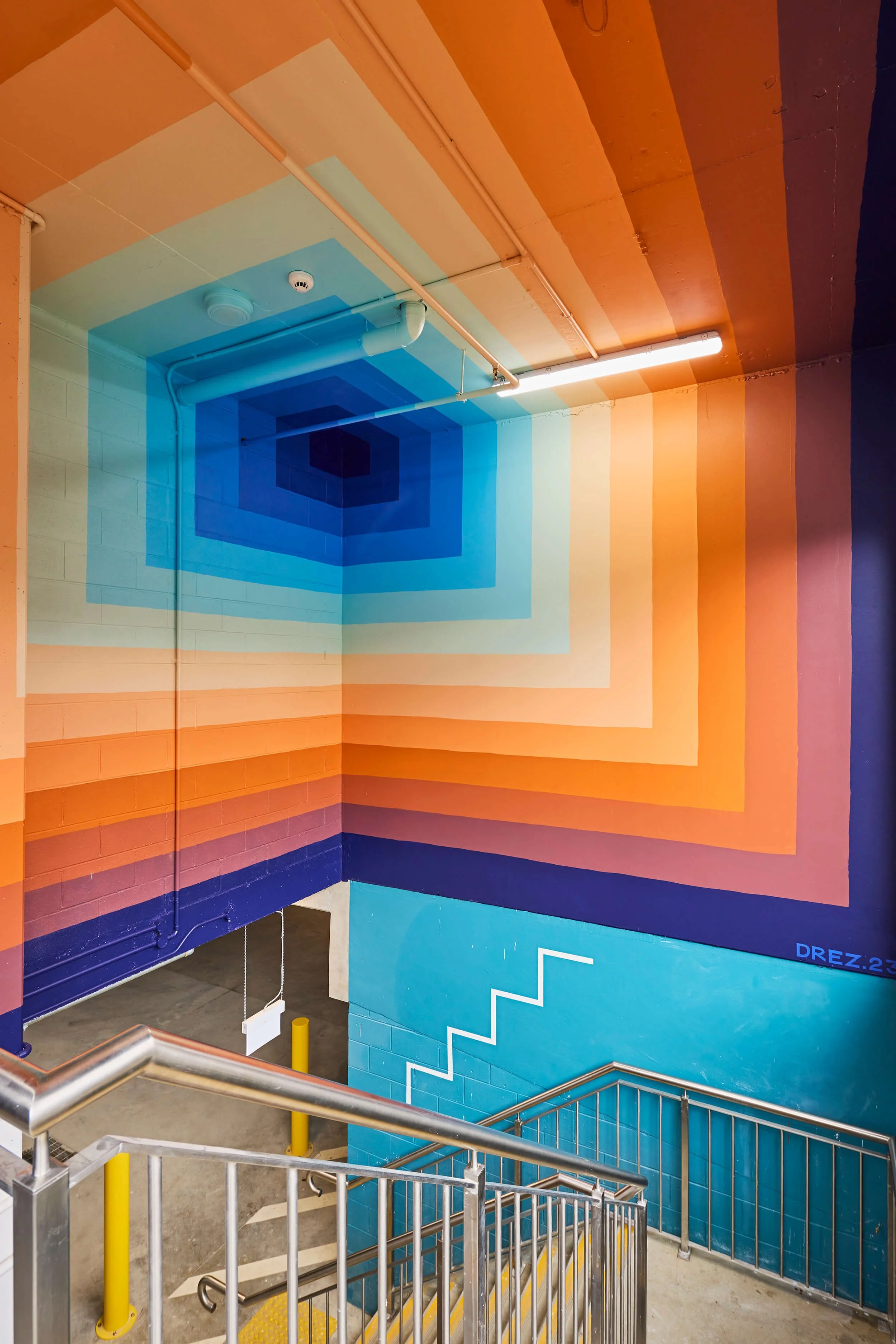
Perspective is everything. This mural appears to change depending on the viewer’s location.
An artwork designed to unfold as people move through space
Juddy Roller curated and delivered two permanent public artworks for the project, appointing Australian artist Drez to respond to the laneway’s scale, geometry, and rhythm and to integrate the entrance foyer into the cultural experience.
Rather than applying imagery as surface decoration, the work was conceived as something experienced gradually, through walking, turning, and shifting perspective.
Bold colour and anamorphic forms stretch across the lane, changing as the viewer moves. What appears abstract at one angle resolves into structure at another. The artwork asks for attention, but never demands it.
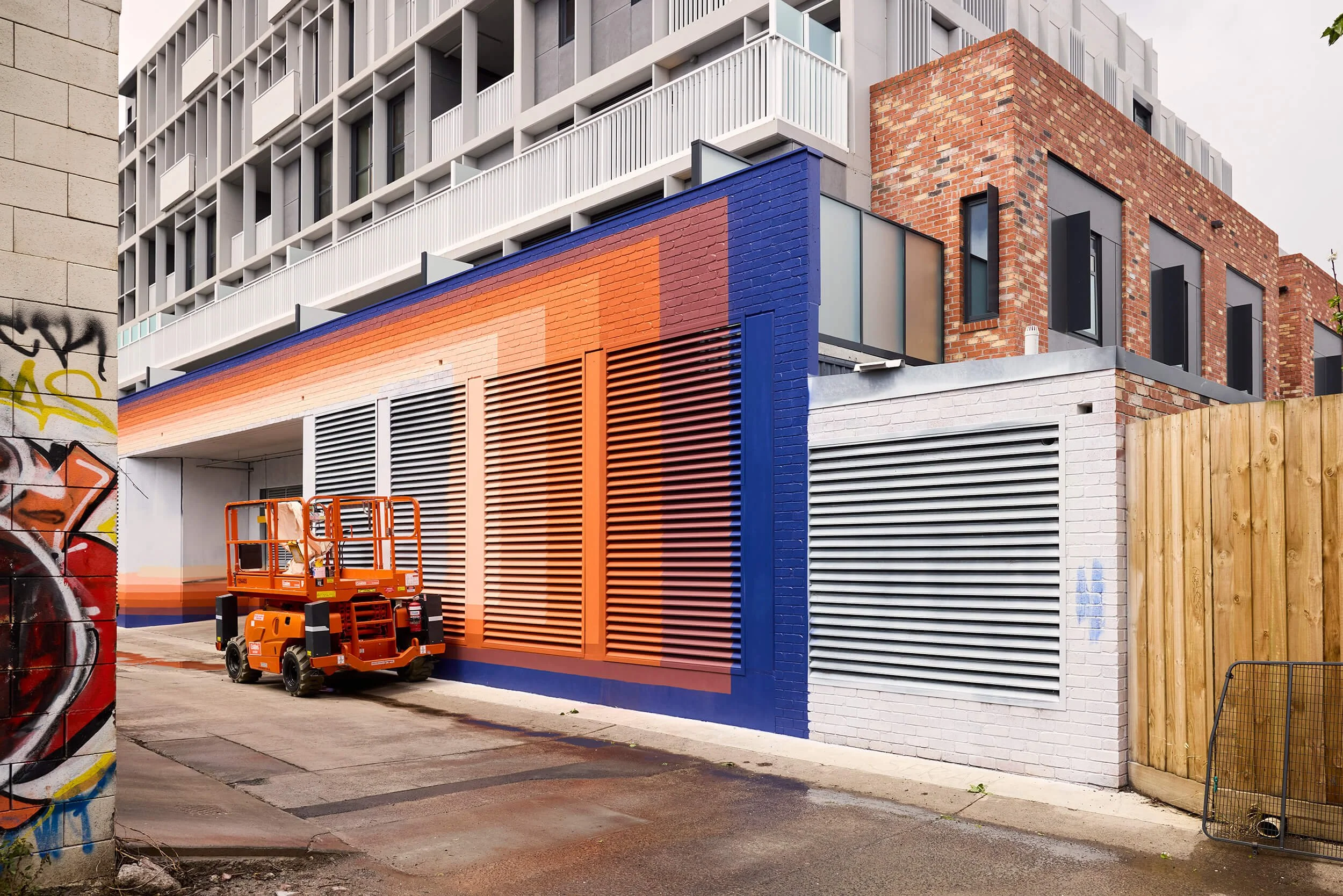
The external mural brightens up the carpark entrance and makes an otherwise forgetten laneway feel alive and inviting
Social housing can be visible without being sensational.
Too often, public housing is treated as something to be visually neutral, something that blends quietly into the background.
This project takes a different position.
Here, public art is used to acknowledge presence rather than soften it. The mural gives the building a cultural voice without spectacle, asserting that social housing belongs confidently within the city’s fabric.
The laneway becomes part of the public experience, not leftover space, but lived space.
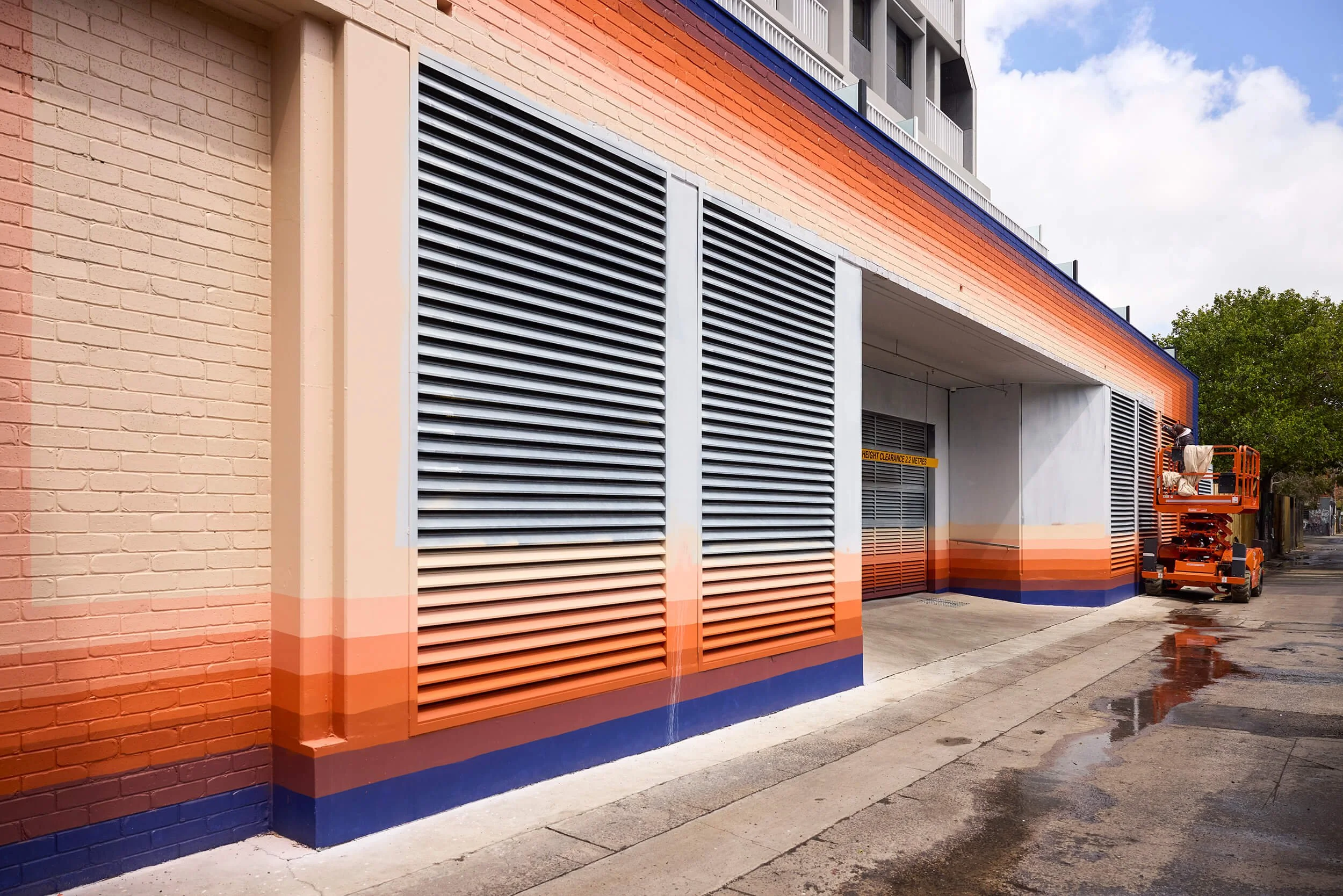
The mural was designed to carefully lead the viewer into the car park, creating a warm welcome and a way-finding beacon.
An everyday encounter, not a one off moment.
Dianella Lane and the accompanying entrance are no longer passable. The artworks introduce pause, curiosity, and orientation.
For residents, neighbours, and passers-by, the mural becomes part of daily routine, encountered repeatedly, quietly, and without ceremony.
The project demonstrates how public art, when treated with intent and restraint, can:
Shift perception of social housing
Improve the quality of the public realm
Contribute to long-term place identity
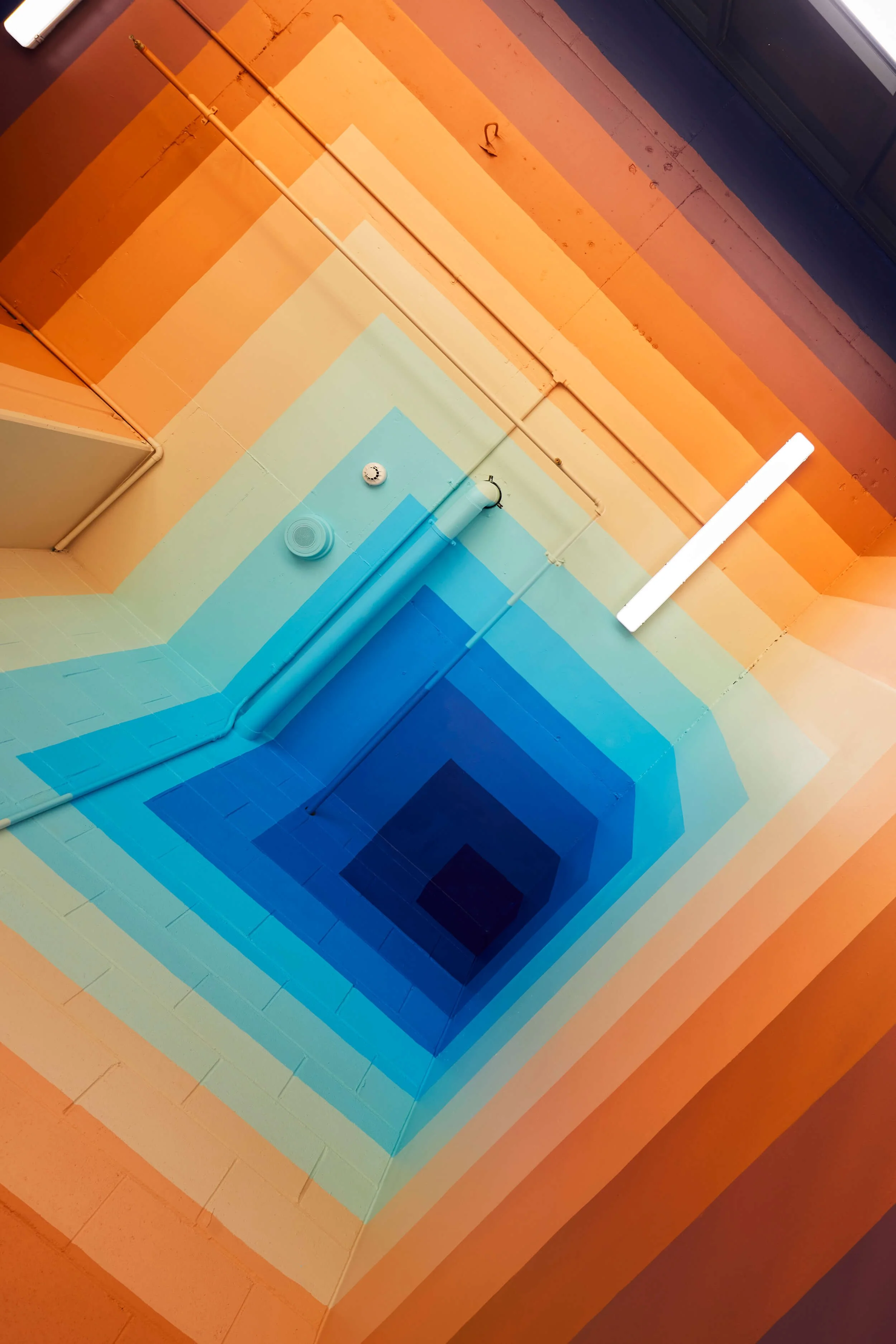
Artist Drez is well known for creating artowrk that draws the viewer into his colourful world
When cultural intent is recognised as design excellence.
The project received a Commendation at the City of Port Phillip Design & Development Awards 2024, under the Jury’s Award for Excellence in Cultural and Community Benefit.
The jury recognised the project for its integration of public art into the built environment and its contribution to cultural and community outcomes.
Collaboration across architecture, art, and place.
Client
HousingFirst
Architect
Baldasso Cortese
Public Art Curation & Delivery
Juddy Roller
Artist
Drez
Related Work
Other projects where public art is treated as part of the built environment.
