
Kingpin Melbourne - Behind the Scenes
Rosie Woods’ incredible spray paint rendering effects were a complete standout
A flagship venue becomes a gallery unto itself.
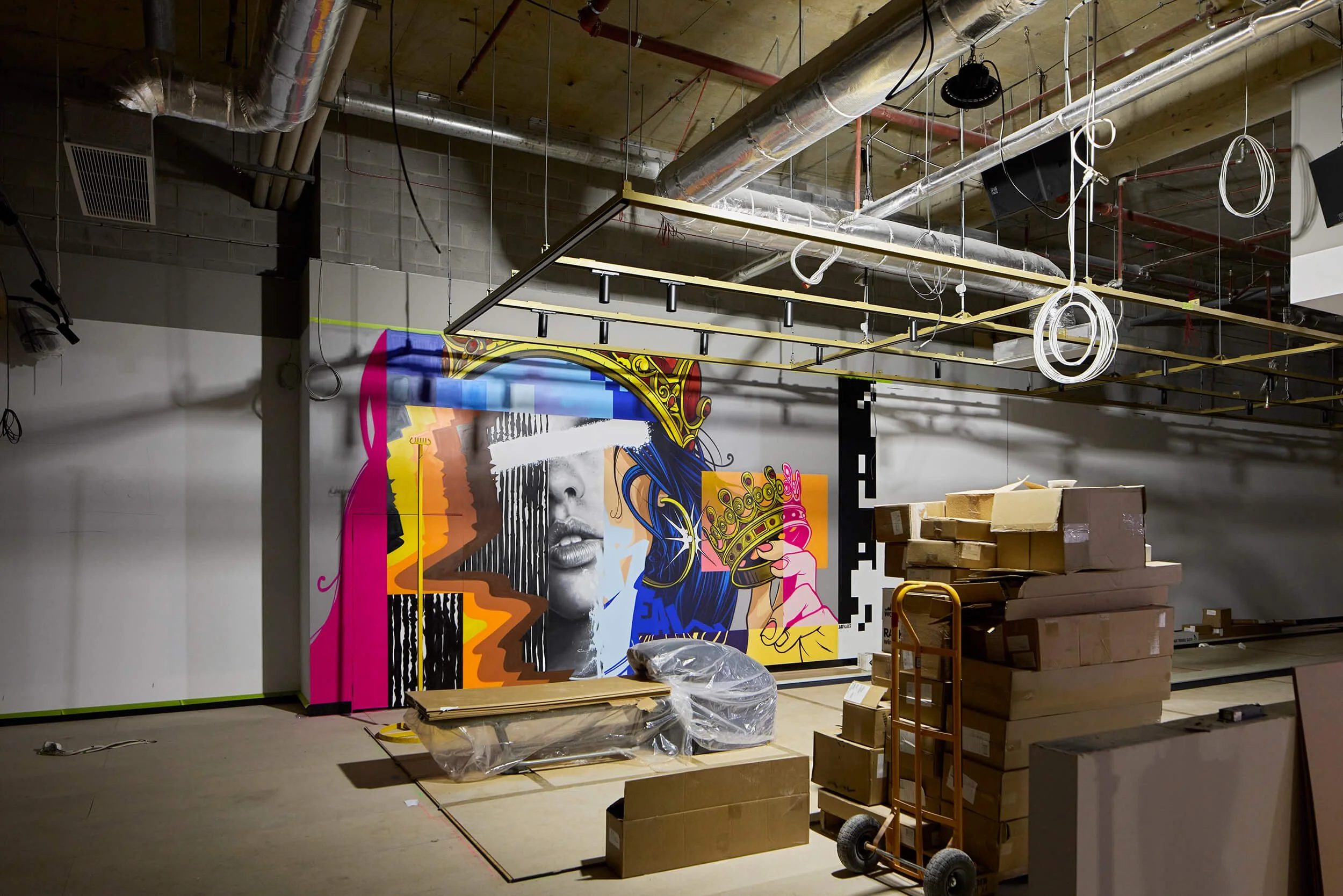
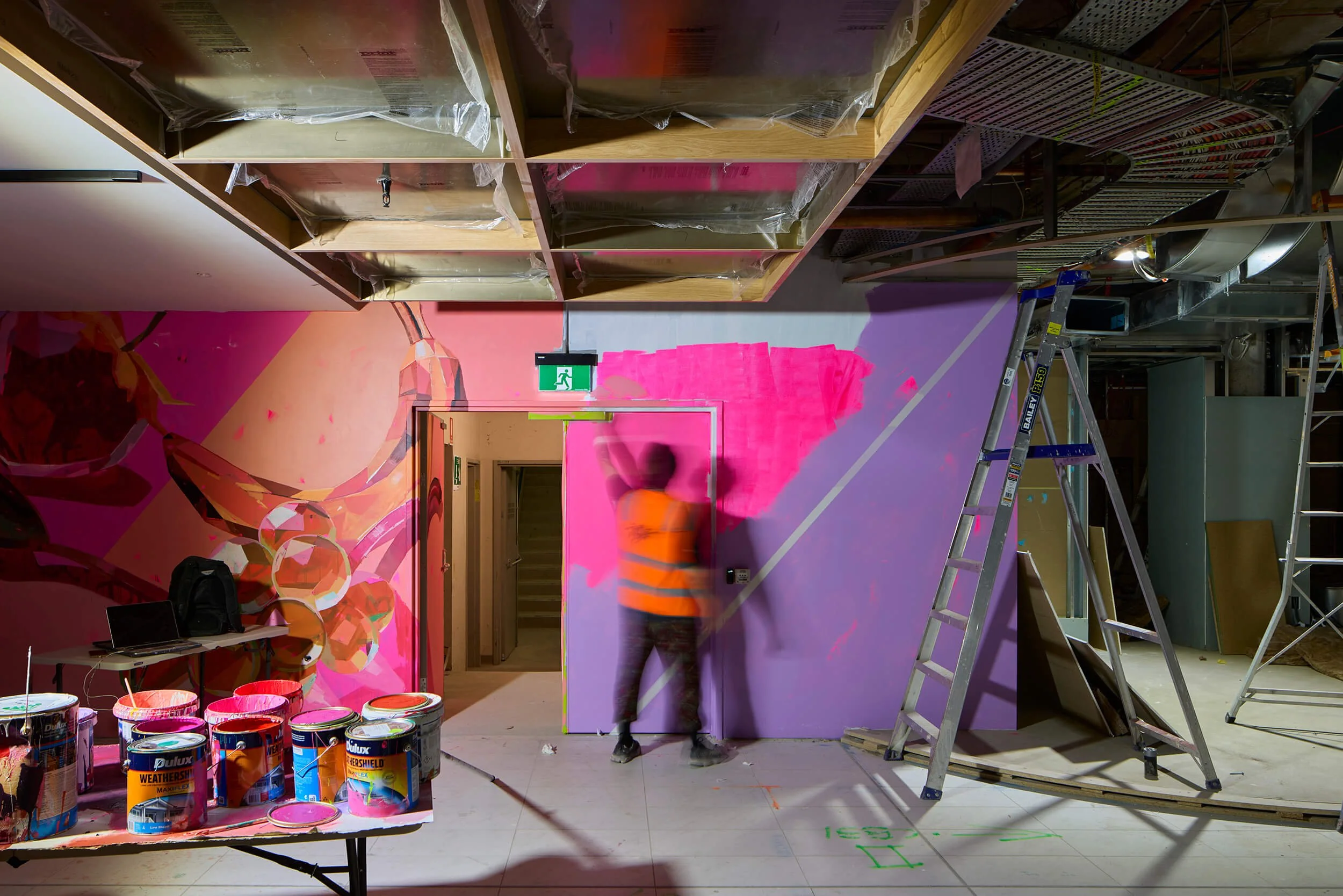
Seven artists. Six weeks. A 3,000-square-meter basement was transformed into a one-of-a-kind entertainment venue.
The new Kingpin Melbourne flagship wasn’t approached as a standard fit-out or branded artwork package. From the start, the goal was clear: let the space feel like an immersive, authentic art experience in its own right, reflecting the depth and culture of all things Melbourne.
The brief was simple - respond to the Kingpin brand's themes while staying true to each artist’s voice.
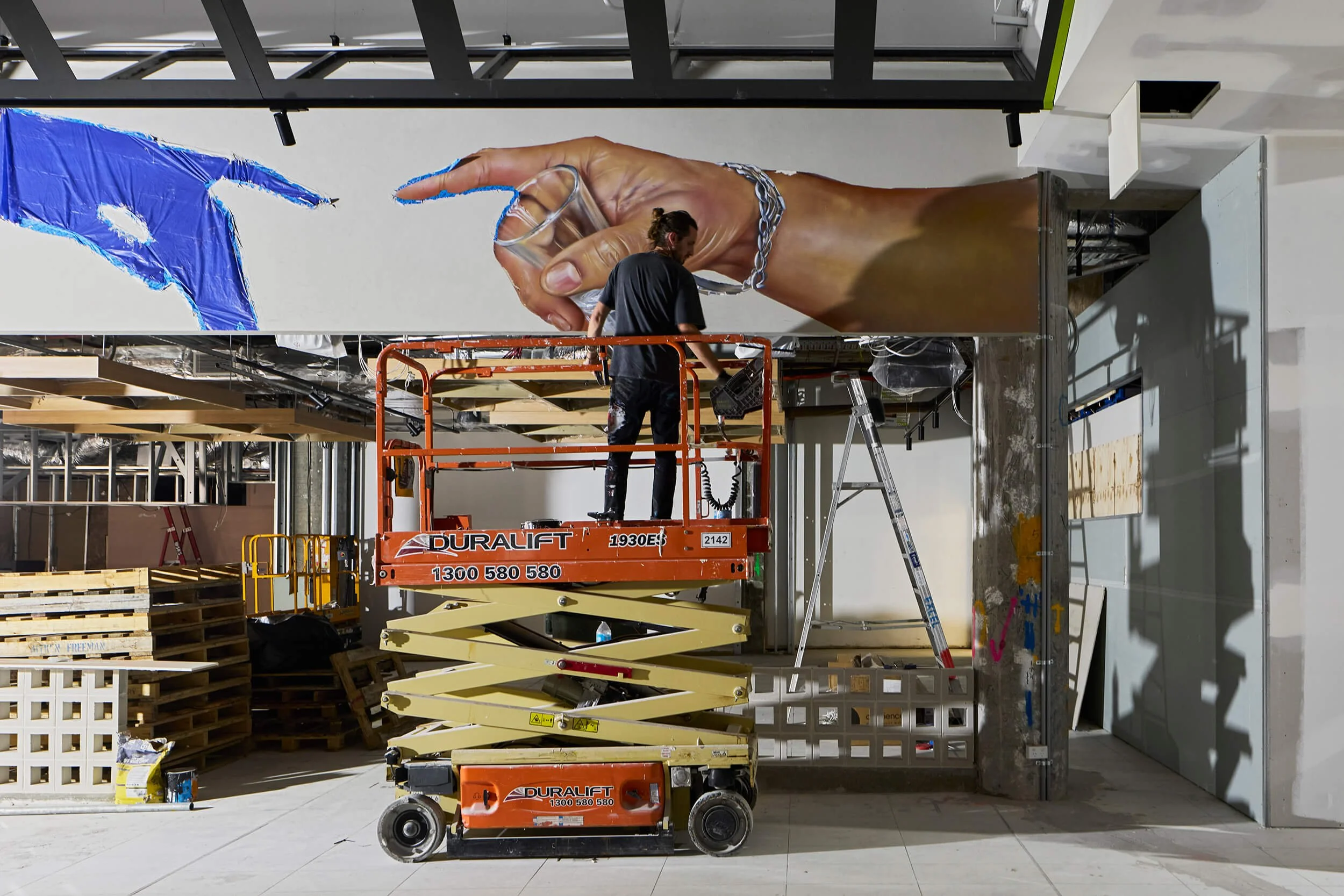
Spanish artist Jay Kaes created numerous works throughout the venue, working with lighting and creating anamorphic illusions.
World Class Artists, World Class Art
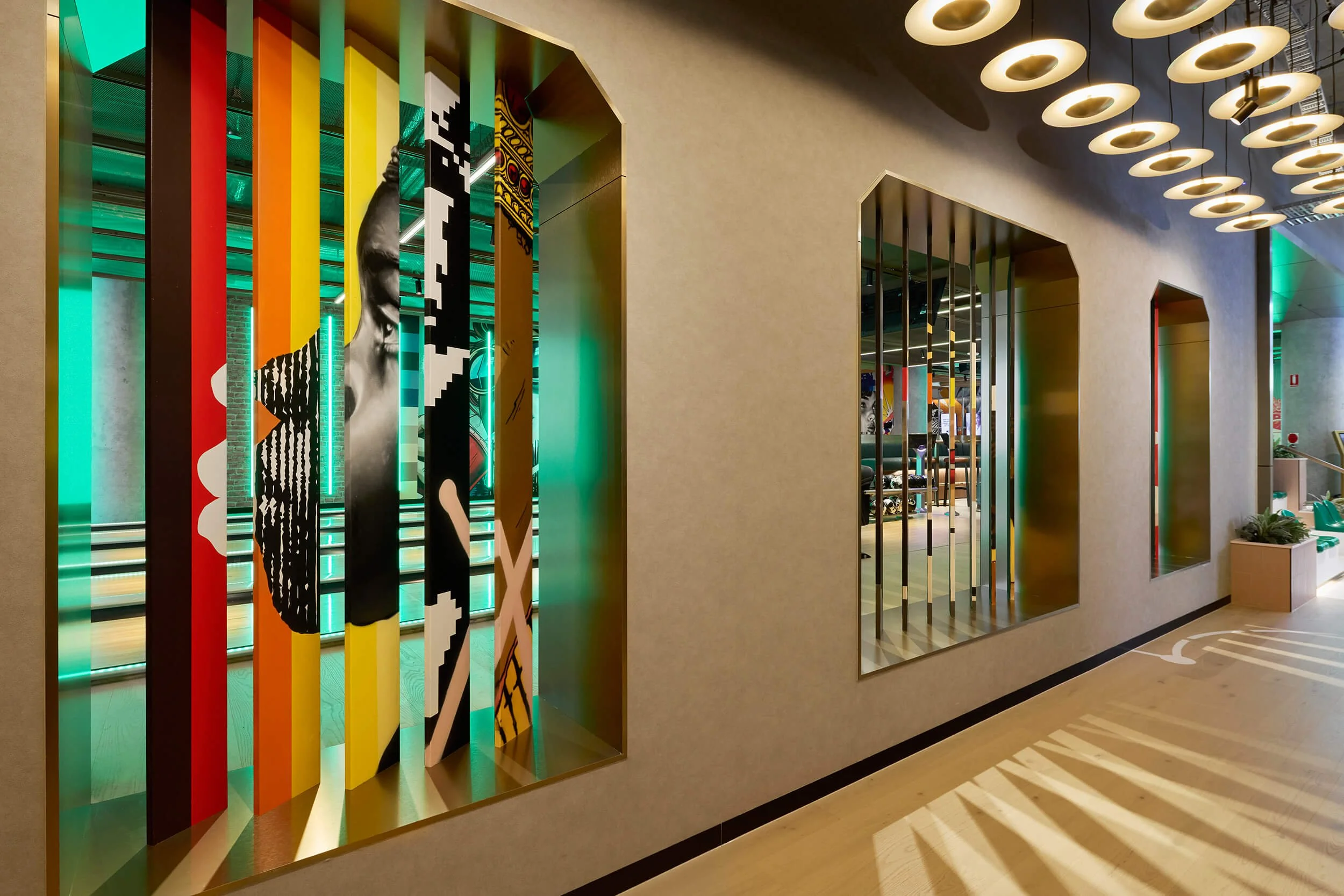
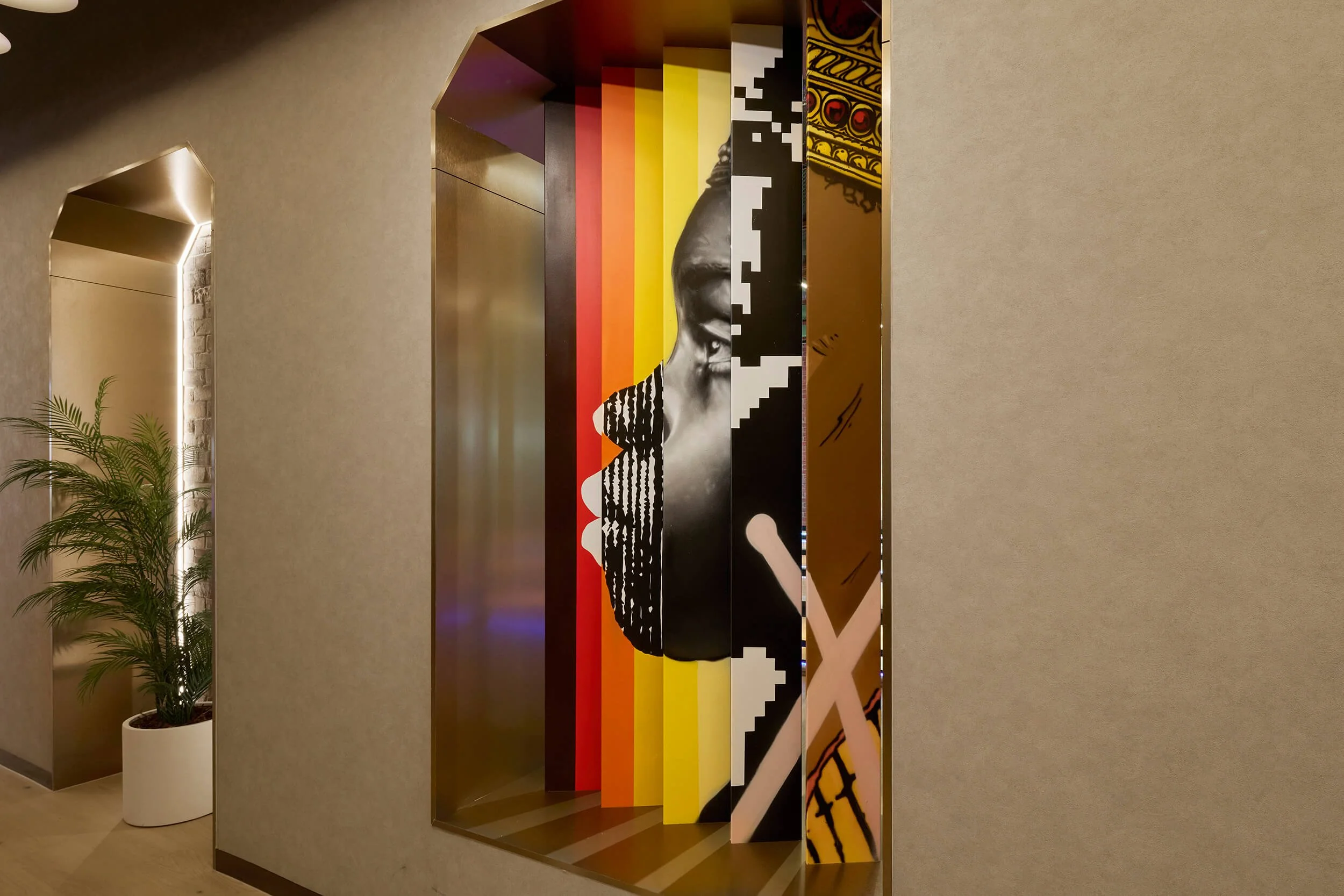
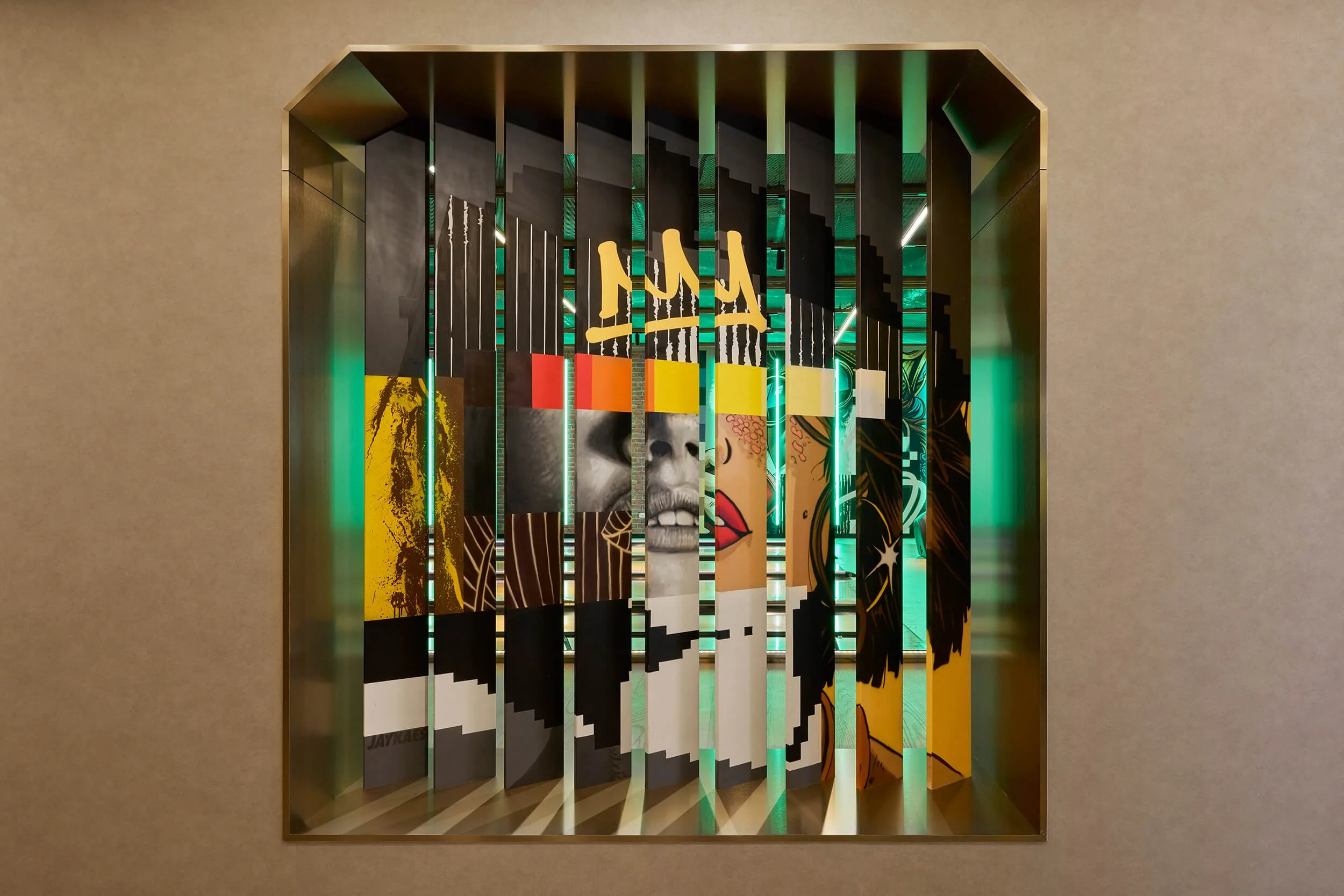
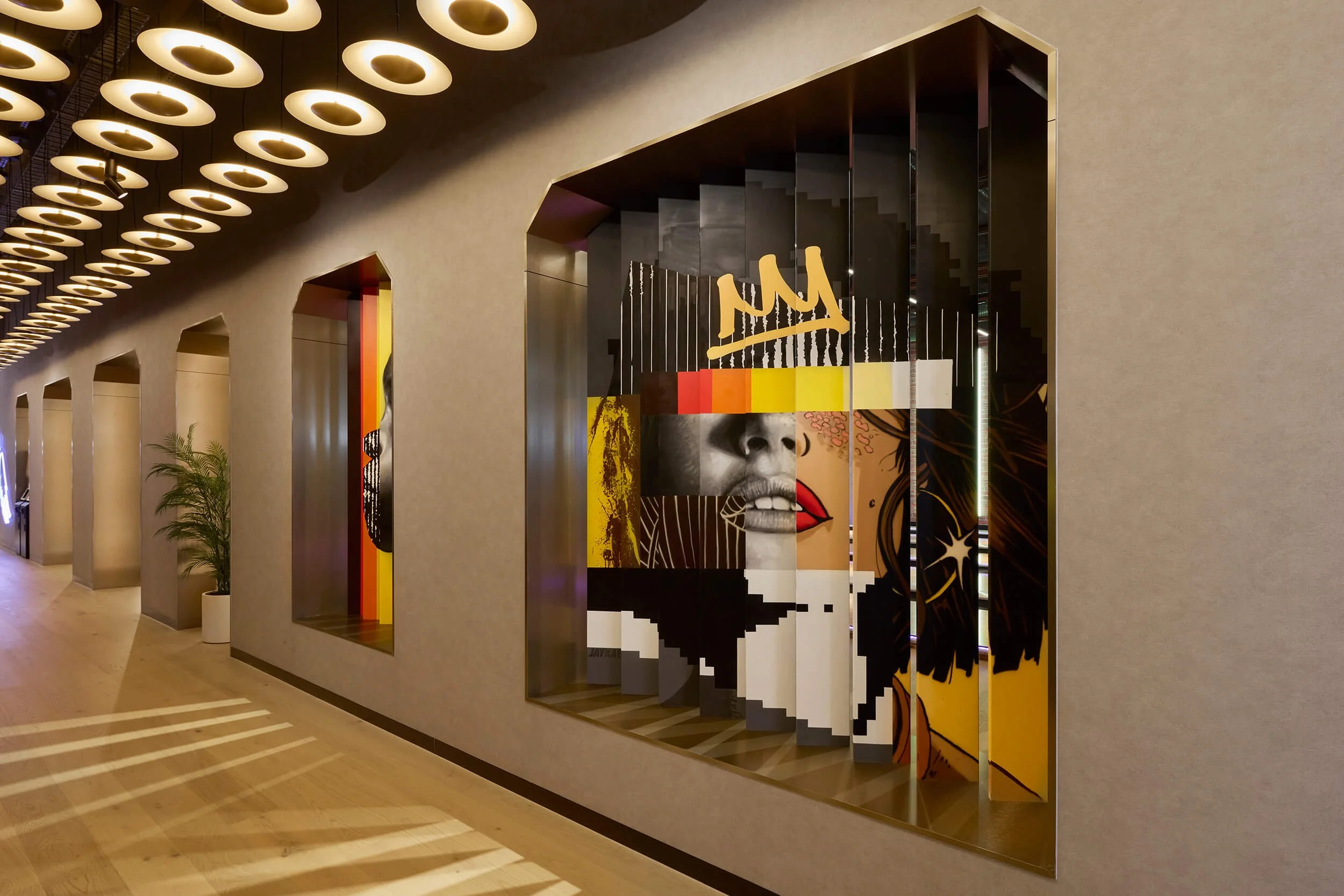
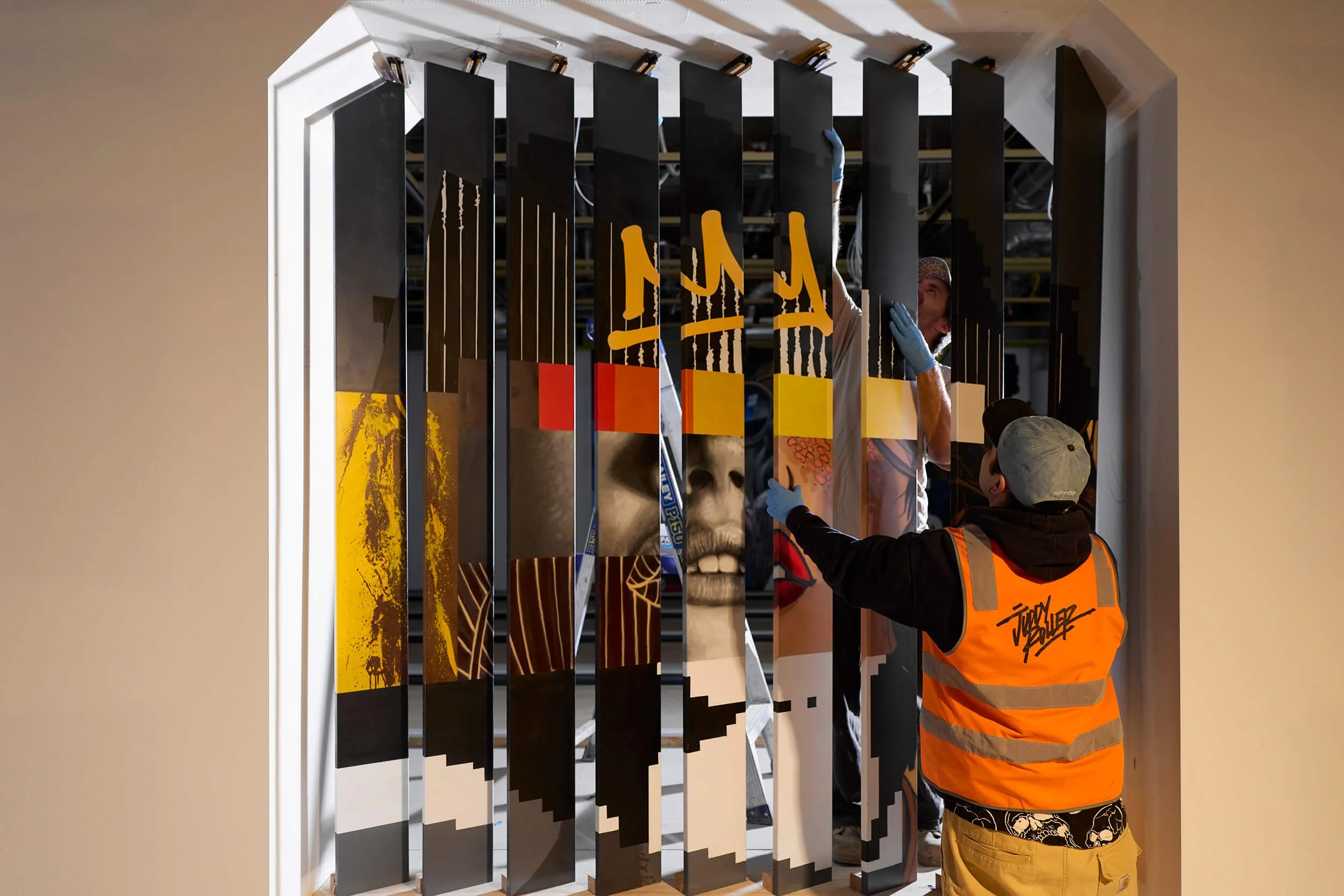
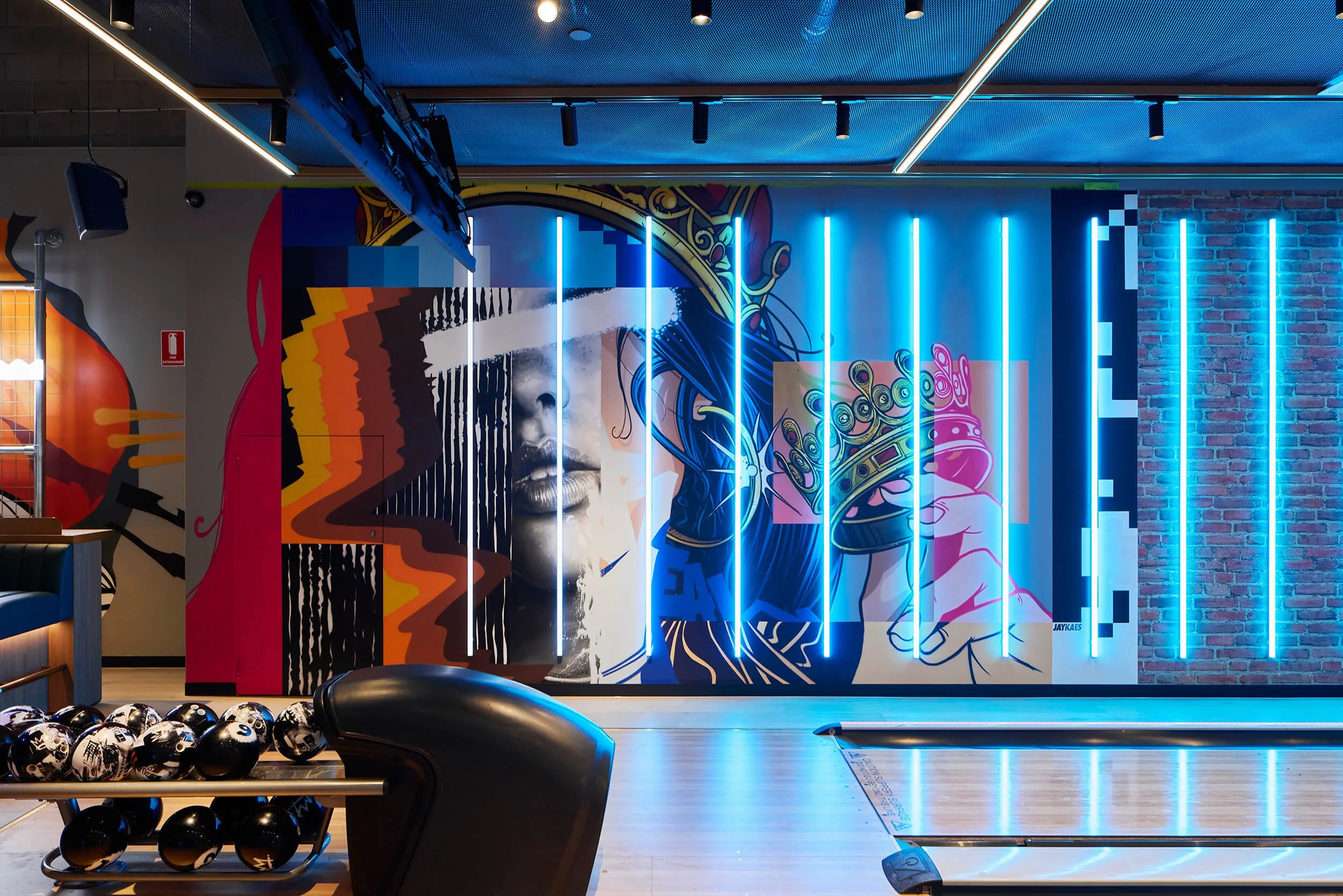
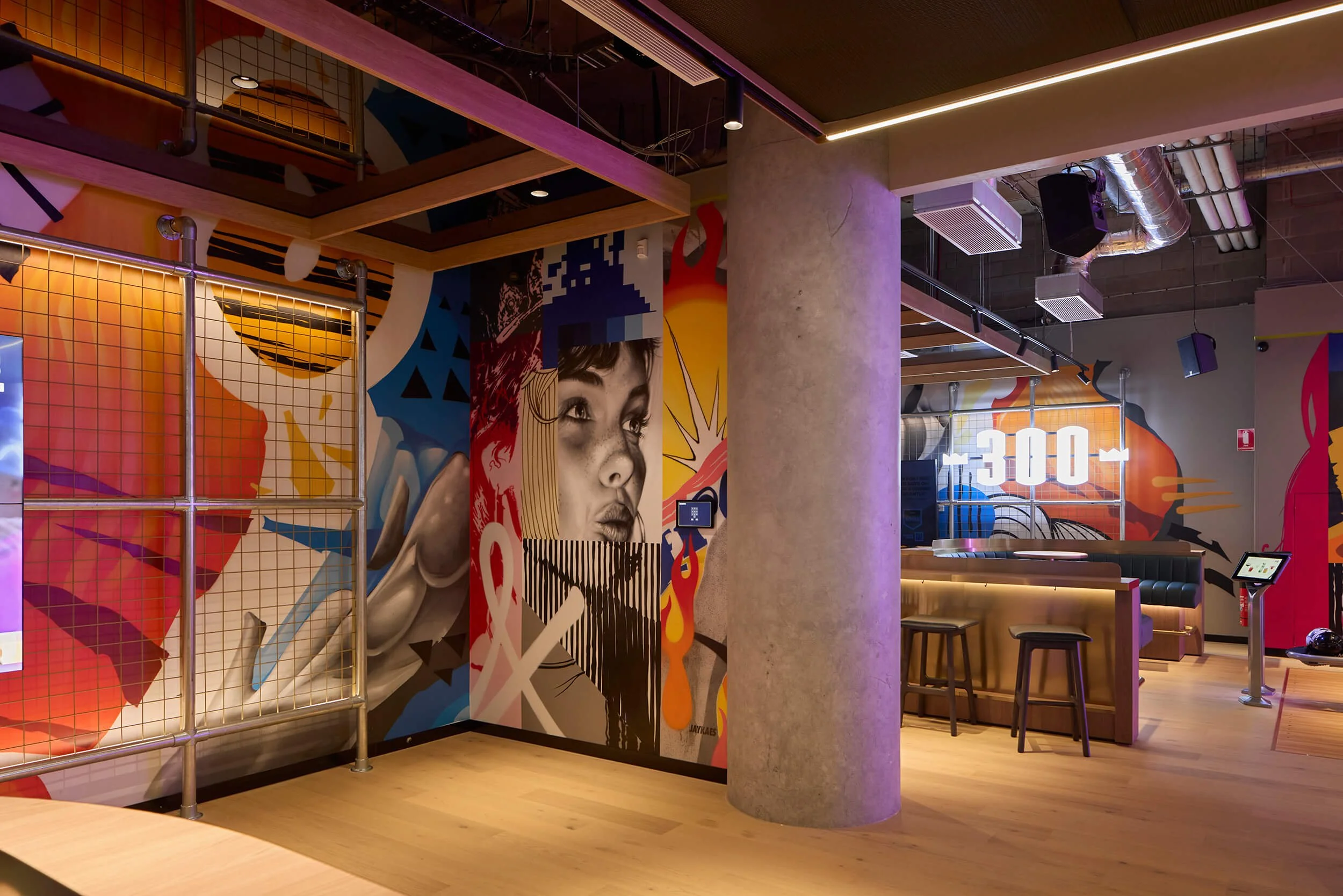
Jay Kaes: Visiting Australia for the first time, Kaes's major artwork for the venue was one of the most technically ambitious works created during the installation. We worked with Kaes to create his artwork as a complex anamorphic optical illusion visible in full from a single point. The production of this piece was complex and arduous, but incredibly rewarding once the final illusion snapped into place. This became an unexpected standout moment in the overall project.
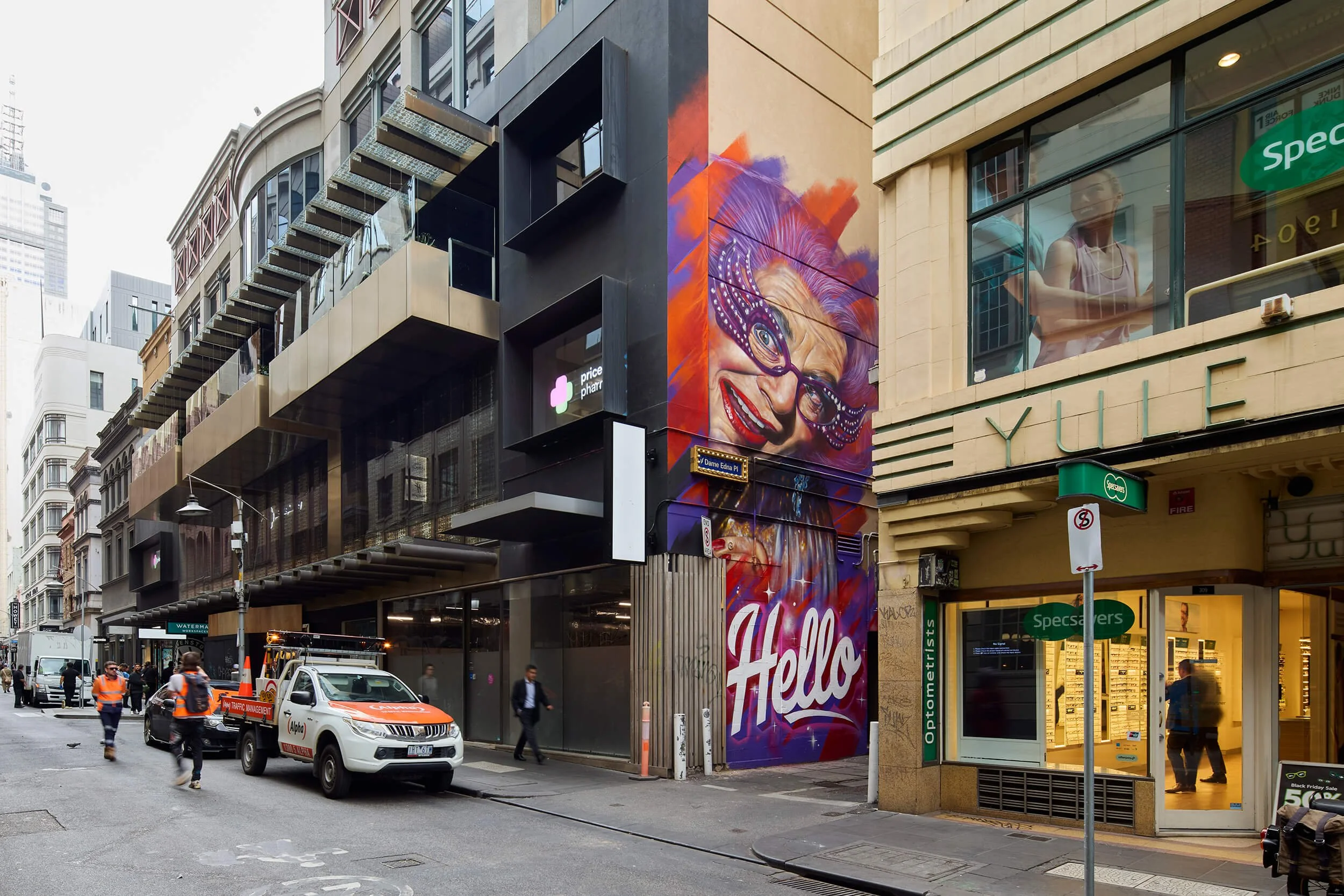
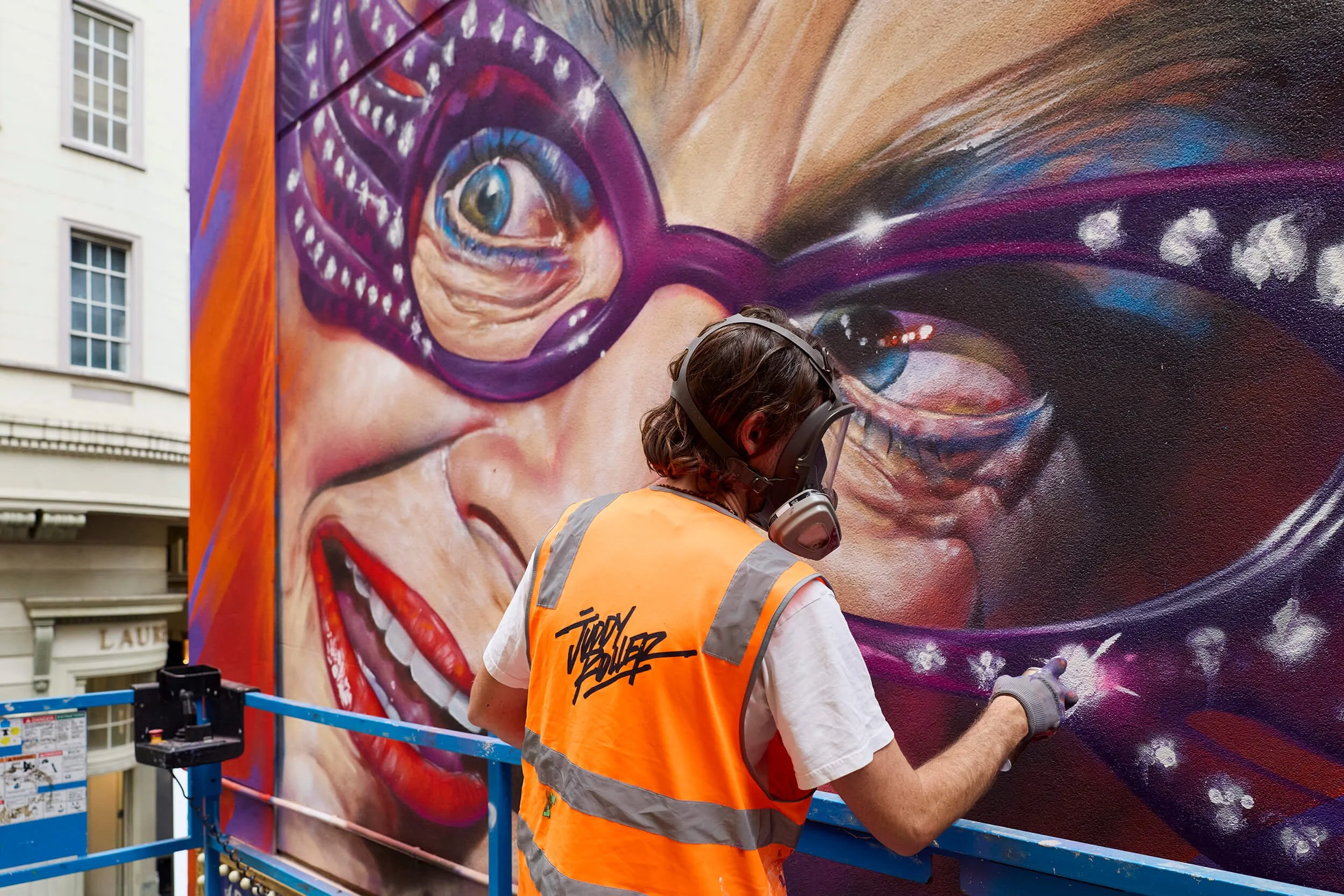
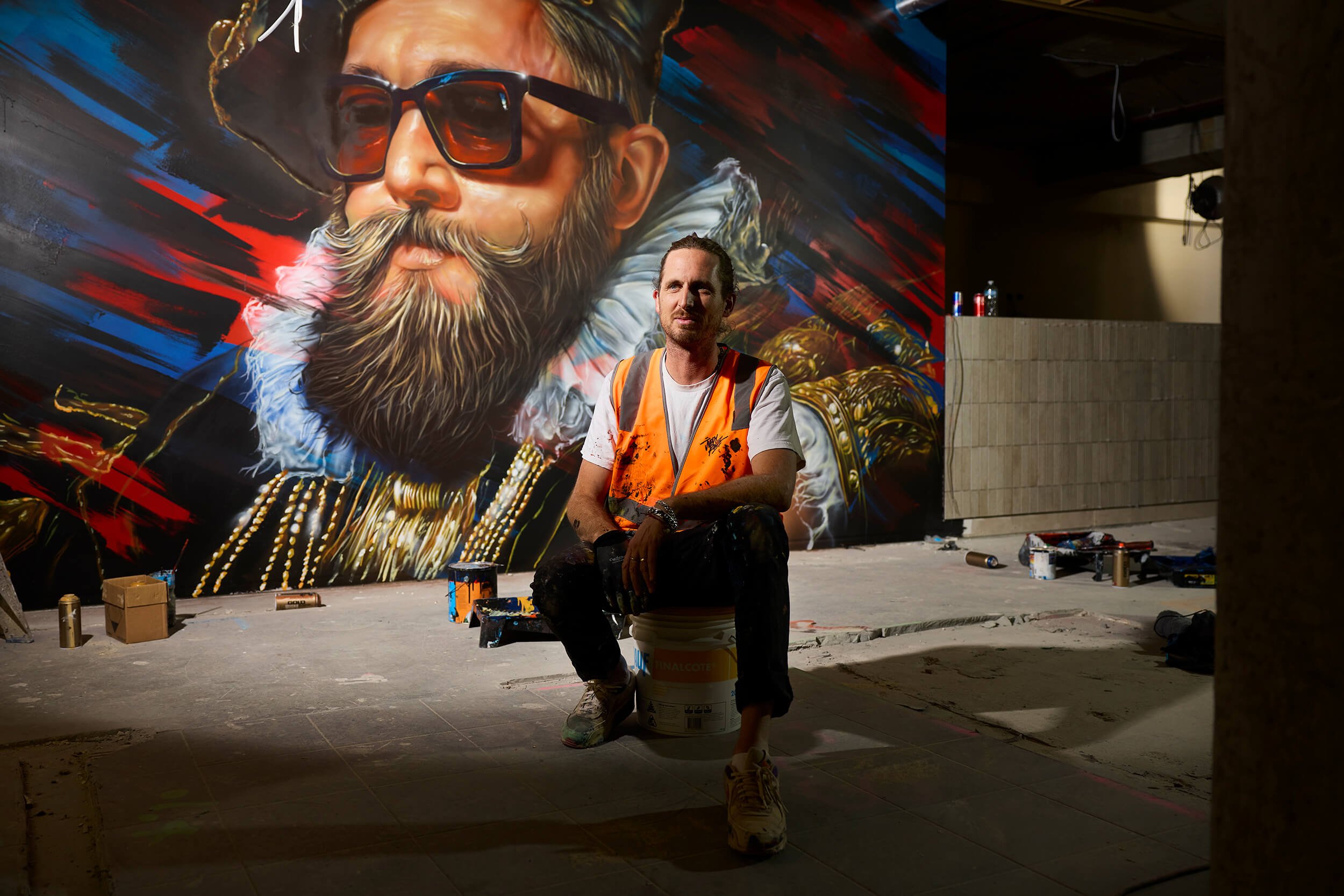
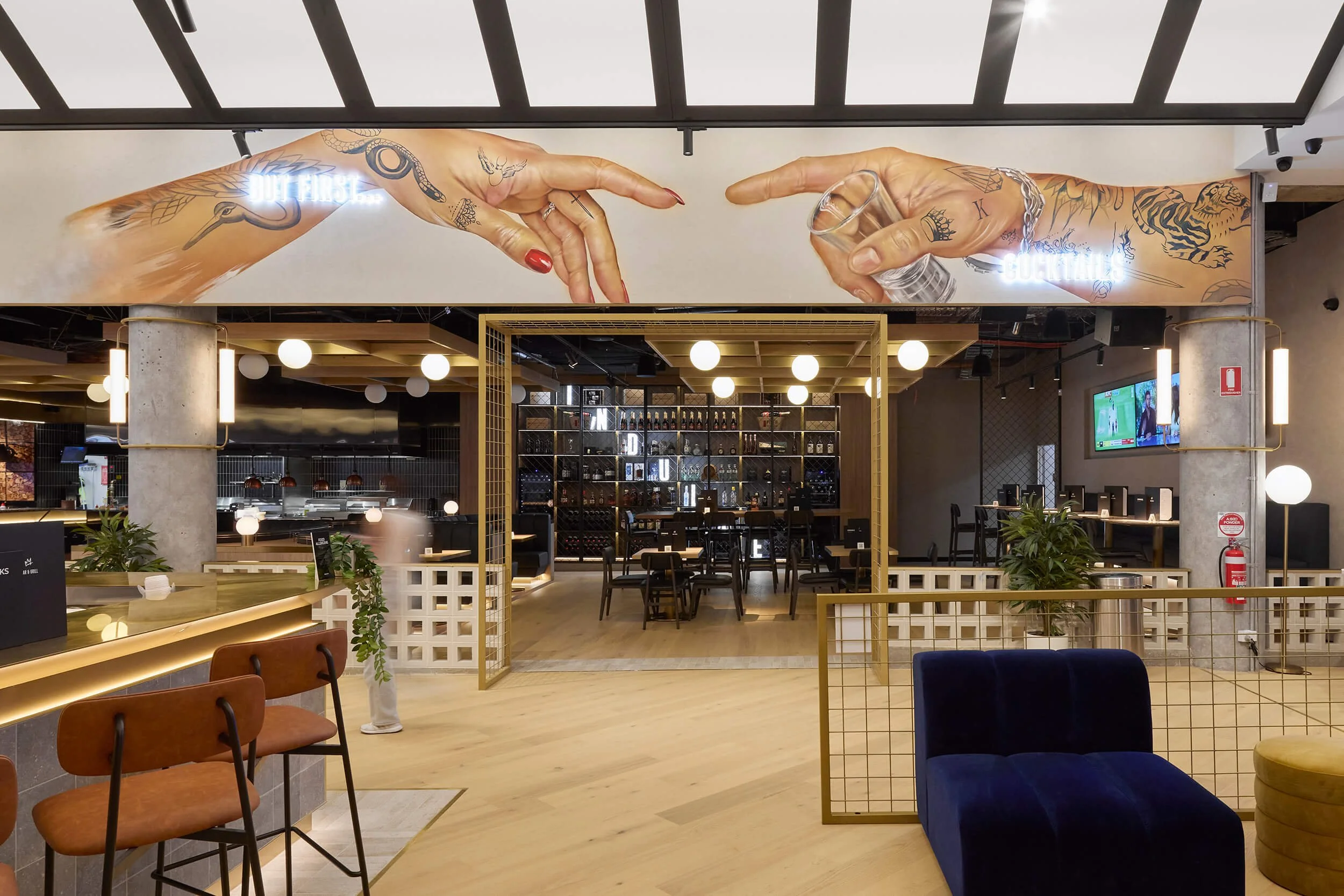
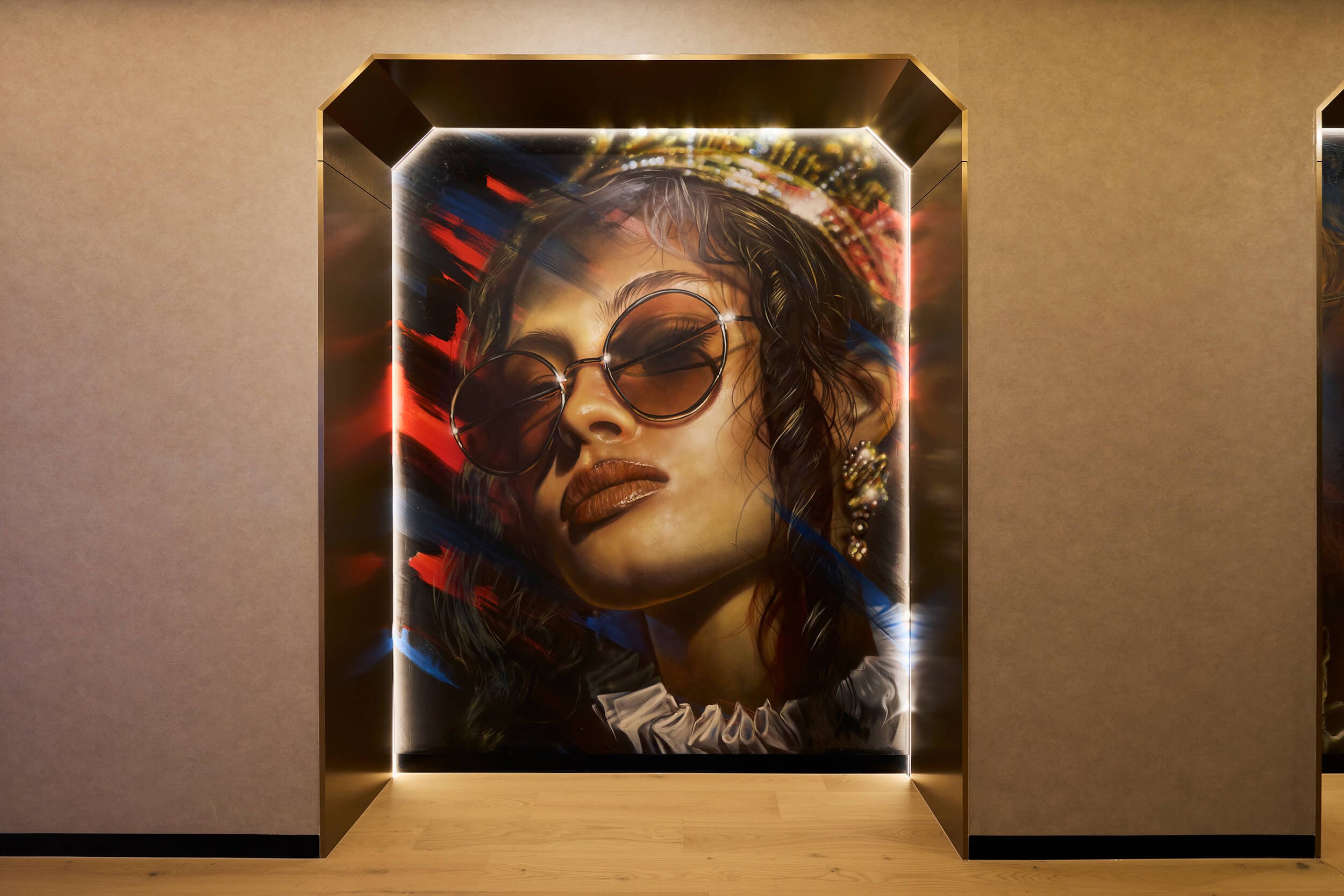
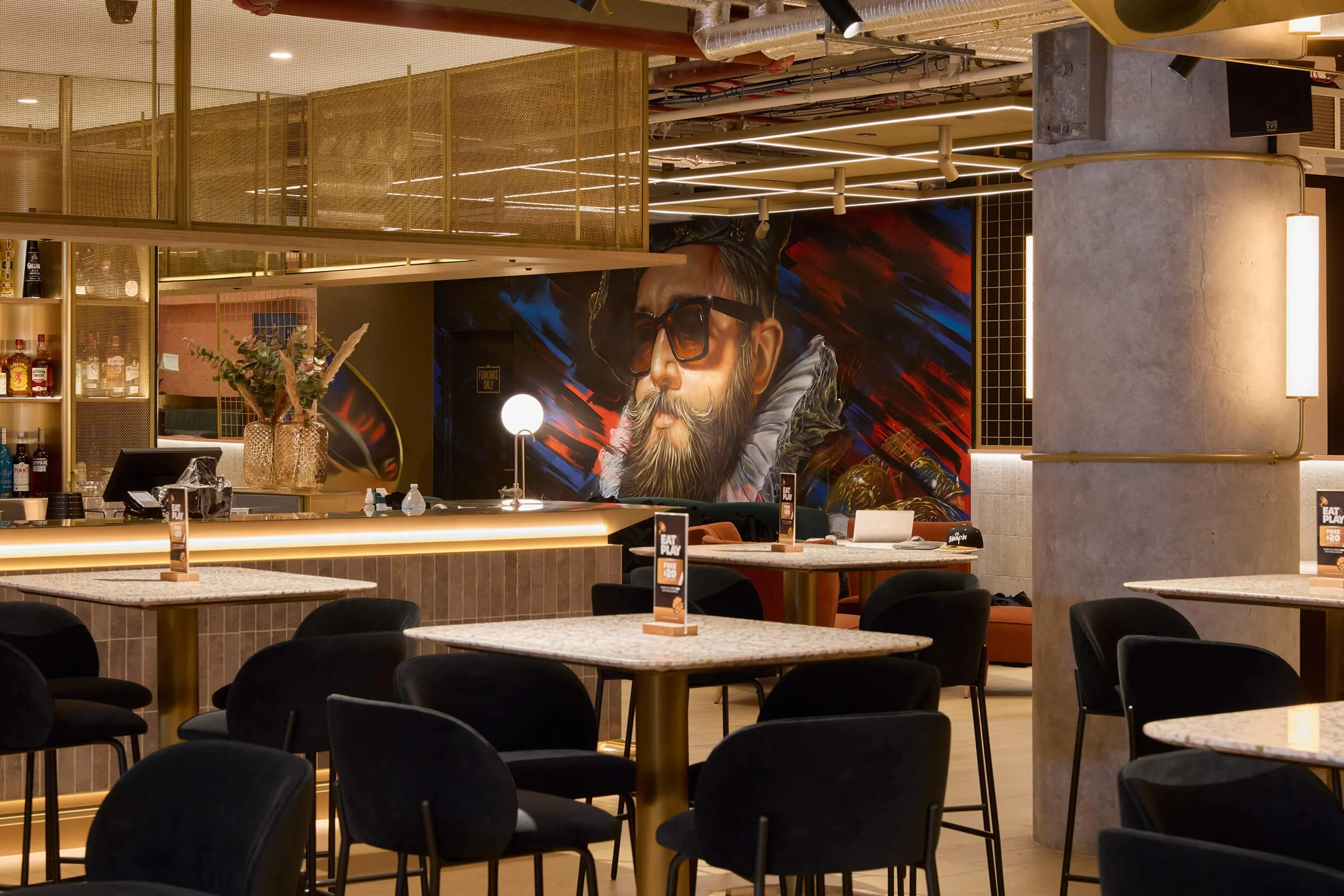
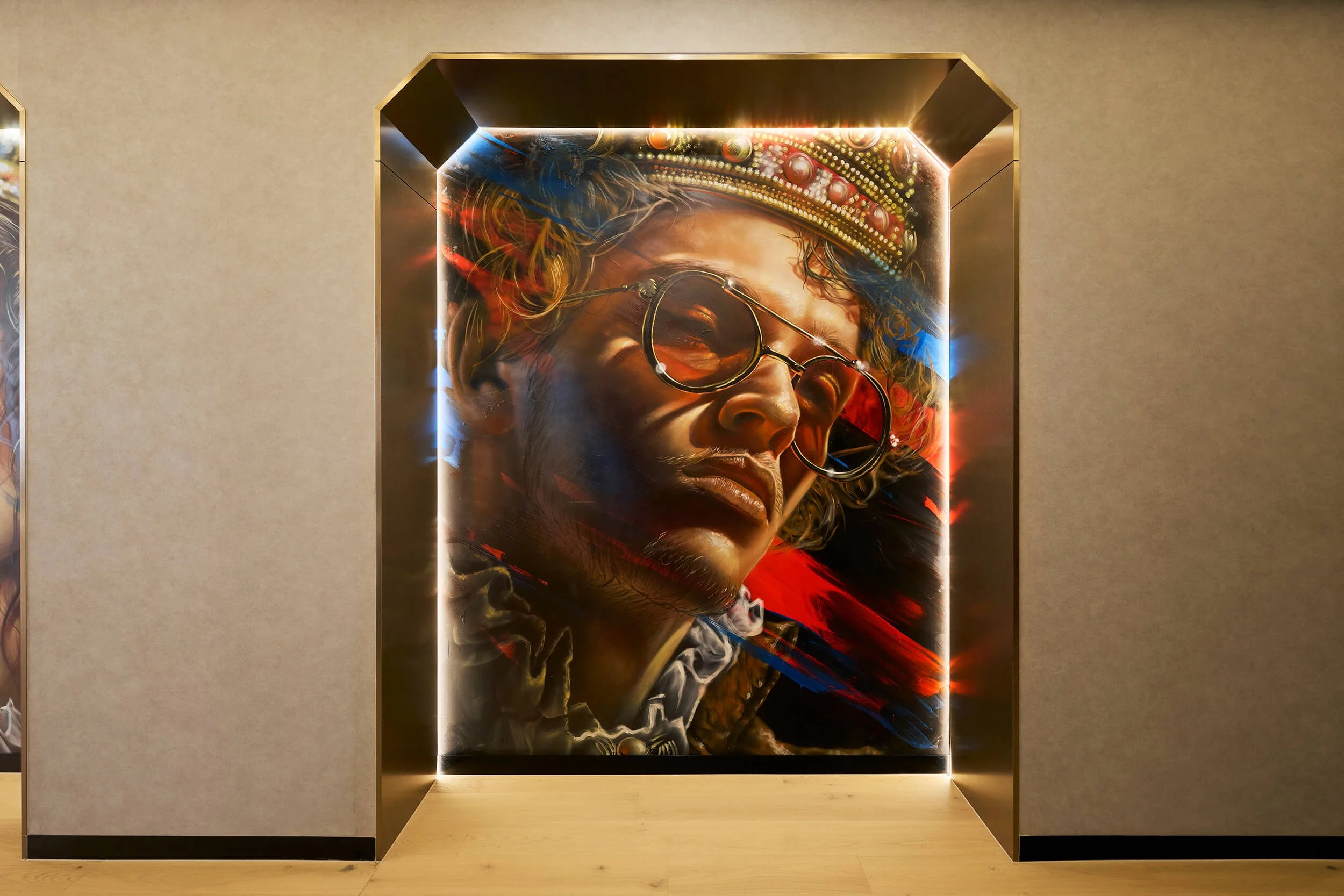
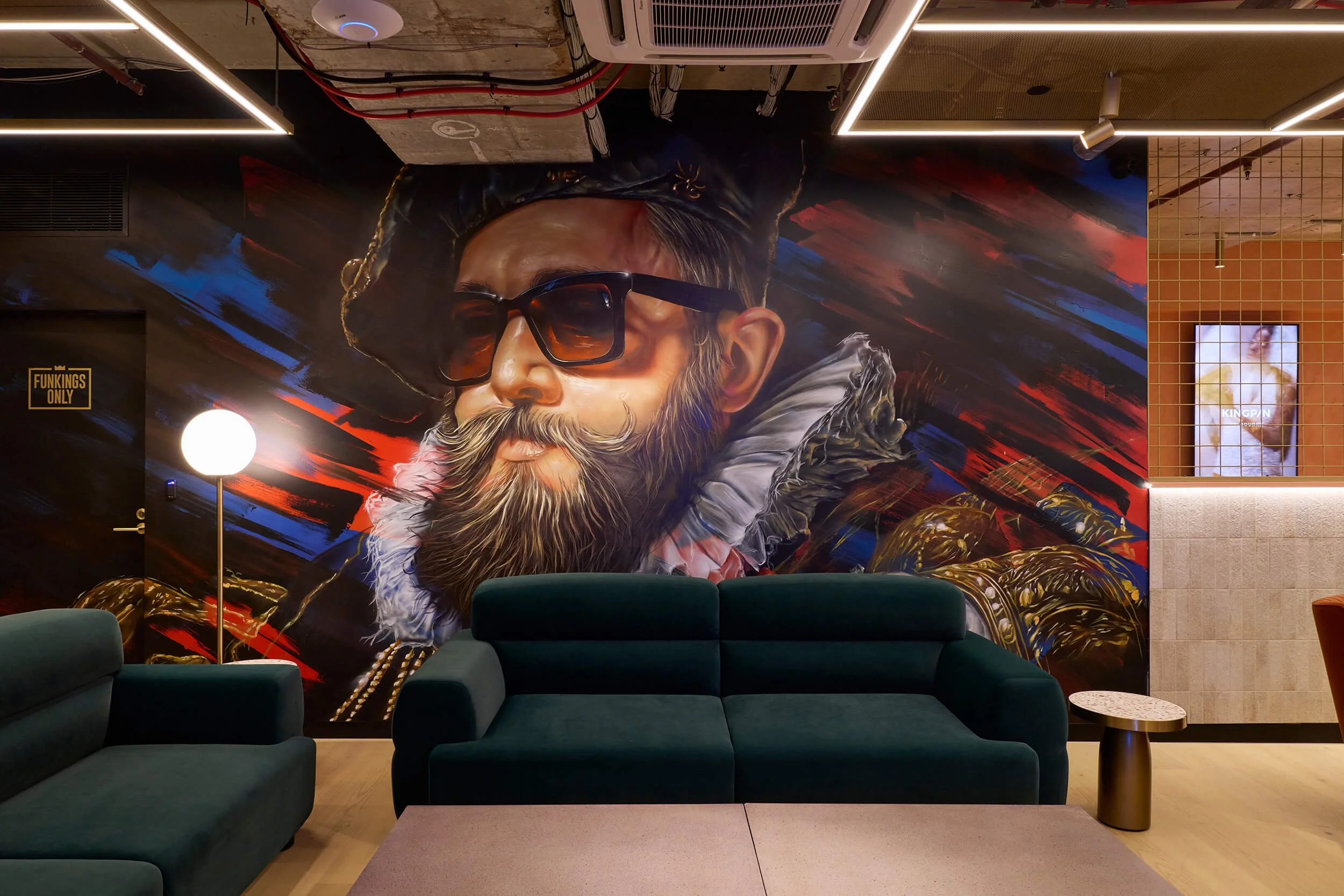
Adnate delivered five portraits that now anchor the space, both inside and out, in his signature realistic spray paint style. Each work carries a quiet intensity, inviting people to pause and connect with the individuals represented, rather than simply passing by. Together, the portraits create a sense of presence that grounds the entire project, adding depth and a more human quality to the industrial style build. One of them, a tribute to Dame Edna on Dame Edna Lane, remains visible to the public 24/7 and is offered by the Kingpin team as a gesture to the city. Positioned within a typical Melbourne Laneway, the piece has quickly become a point of curiosity and pride, drawing both locals and visitors into an unexpected cultural moment that extends beyond the venue itself.
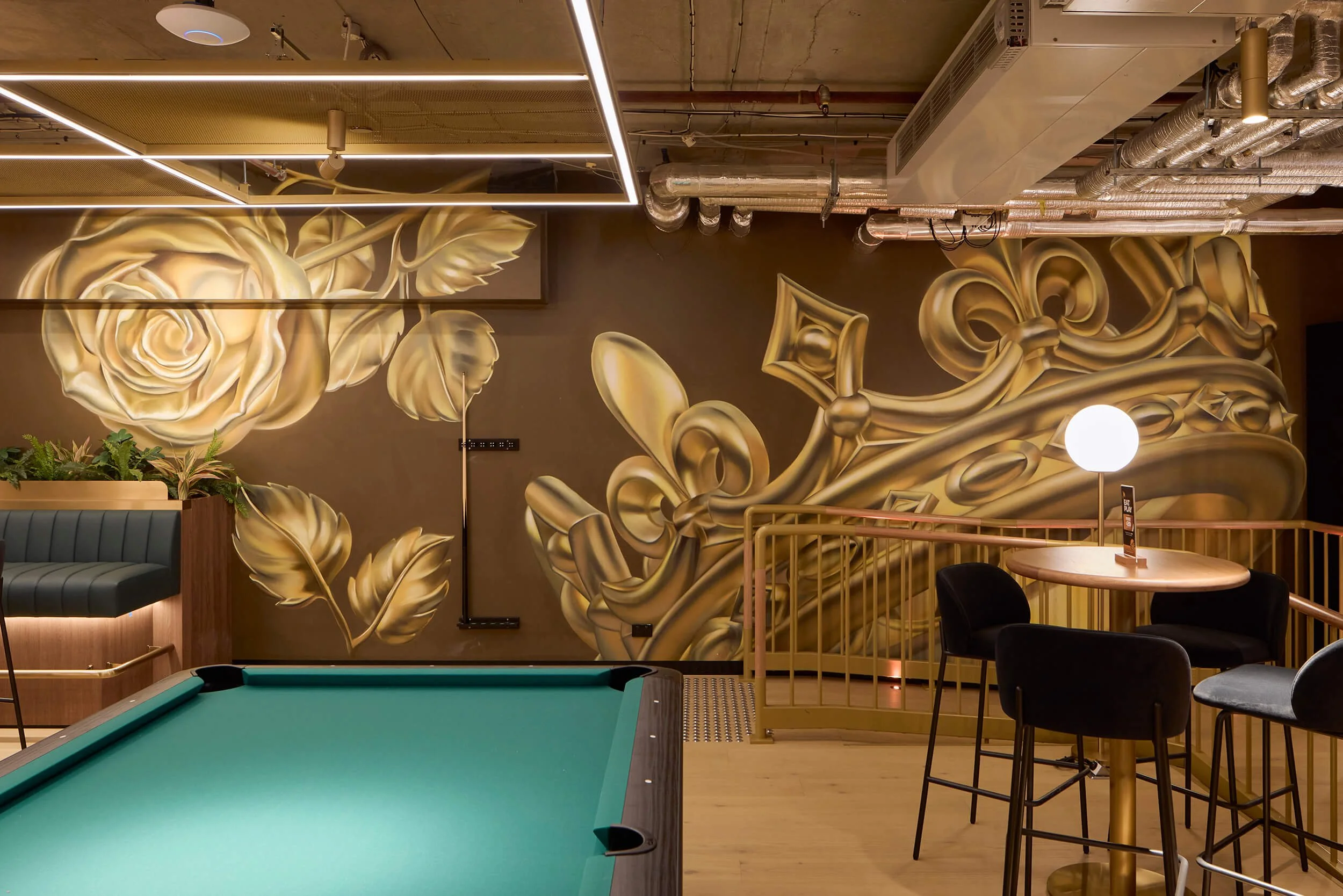
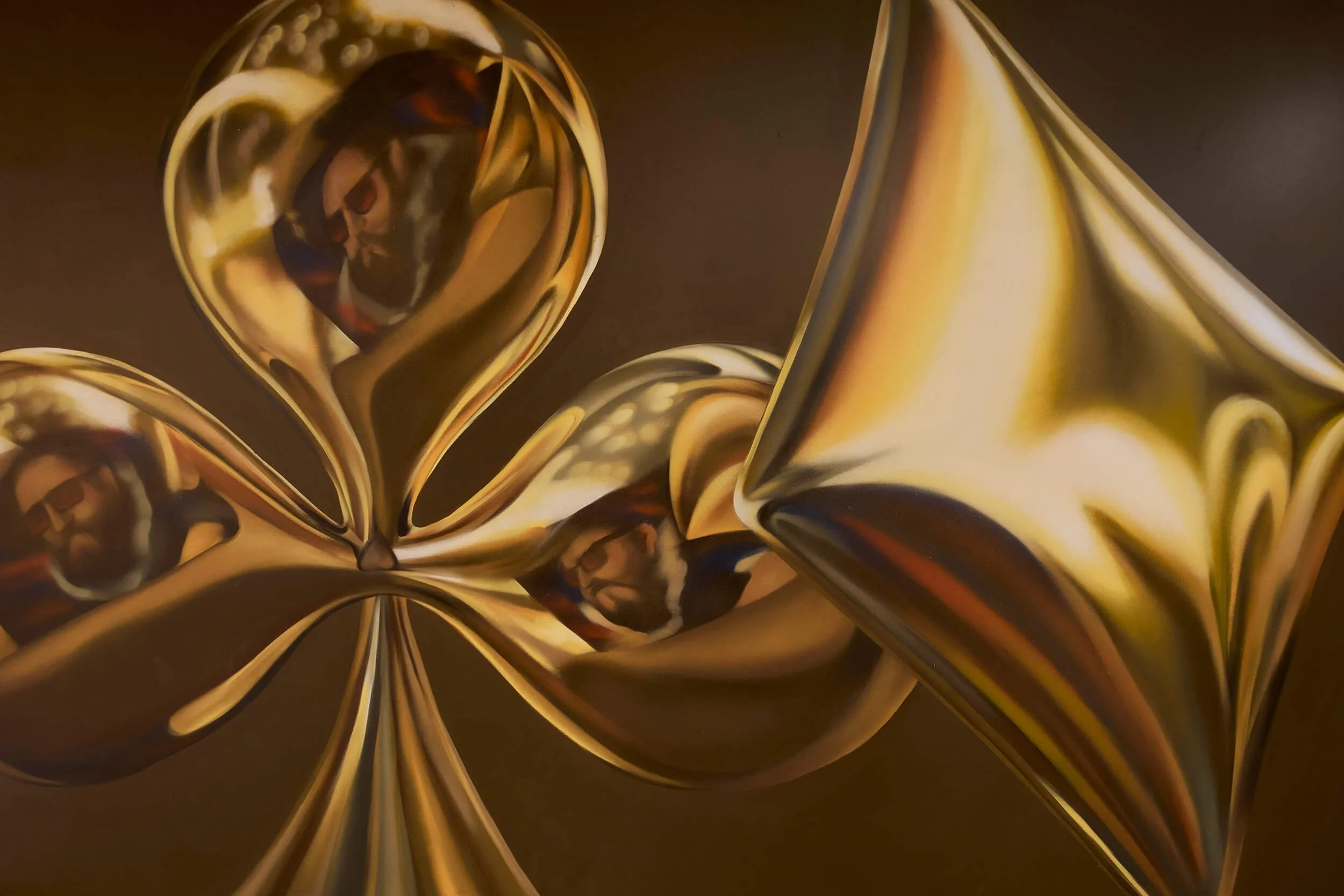
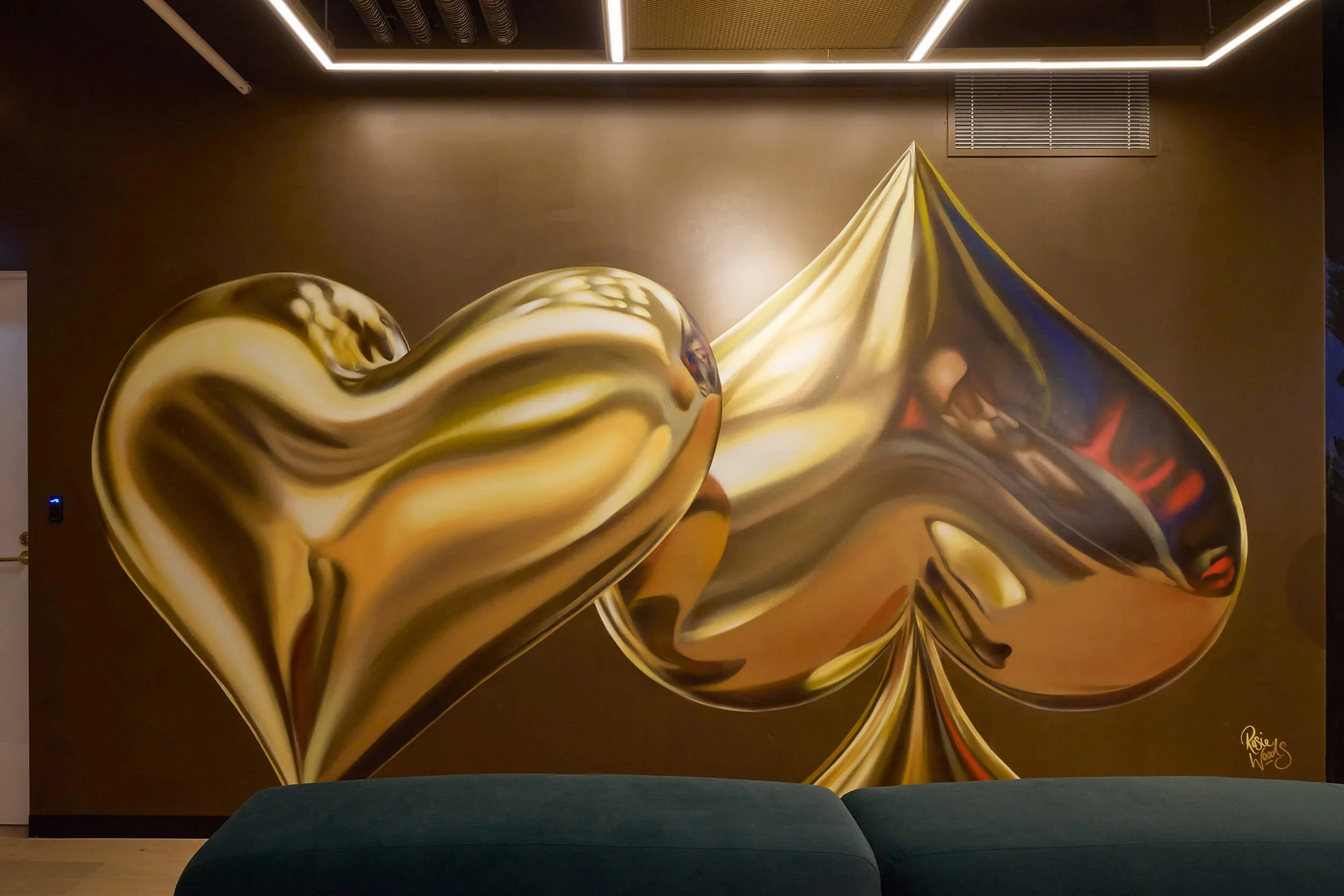

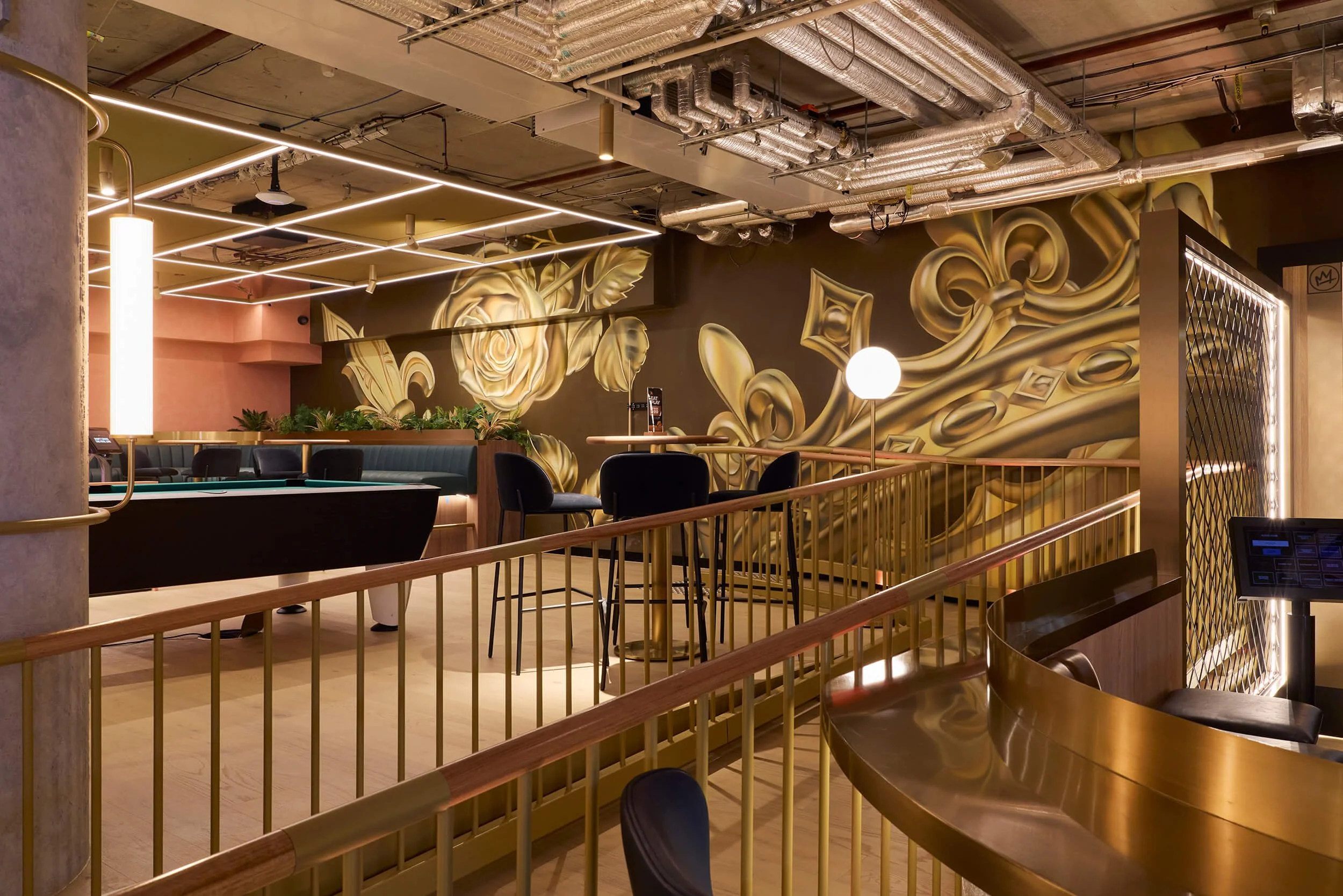
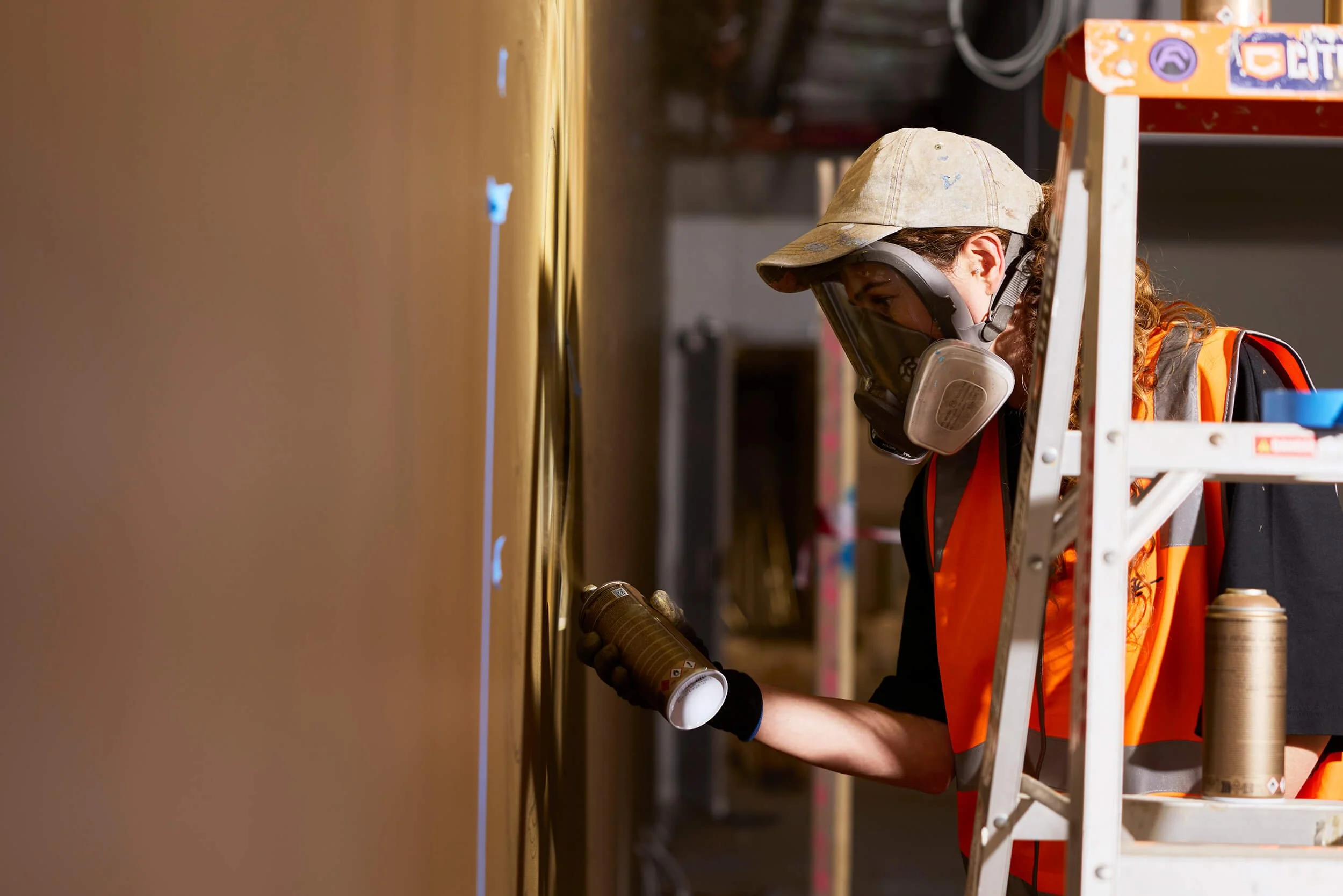
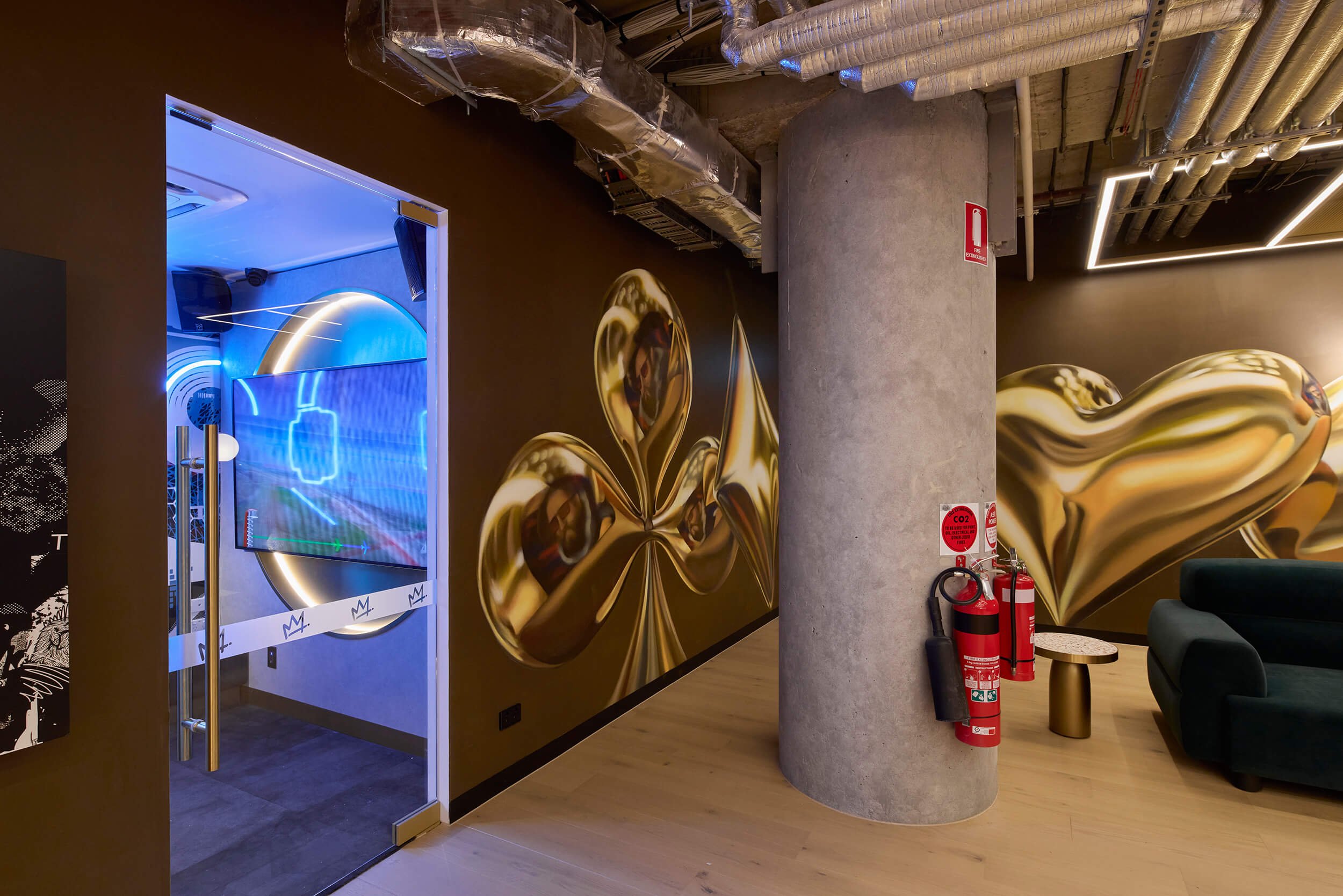
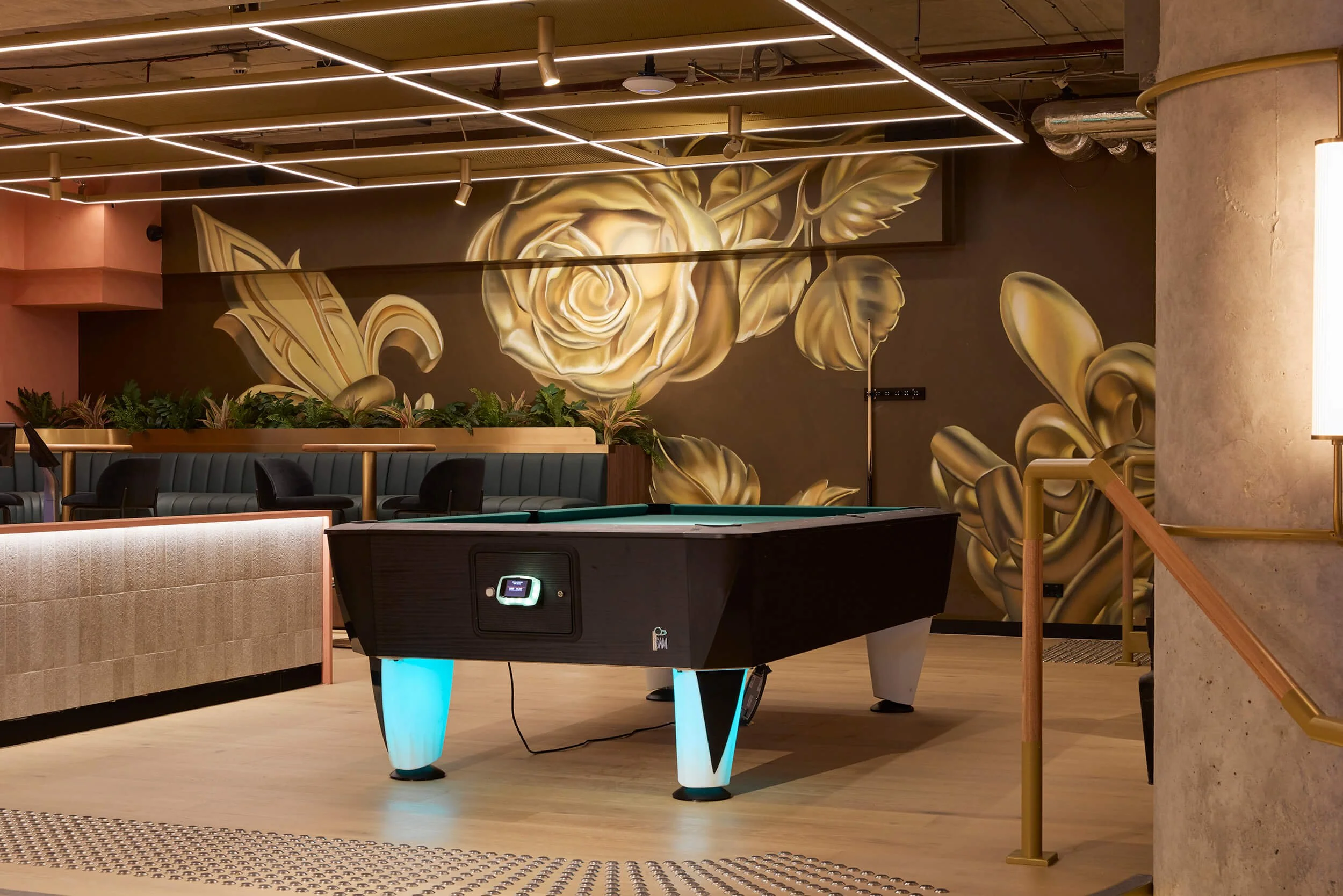
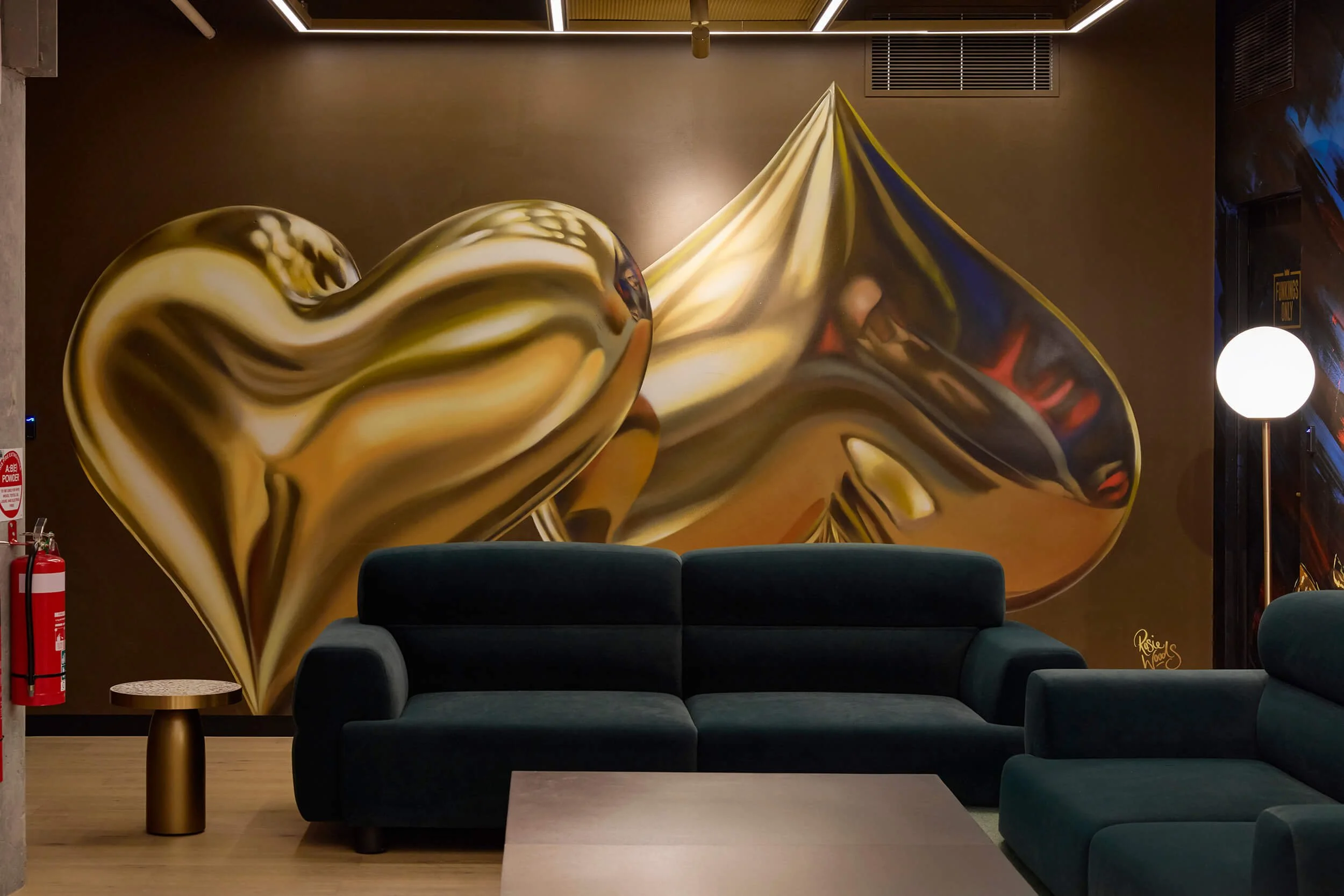
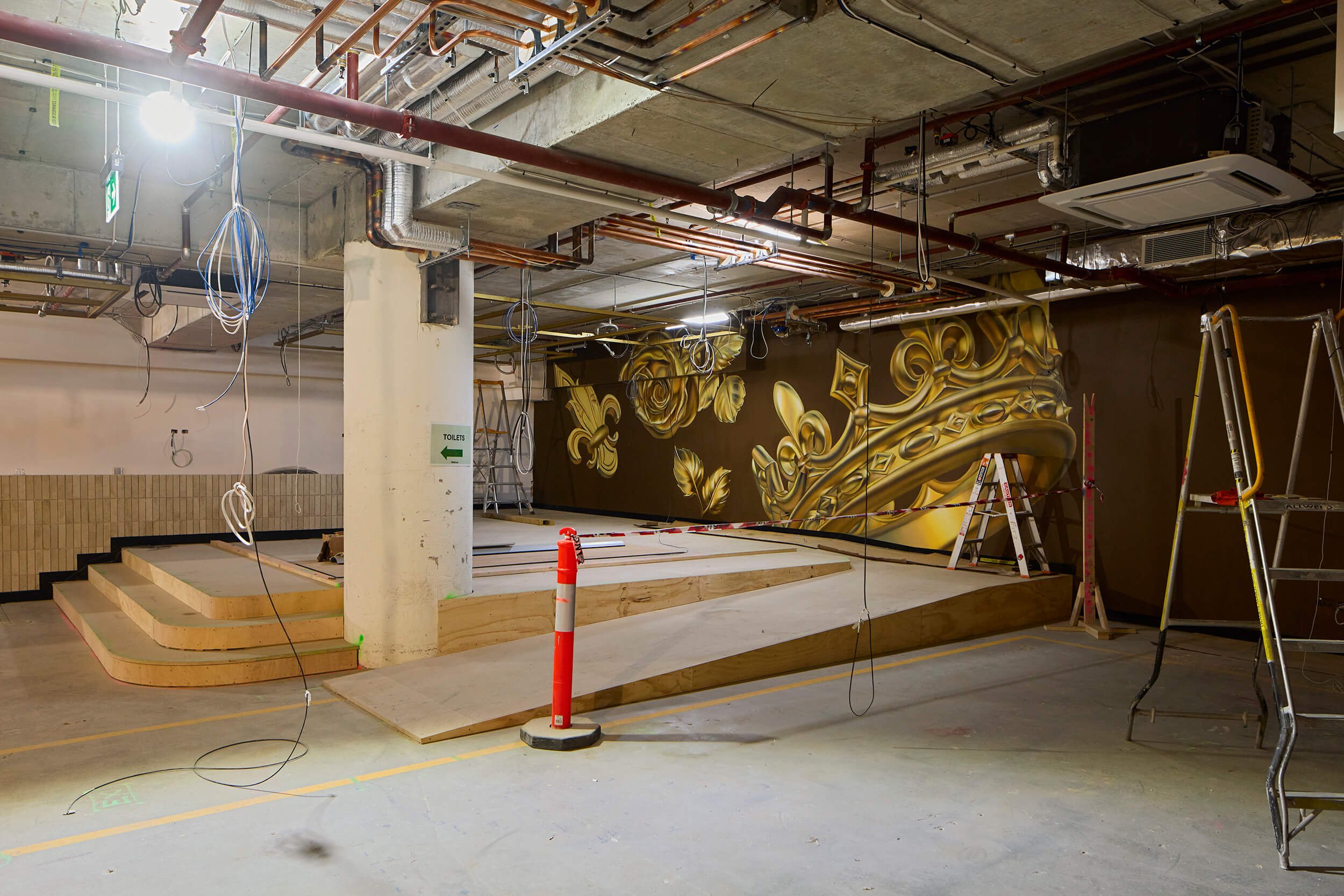
Rosie Woods brought her signature 3D gold rendering to the project, translating the Kingpin world into something sculptural, luminous, and regal. Rosie is one of the most exciting artists in the country right now. She cut her teeth on the streets of London but now calls Australia home, and our scene is stronger for it. Her work carries a serious pedigree, including expansive murals across Meta’s California offices, reflected in the confidence and technical rigor of her practice.
What elevated her pieces even further was how Rosie blended subtle reflections of Adnate’s portraits into her gold forms, refracted and distorted within the metallic surfaces, creating a quiet visual dialogue that tied the room together.
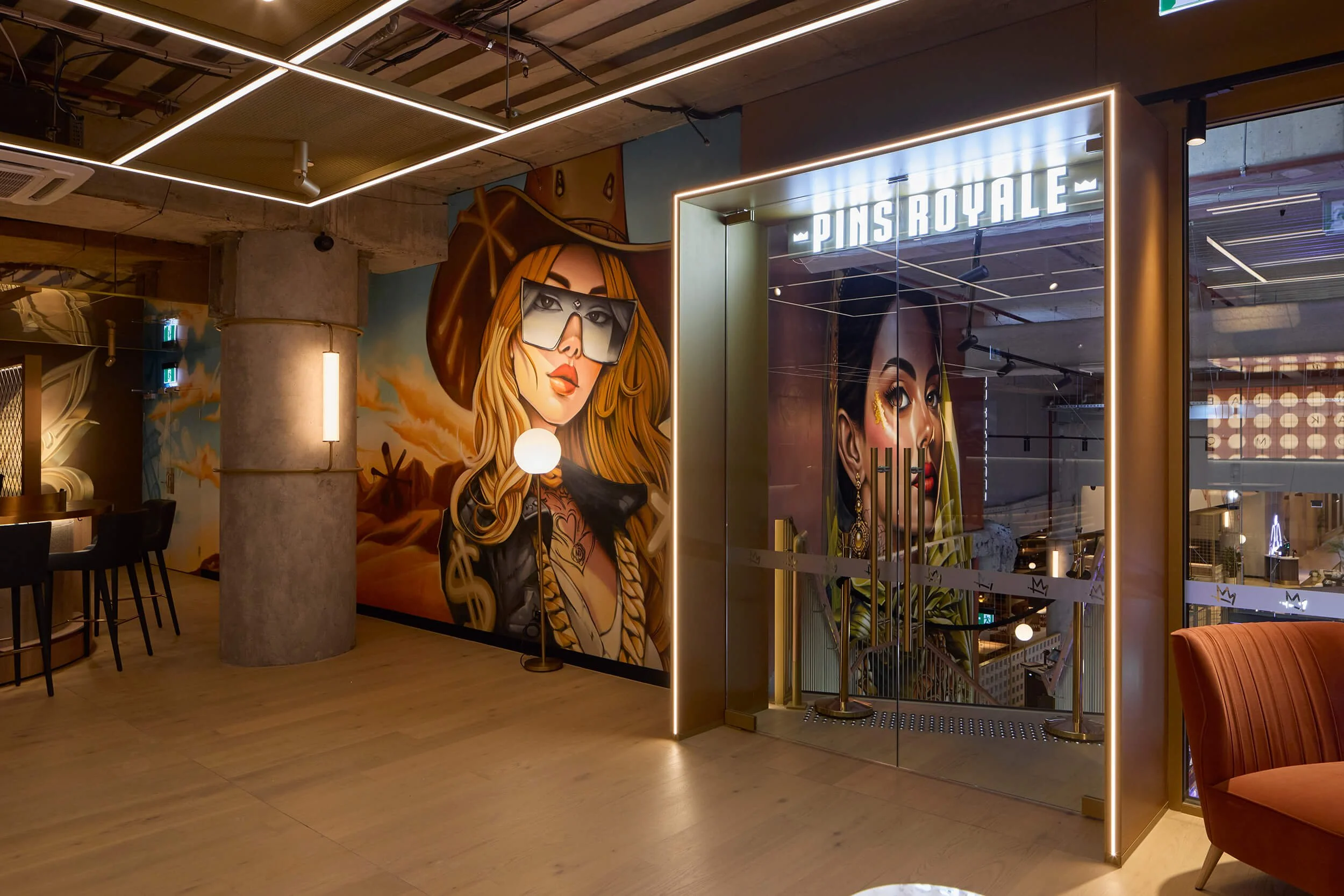
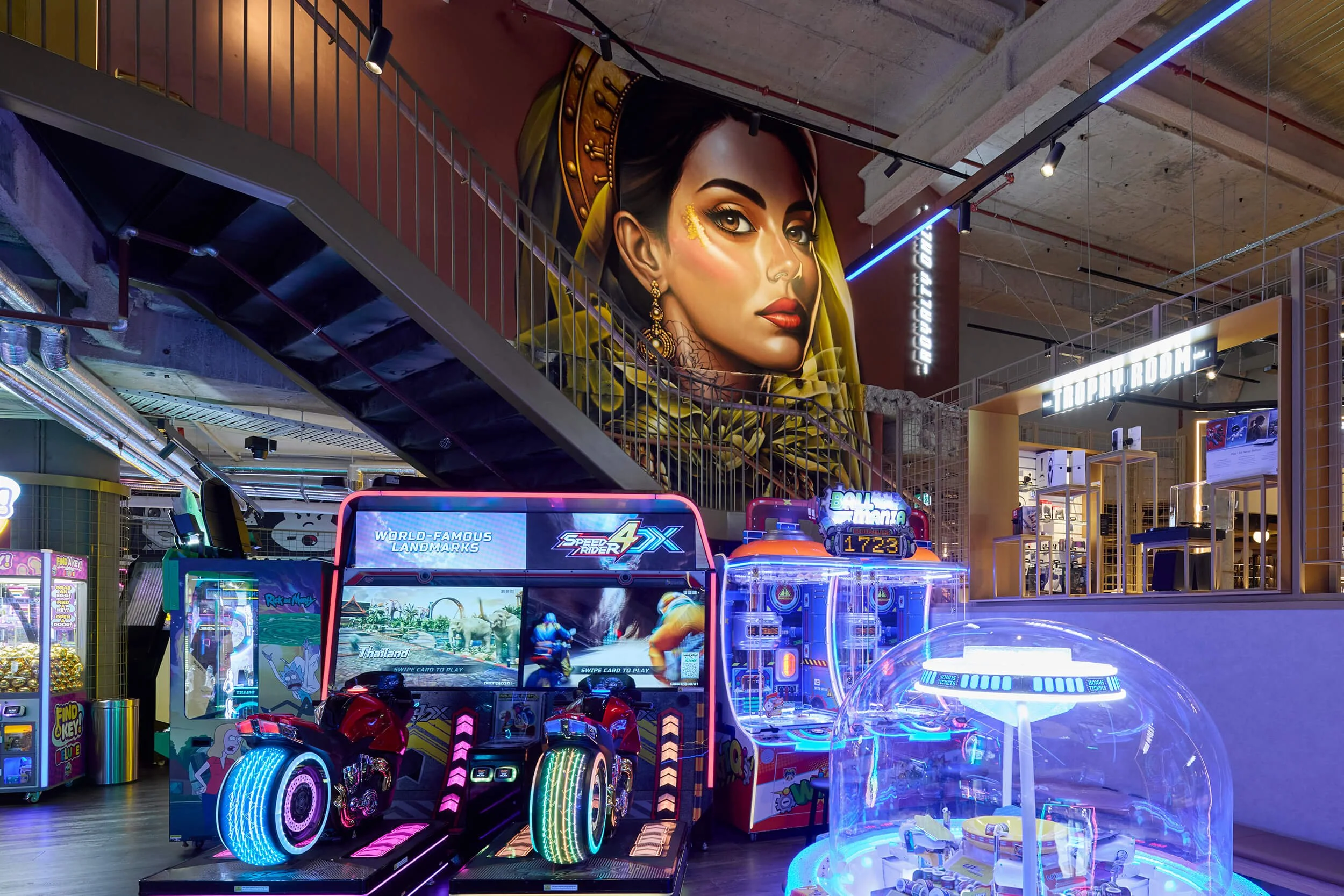
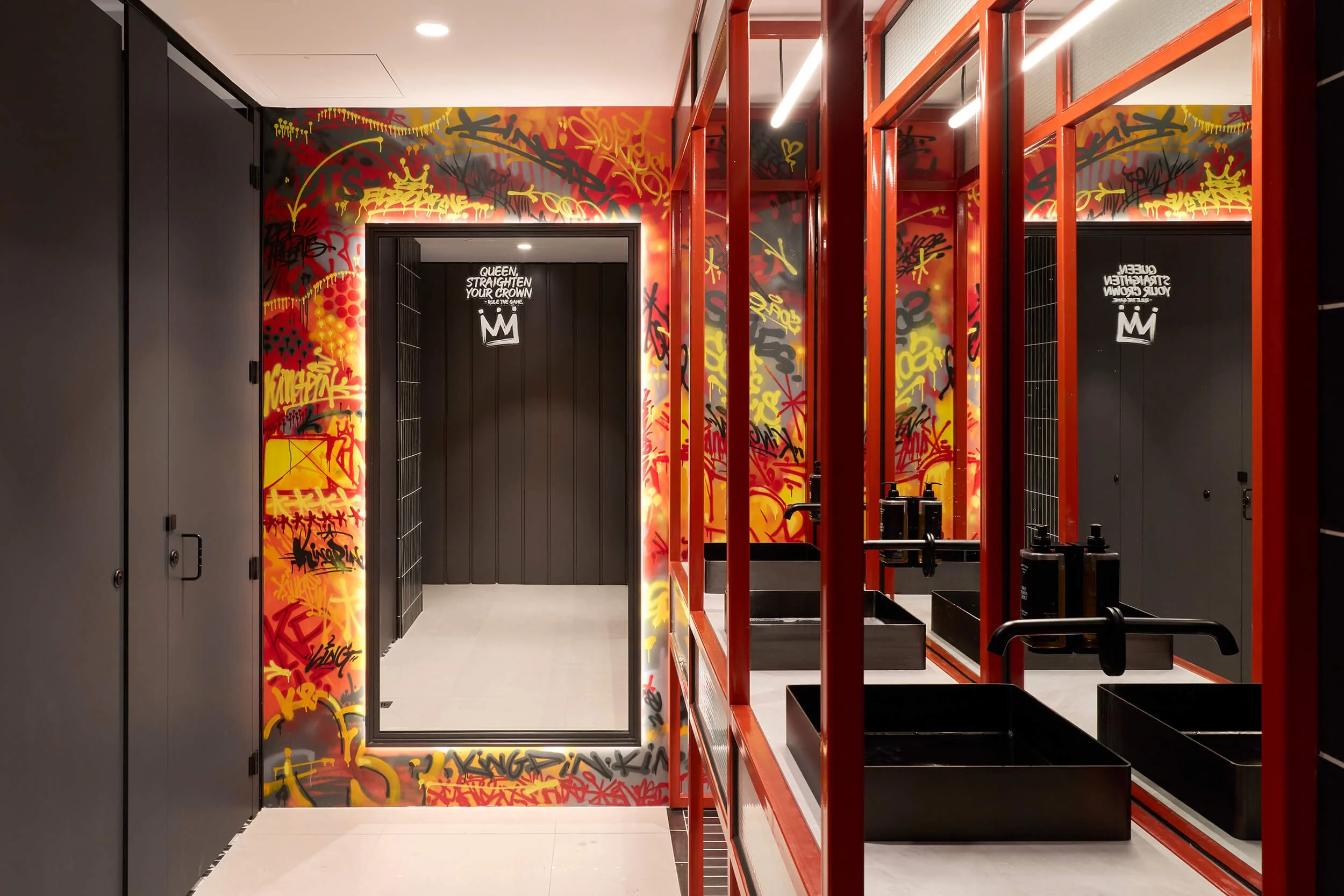
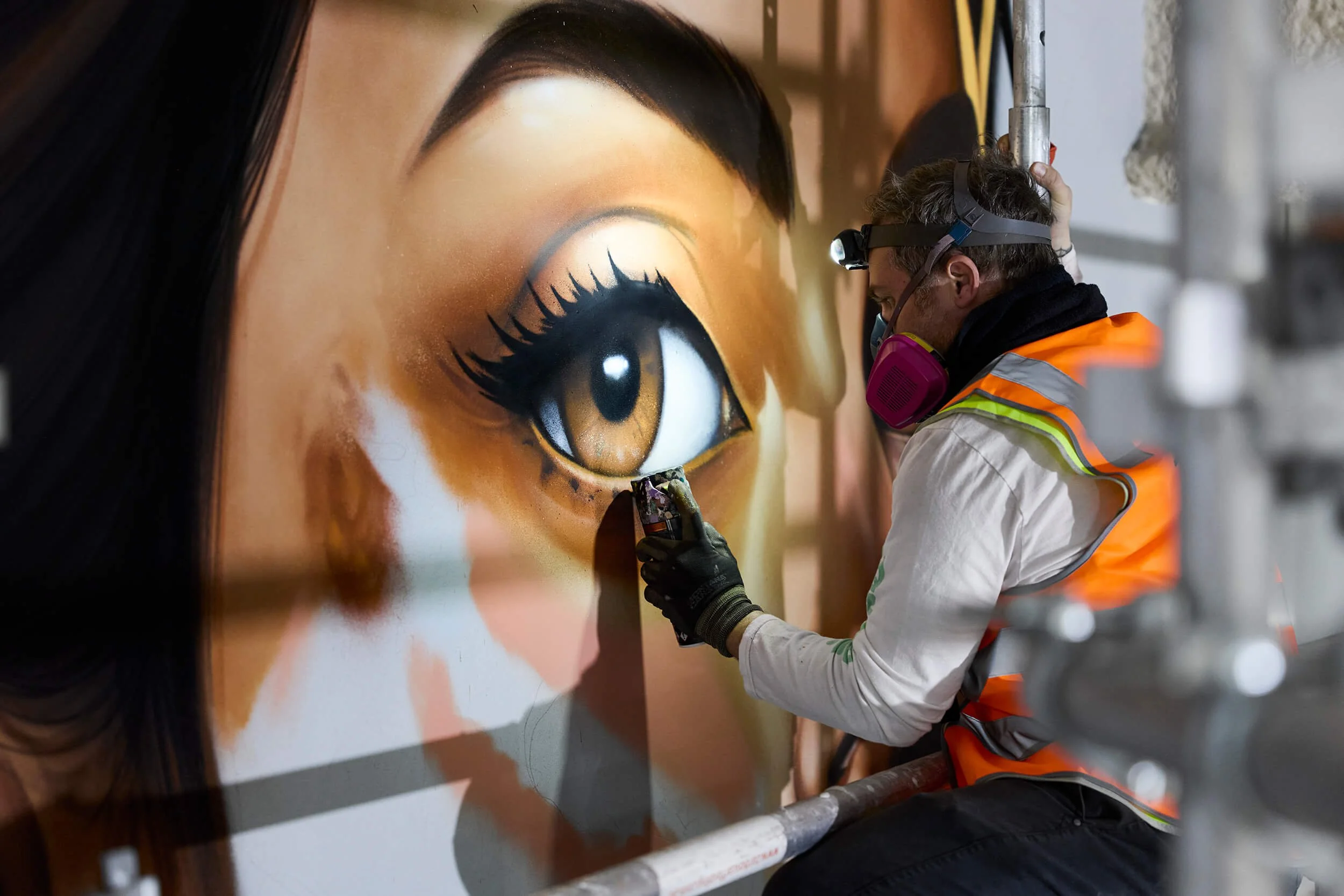
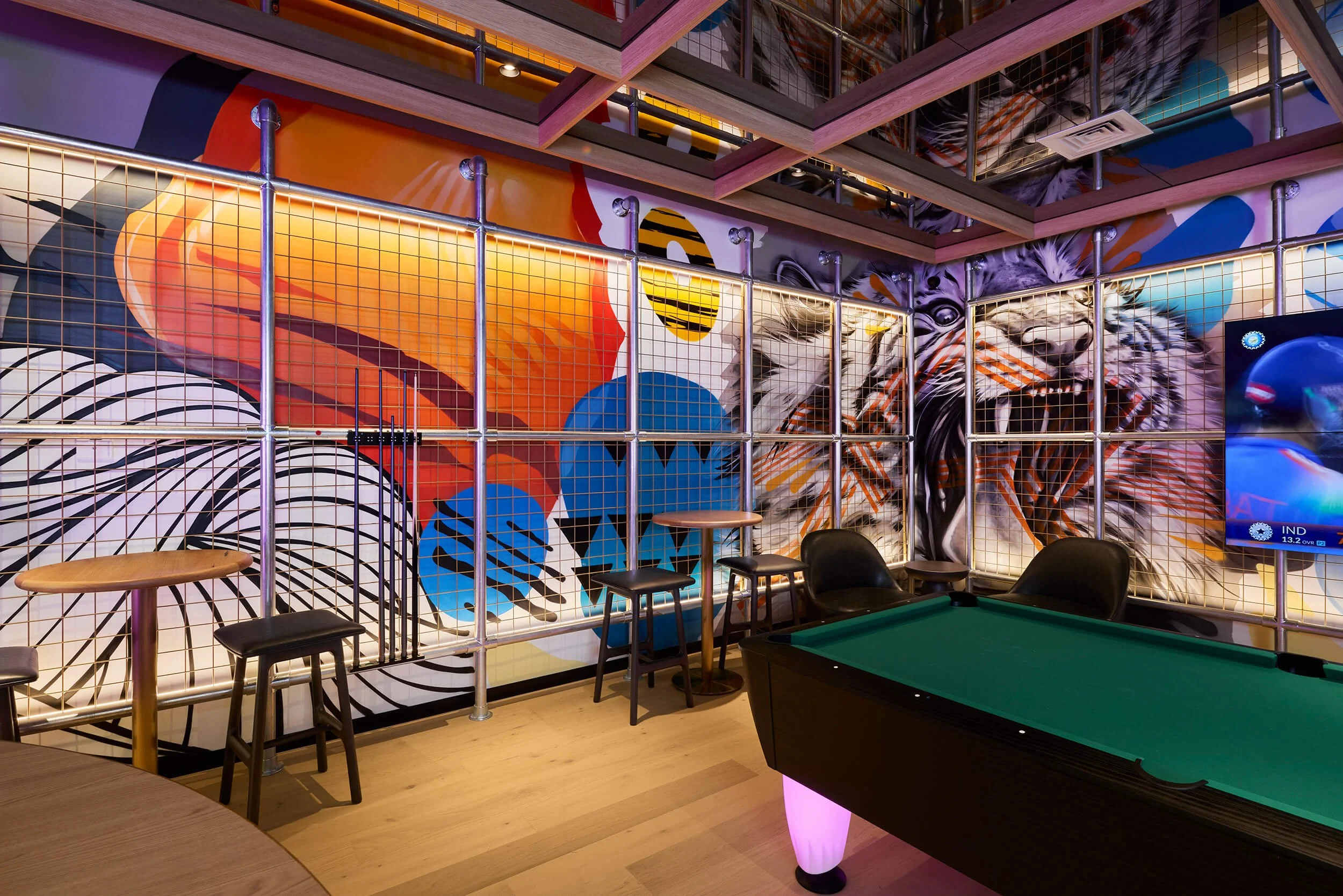
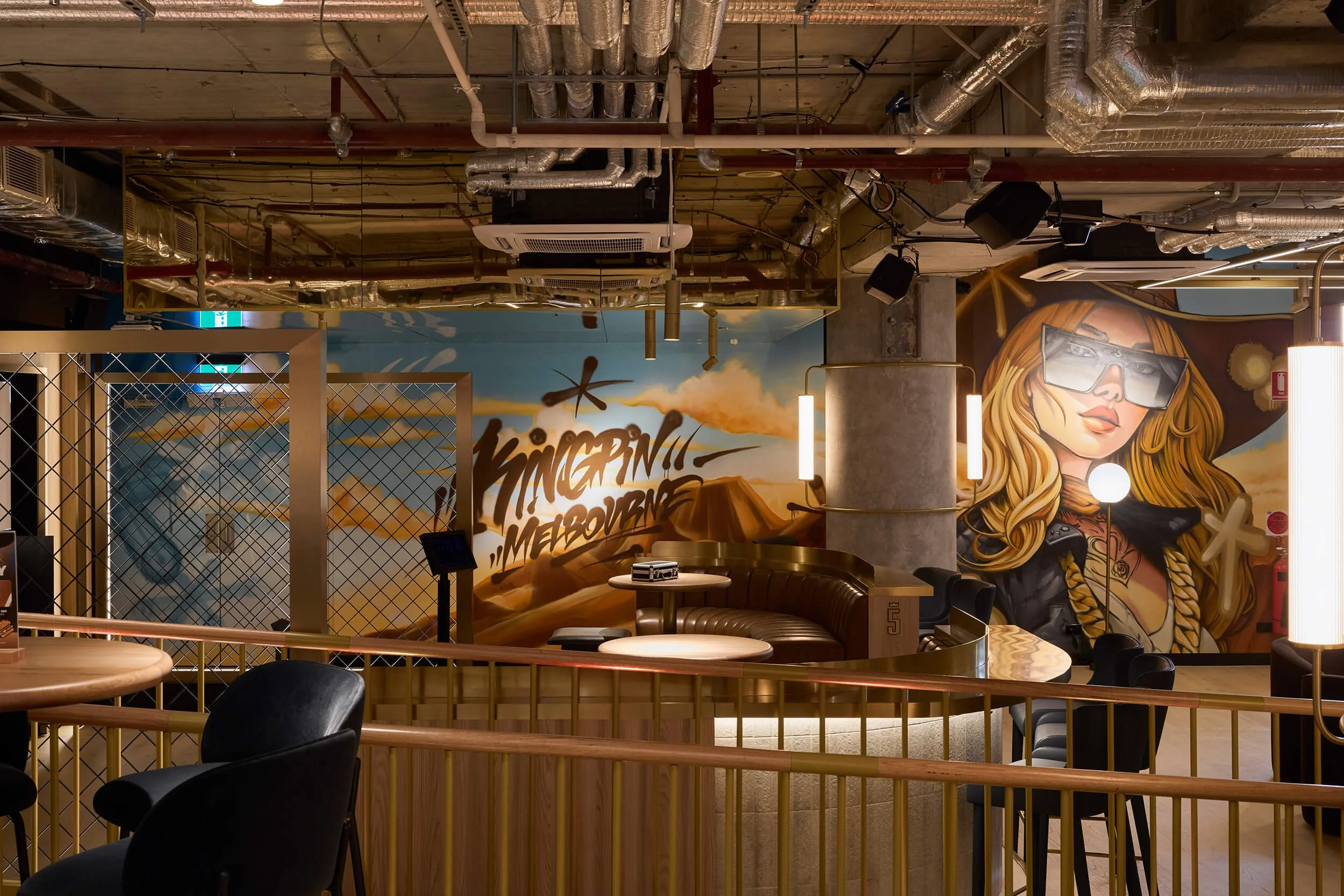
Sofles' major contribution (among other works throughout the building) is the venue’s centrepiece: a graffiti-inspired princess, spanning the height of the two-story basement, with detailed neck tattoos and bling fit only for a queen… or, in this case, a street-savvy princess. The work commands the space. Raw, technically brilliant, and unmistakably Sofles, it acts as a visual spine through the venue.
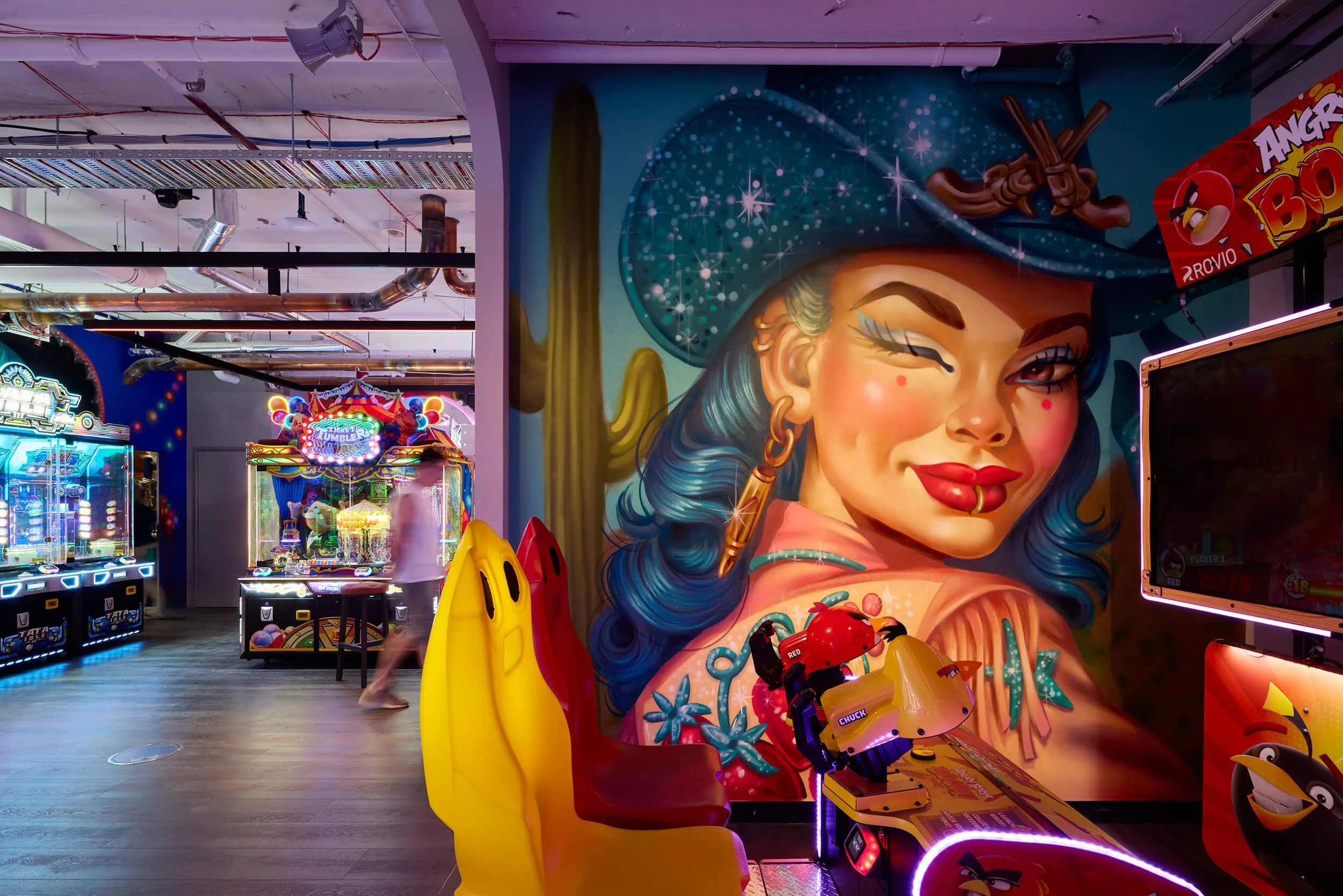
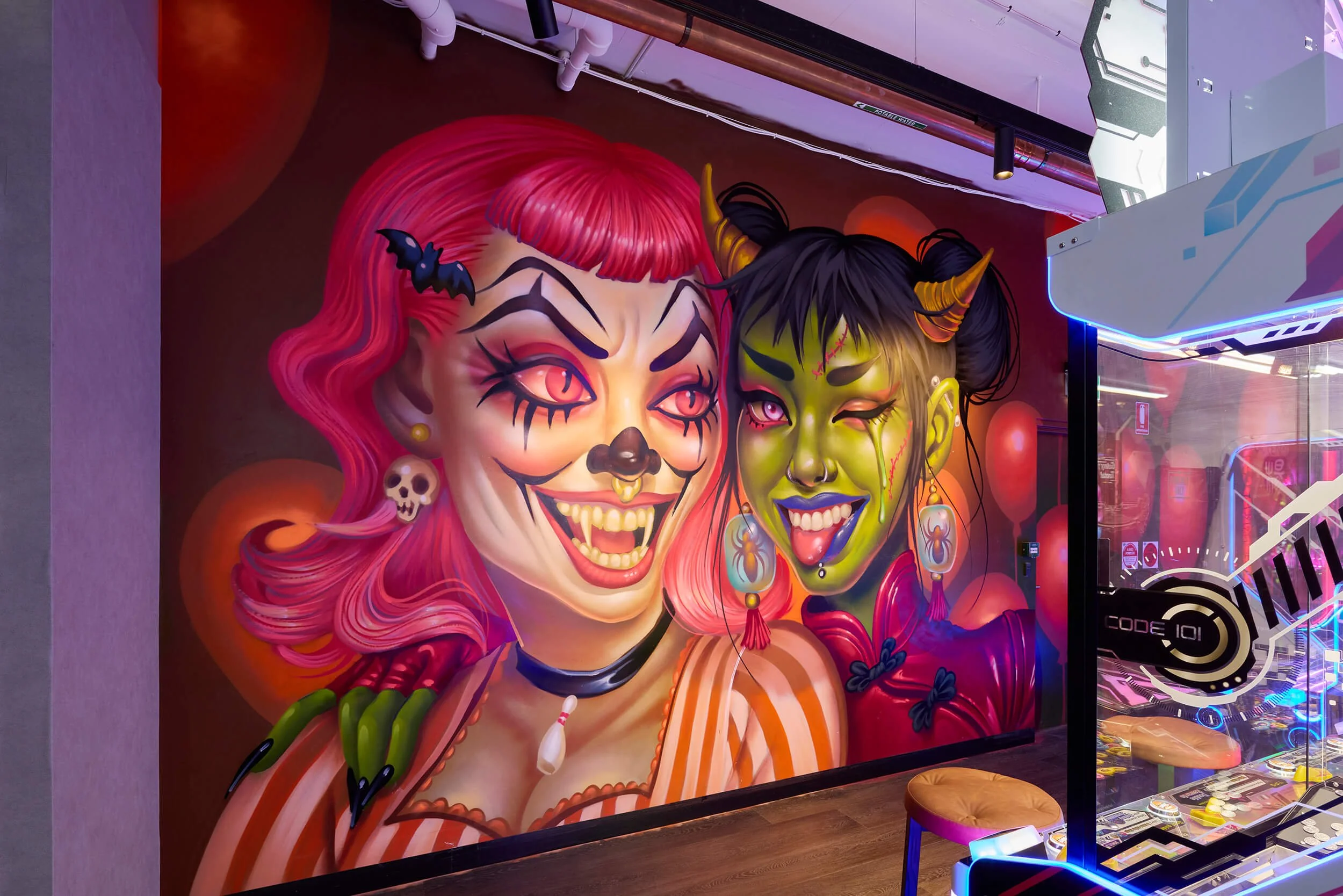
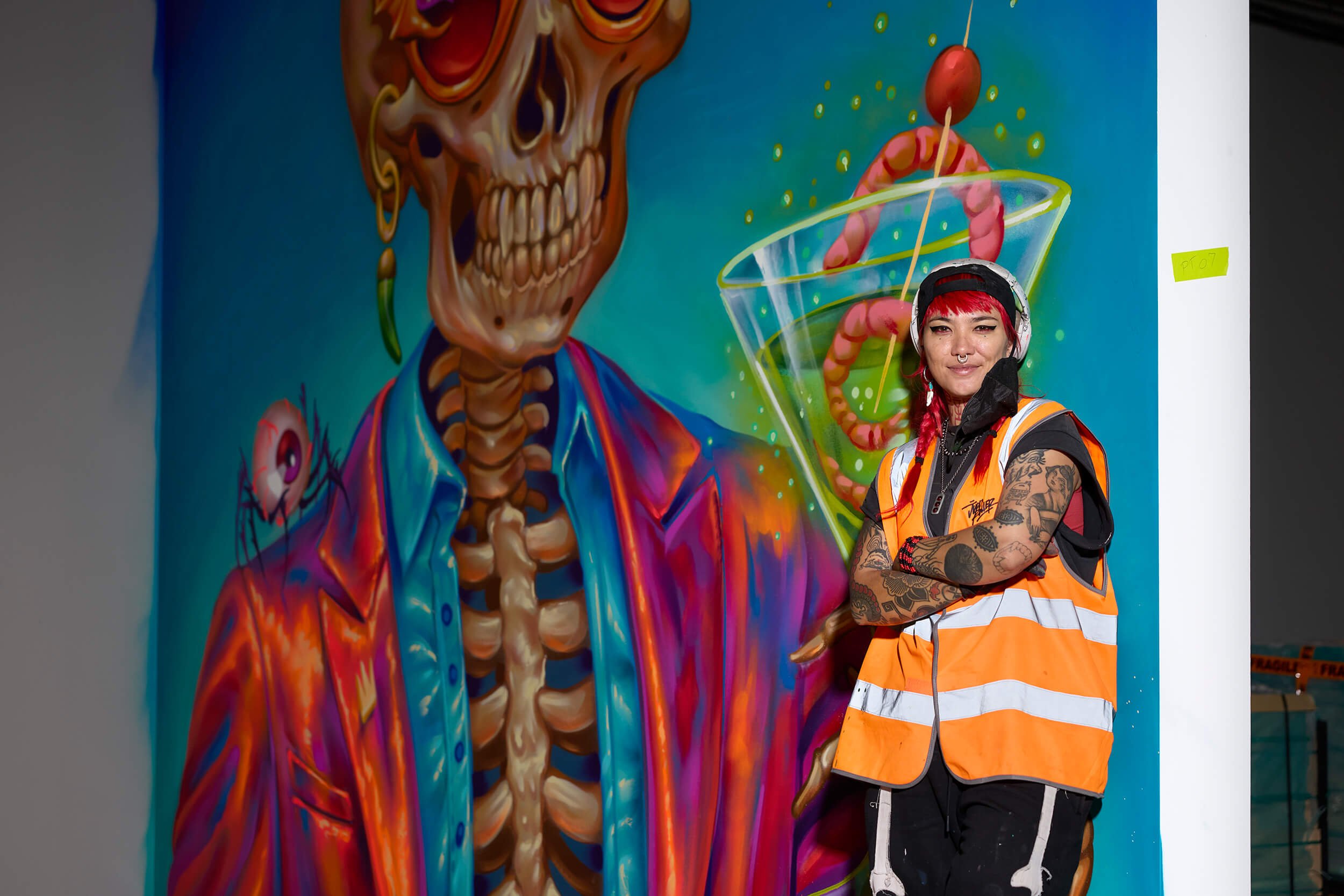
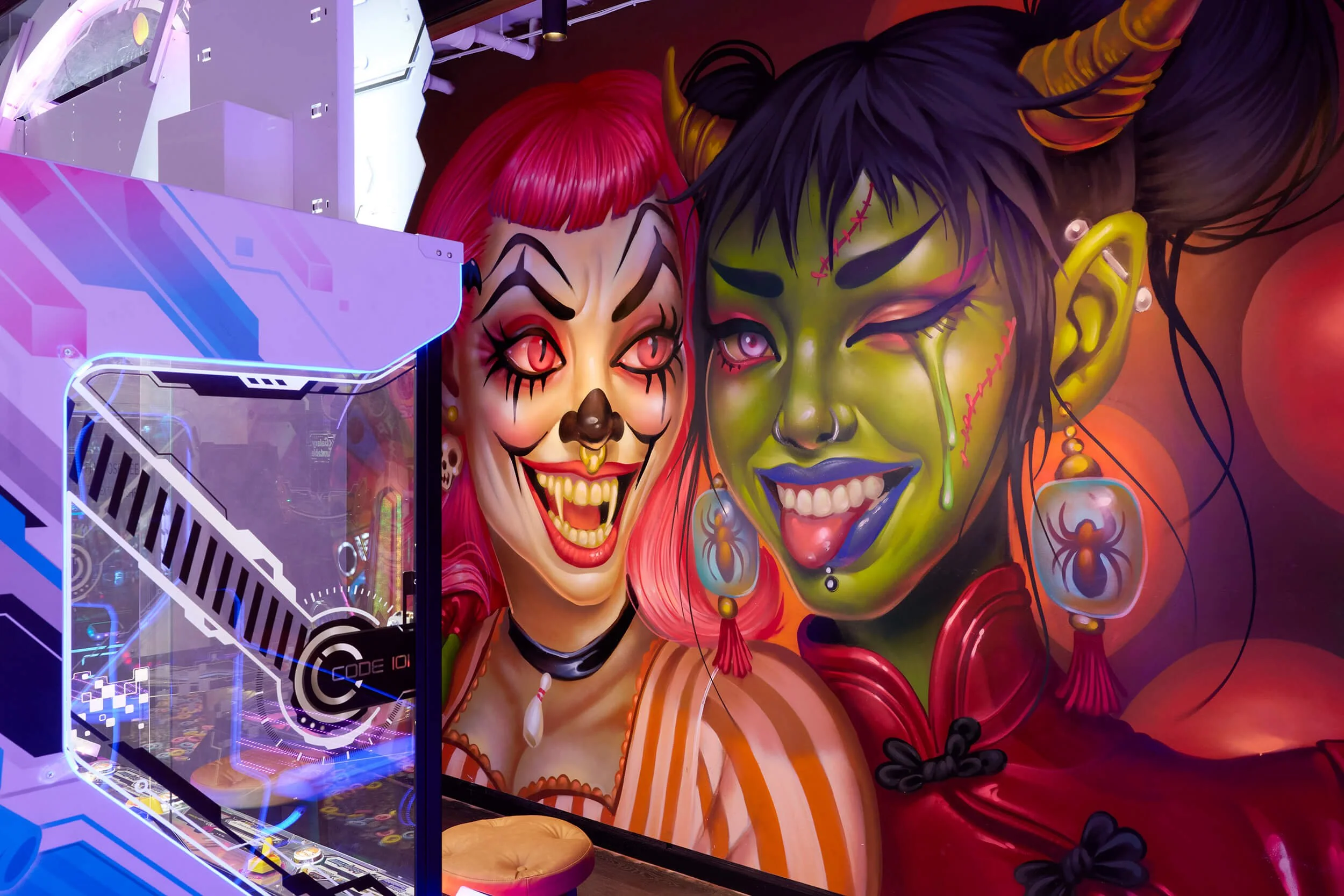
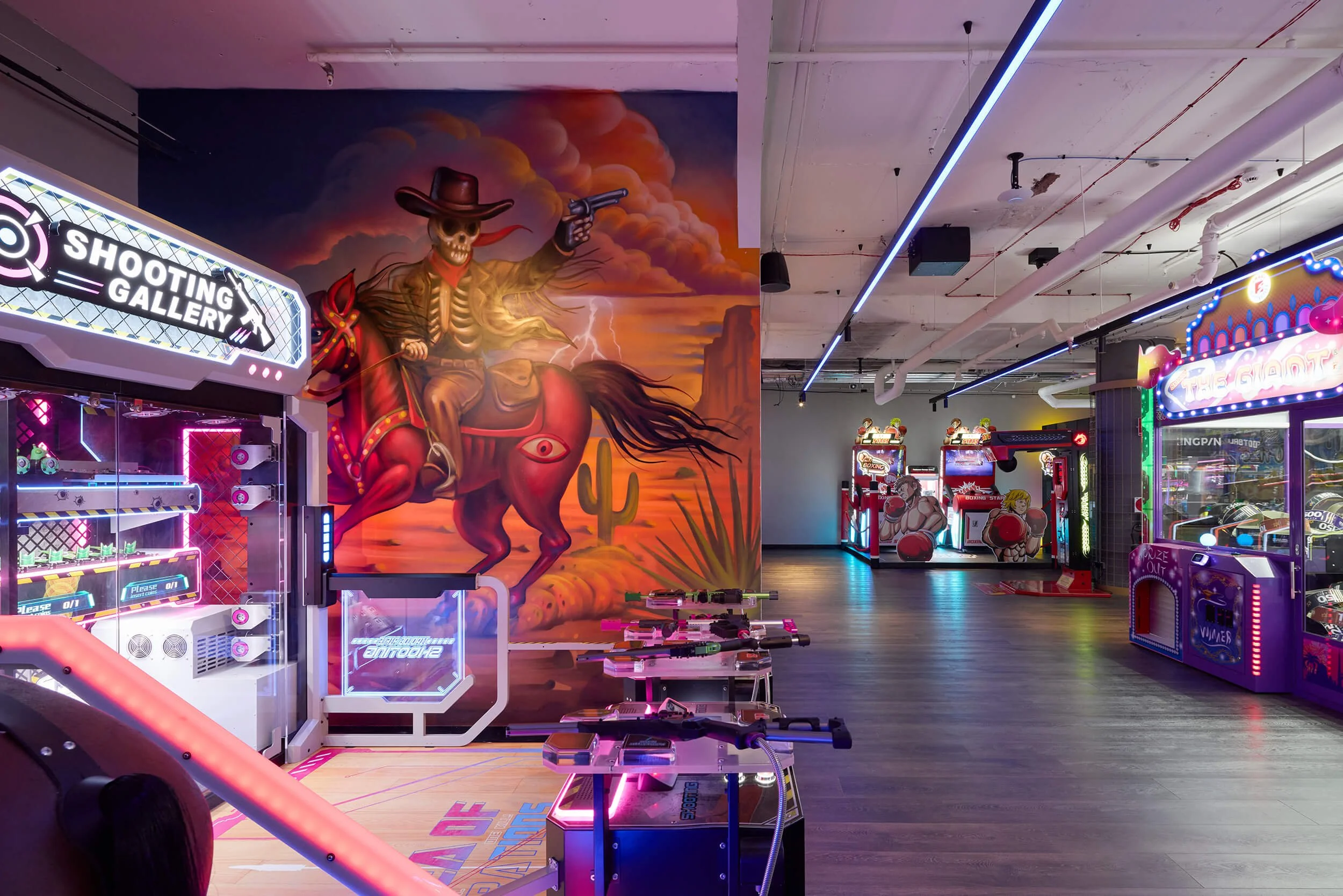
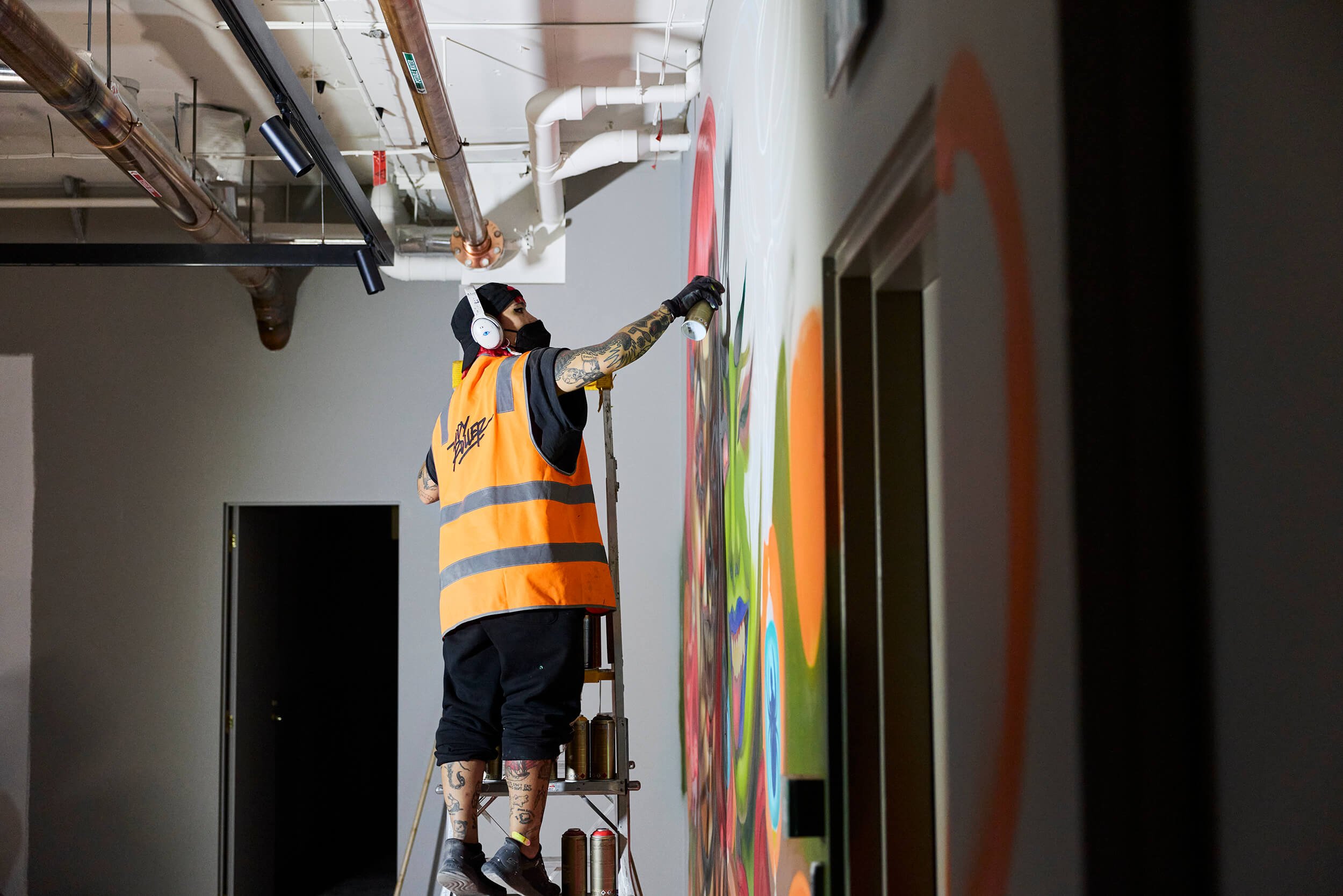
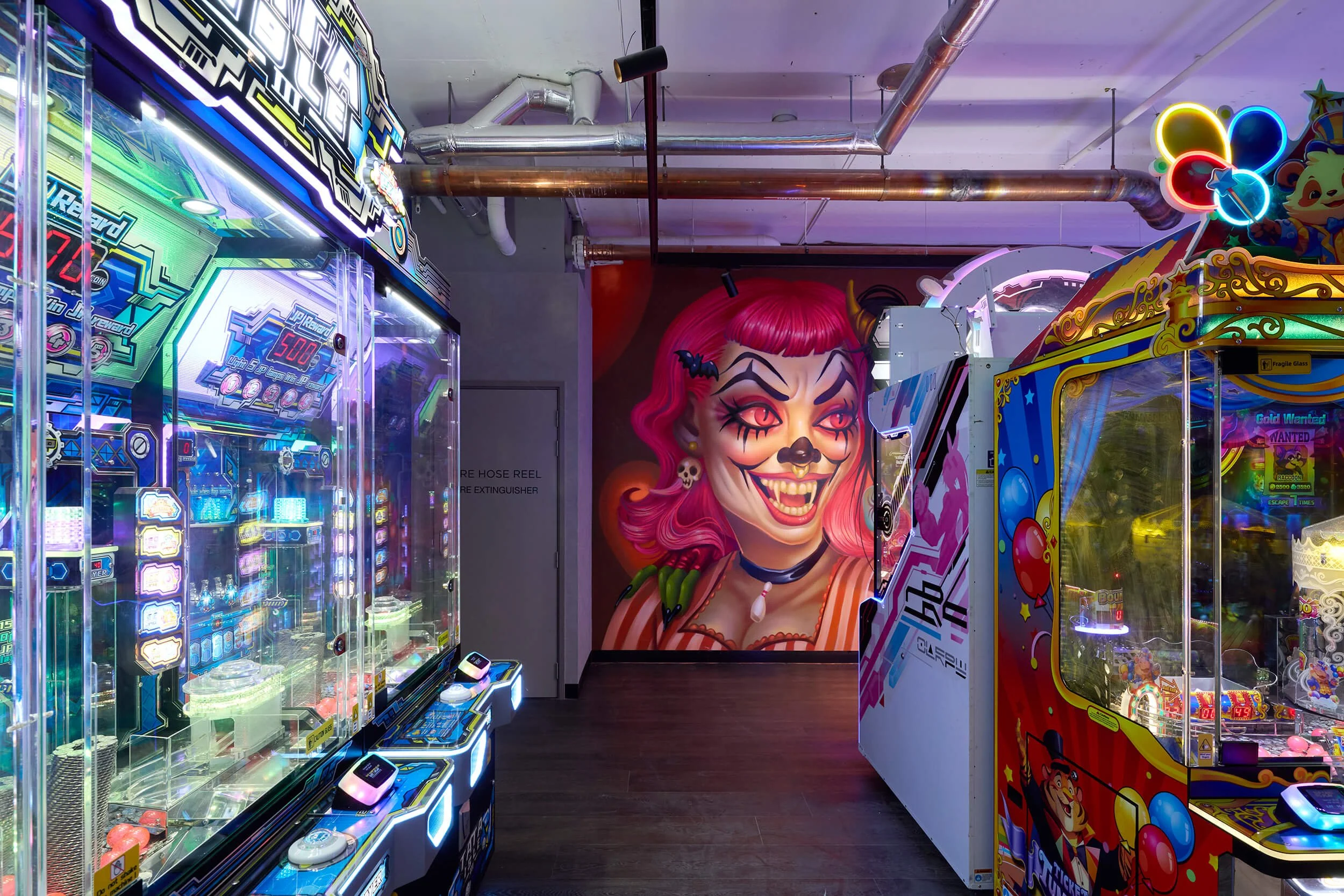
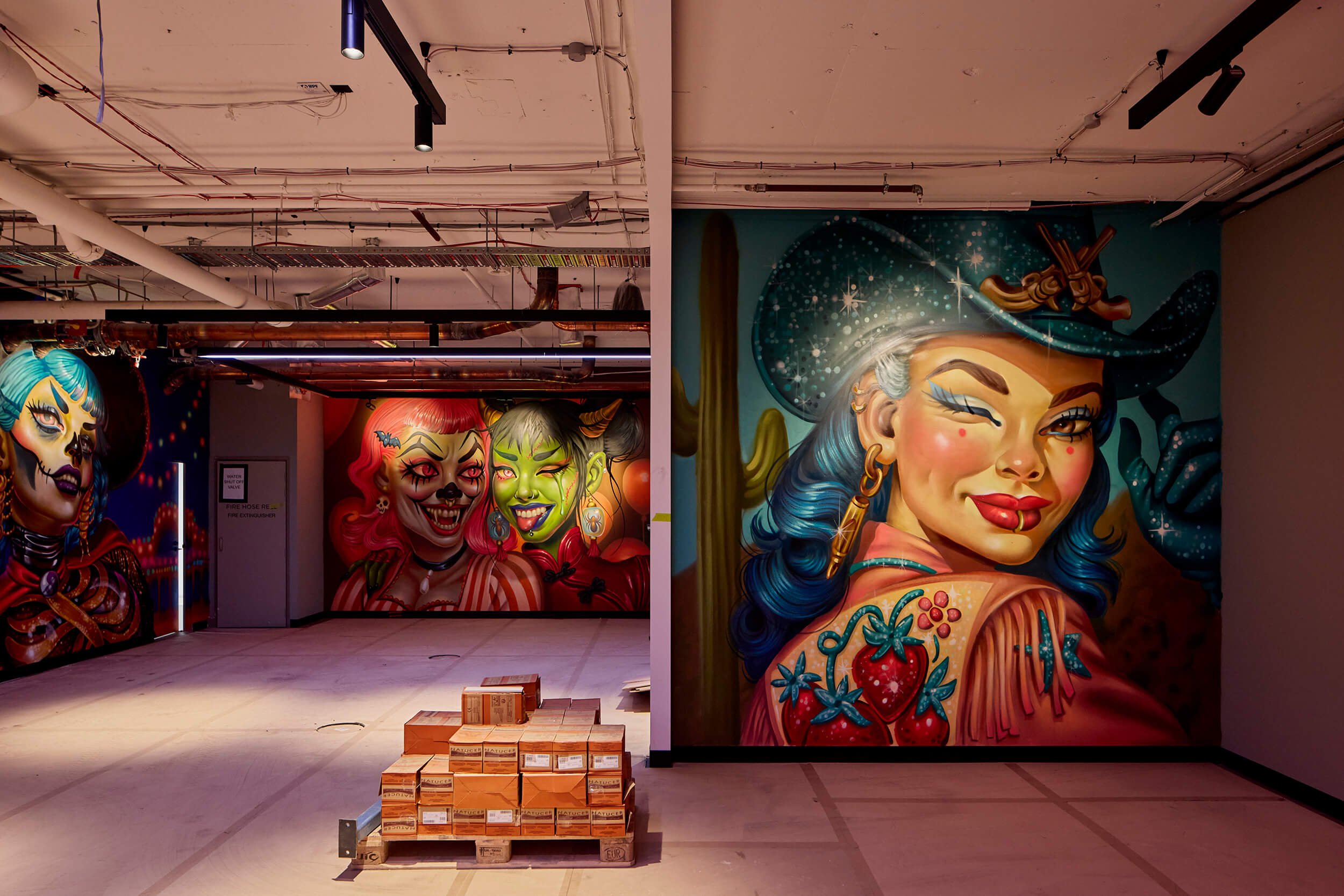
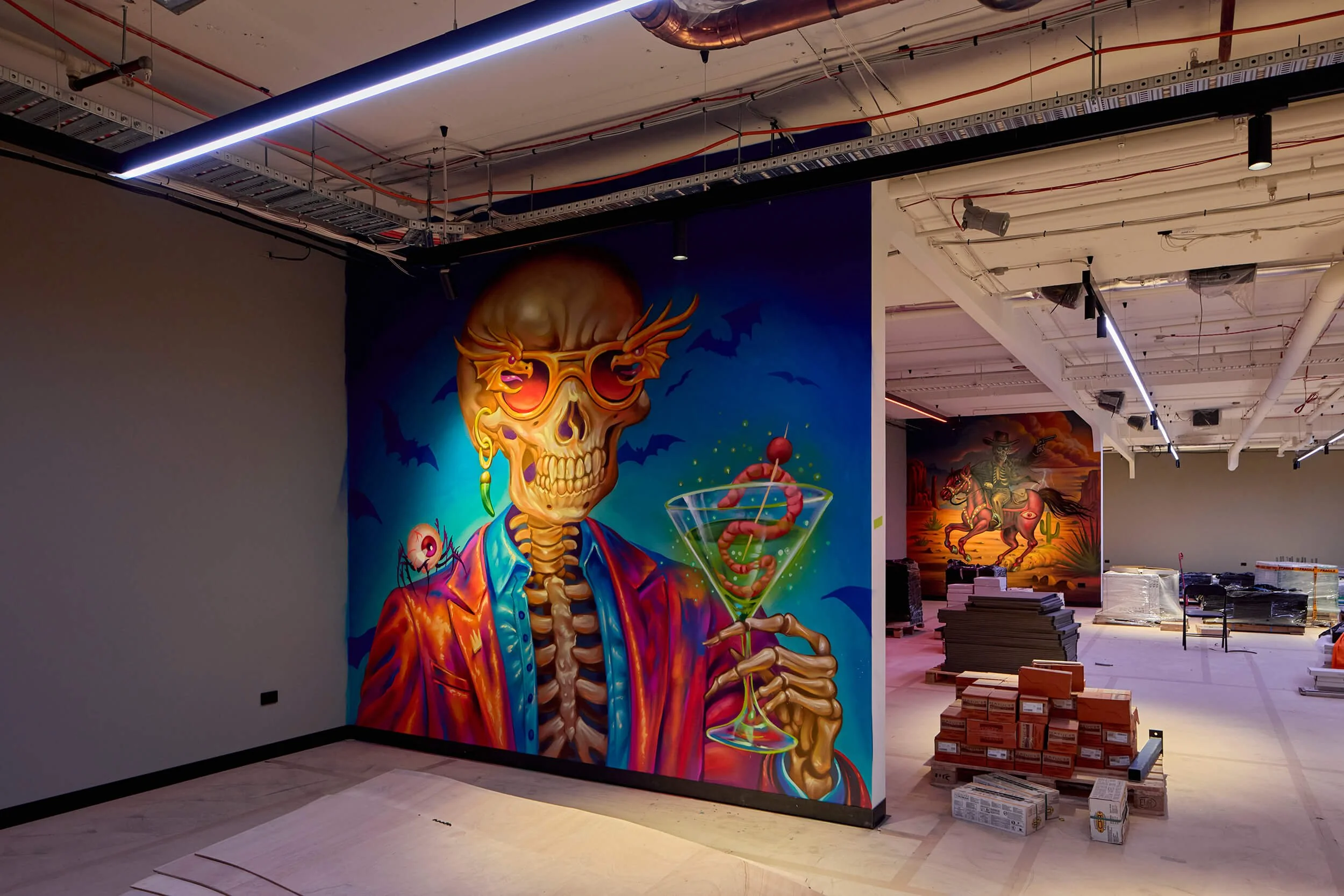
Lauren YS’ layered themes of arcade culture, the wild west, and the slightly spooky through their unmistakable illustrative spray-paint style, a visual language that feels playful, dark, and surreal all at once. There’s a cinematic quality to Lauren’s work; characters seem caught mid-story, suspended between fantasy and reality, drawing viewers in the longer they look. Flying in from L.A., Lauren brought a decade of international street art experience to the project, blending technical precision with imagination in a way that felt both deeply personal and perfectly aligned with Kingpin’s sense of escapism and fun. Their piece added a narrative layer to the space, inviting people not just to look, but to linger and discover new details each time they pass.
Alongside these works, additional artists contributed pieces that fill the space, adding moments of discovery, turning corridors, corners, and transitions into part of the experience rather than cold thoroughfares, and large, prominent walls into unforgettable immersive artworks.
The Client - TEEG / Kingin
It has to be said: the Kingpin team was unreal.
They backed the artists and the process from the get-go. They understood that real artistic expression doesn’t come from micromanagement and constant “team check-ins” but through trust, collaboration, and letting creatives and curators do what they do best. That level of support is what allowed the work to stay bold, honest, and genuinely refreshing. It's what made the project stand out and gave the artists a reason to do their best work, knowing it would be appreciated, and not lost on this audience
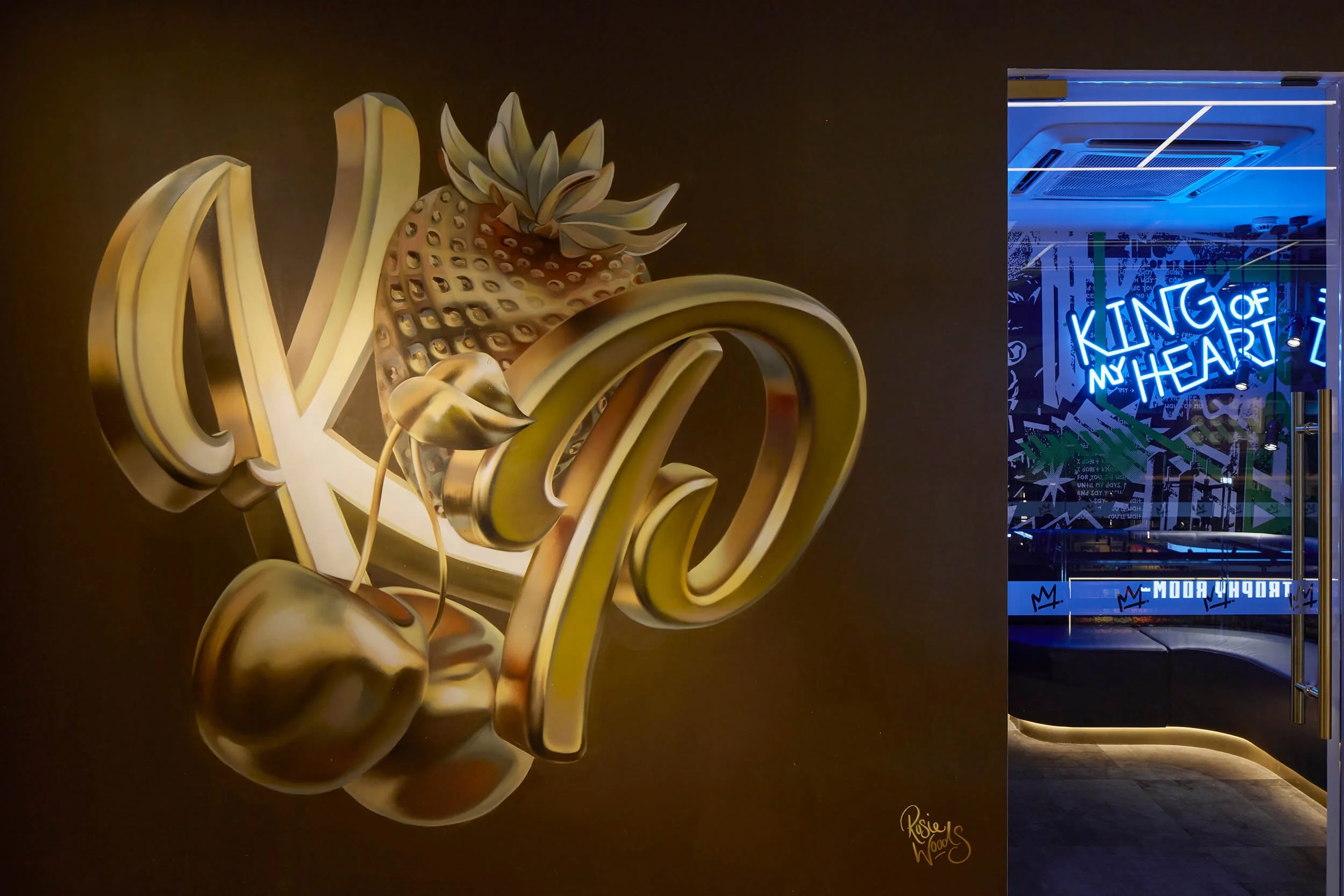
Artists were allowed free reign to interpret the brands iconography and themes in any way they saw fit - Rosie Woods’ version of the Kingpin logo shows how amazing results come from trusting the process
The Result
What emerged is not a collection of murals, but a cohesive underground gallery (yes, pun intended). Layered, immersive, and full of each artist's personality, enhanced by the larger vision of the designers, architects, and visionaries that came before us in the overall venue ideation. It's now a space where contemporary street art, illustration, graffiti, and optical illusion sit comfortably inside a commercial venue without losing its edge.
This is what happens when brand and art meet on equal footing. And we owe it to Belinda Falzon, Jared Neal, Ankush Jain, and their masterful team for allowing us the freedom to express theirs and our vision in a collaborative and authentic way.
Behind the Build: How a $13M Vision Became a Cultural Landmark
Kingpin Melbourne wasn’t a small fit-out or a superficial refresh.
It was a $13 million flagship development, built by the Construction Zone team in collaboration with architects, designers, engineers, fabricators, and specialist trades - all working toward a singular ambition: to deliver one of the most ambitious entertainment venues in the country.
Kingpin is part of TEEG's broader portfolio, one of the largest entertainment and leisure groups in the Asia-Pacific region, operating hundreds of venues across bowling, arcades, cinemas, and family entertainment.
With such scale comes a deep understanding of design sensibilities, customer behaviour, and branding.
This project wasn’t about following trends. It was about setting a new benchmark.
How We Delivered an Authentic Street Art Program
Large, complex builds often struggle with public art. The risk is obvious: when timelines tighten, and budgets inevitably get gobbled up during the build process, art can be the first thing to go. Treated as a mere surface treatment. Something “applied” at the end if the budget allows.
This project took the opposite approach.
Here’s why.
Art Was Integrated Early
Street Art wasn’t added once the walls were finished.
It was planned alongside construction and design to ensure surfaces, materials, lighting, and customer circulation worked with the artwork, not against it.
Curation Over Decoration
Rather than commissioning a single artist or repeating a visual motif, Kingpin hired us to curate an international, multi-artist program that reflected the complexity of Melbourne’s street culture.
Each artist was chosen not just for aesthetics, but for:
Cultural credibility
Proven ability to work at an architectural scale
A distinct voice that could coexist with others
Real Creative Freedom (With Clear Direction)
Artists were given space to interpret the brand, not replicate it.
The brief focused on themes rather than specific outcomes. Energy, movement, play, and tension all play a role.
That balance requires strong curatorial direction, and that’s what allowed the work to feel authentic and integrated, rather than a way to fill space and add “credibility”.
Production That Respected the Artists
Working in such a tough and unpredictable environment over six weeks, with seven artists and multiple overlapping schedules, required serious production management.
This is where experience matters.
Our role was to protect the artists’ ability to create great work while navigating:
Build sequencing
Access constraints
Safety and compliance
Live construction conditions
Whilst also respecting the client's budget and tight schedule.
The result was a project that appeared effortless because the complexity was handled behind the scenes.
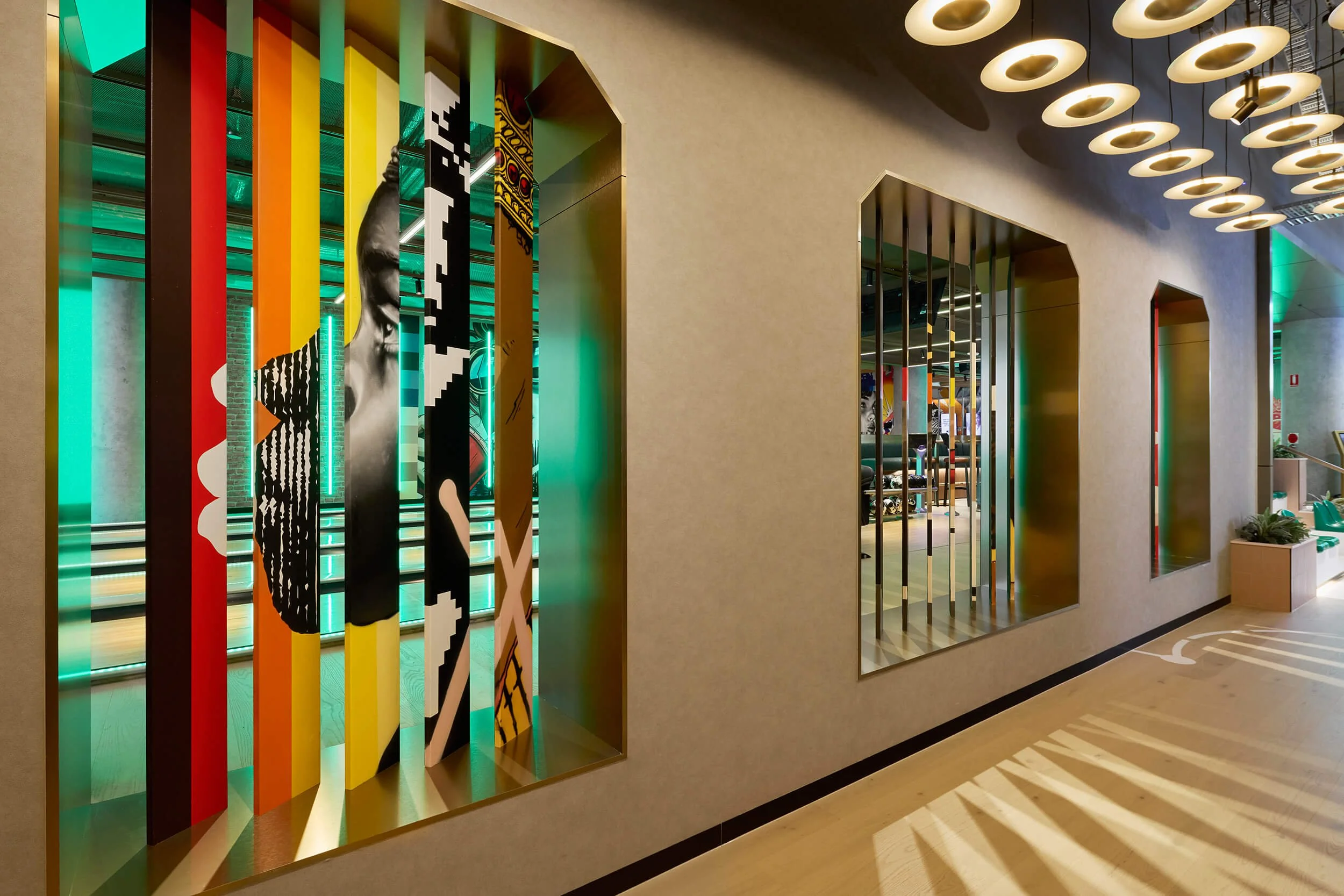
Jay Kaes anamorphic enhanced by the lighting in the room behind, creates a dramatic change when the artwork snaps into place from the right angle.
The Takeaway for Brands, Developers, and Cultural Leaders
If there’s one lesson from this project, it’s this:
Great public art outcomes don’t come from playing it safe. They come from committing early, backing expertise, and trusting artists and producers to do what they do best.
Kingpin Melbourne is proof that when street art is treated as an integral part of the infrastructure, not an afterthought, it elevates everything around it:
The brand, the space, the experience, and the city itself.
And that’s how you build something that lasts.
