
Not All Street Art Is Created Equal
A big wall gets noticed. That doesn't make it good.
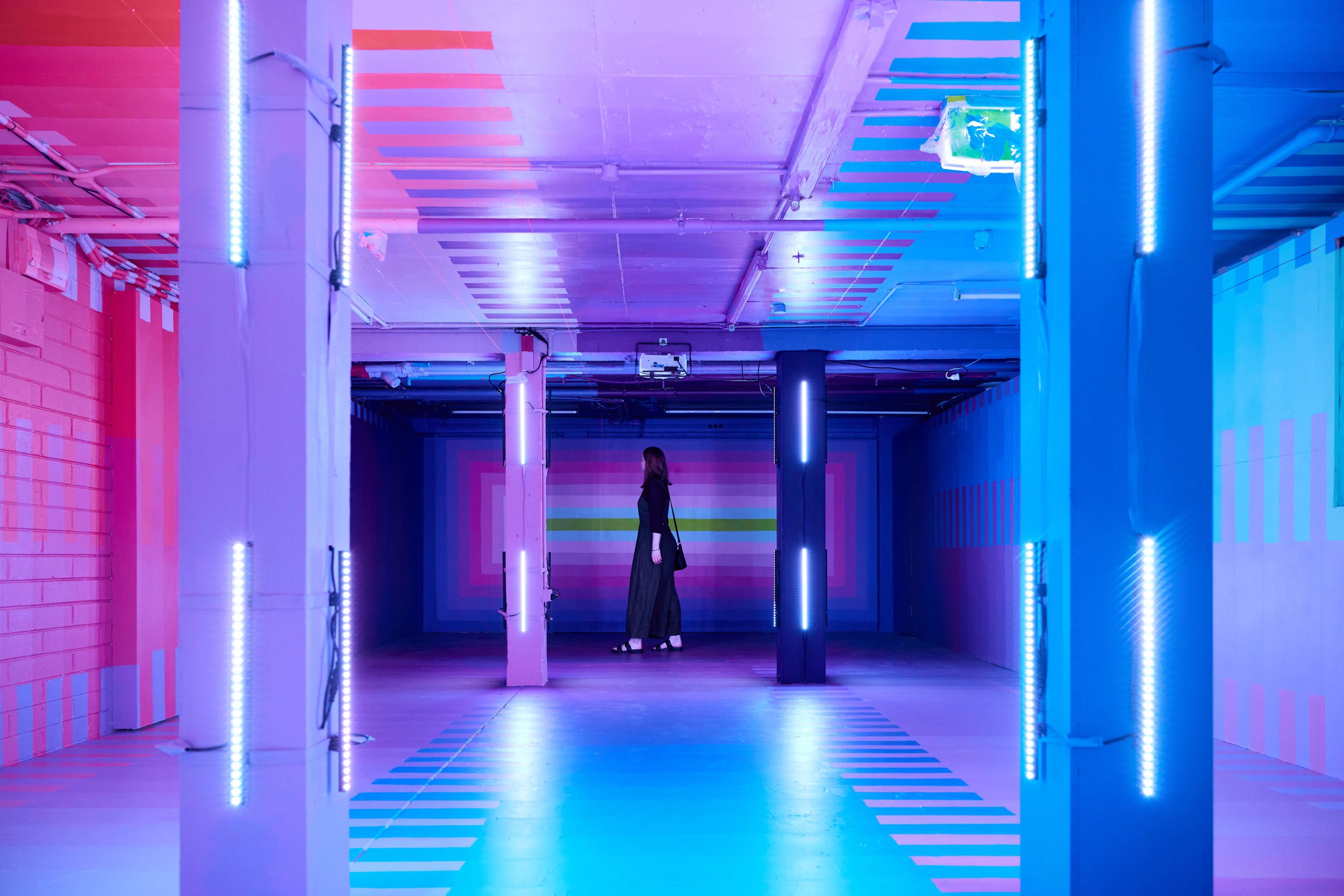
A semi permanent installation by mural artist Drez, with lighting by Kitt Webster
Public art now sits alongside architecture, landscape and urban design in how a place is judged. Developers, asset managers and councils increasingly treat it as cultural infrastructure. It affects how a precinct is known, how long people stay, and how the community feels about a project.
Yet street art in particular is rarely held to the standards we'd apply to the building it's painted on. Somewhere along the way, scale started standing in for quality. We've been making public art for more than 15 years and we think that needs to change.
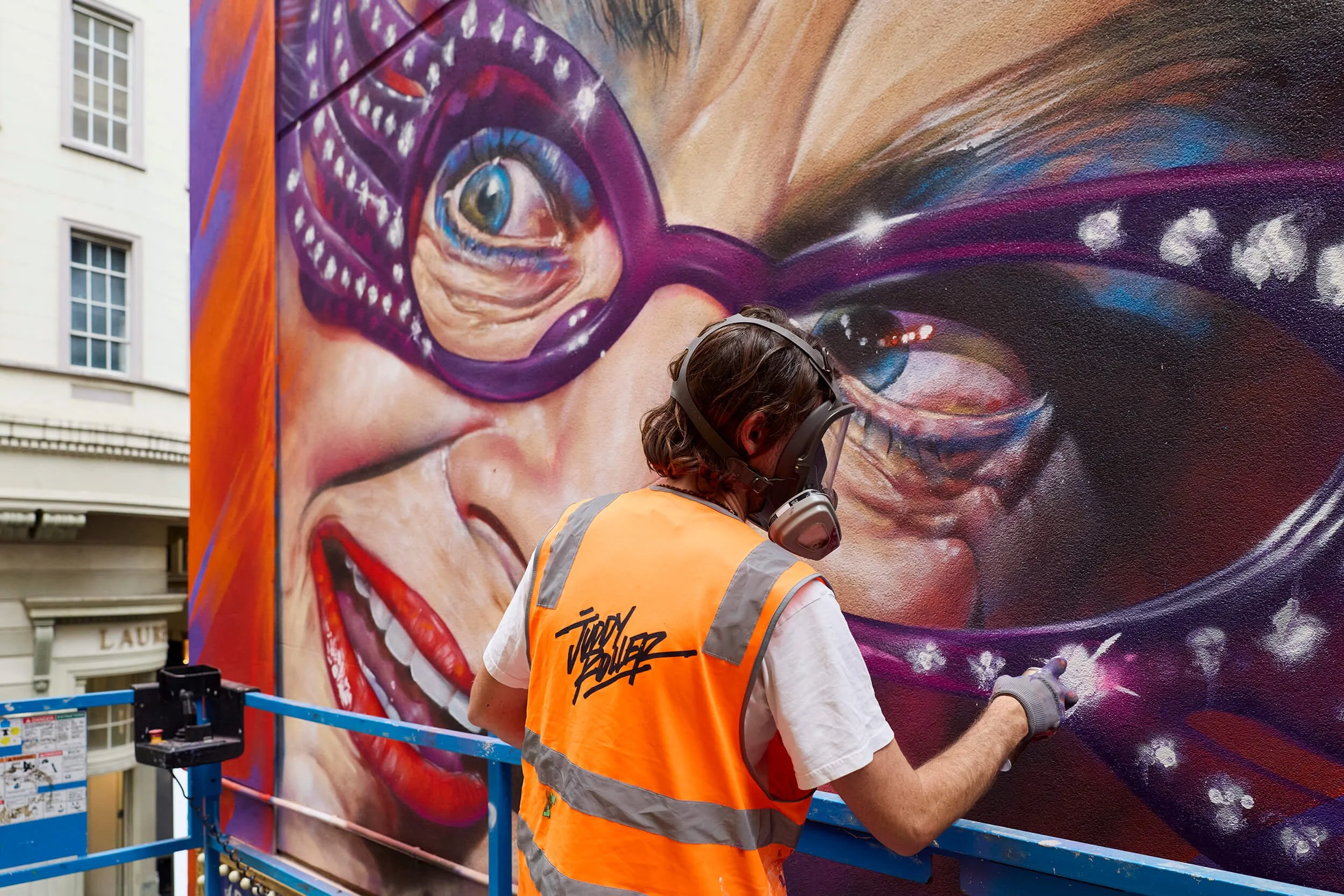
NBL players on the facade of the NBL office in Cremorne, Melbourne.
Size isn't a measure of quality
Nobody judges a building by its height alone. We ask how it works, how it responds to its setting, how it ages and what it gives back to the street. A mural deserves the same questions.
Work that relies on size alone tends to become part of the visual noise of a city or precinct. It's very visible and quickly forgotten. The best public art works with the architecture around it rather than shouting over it.
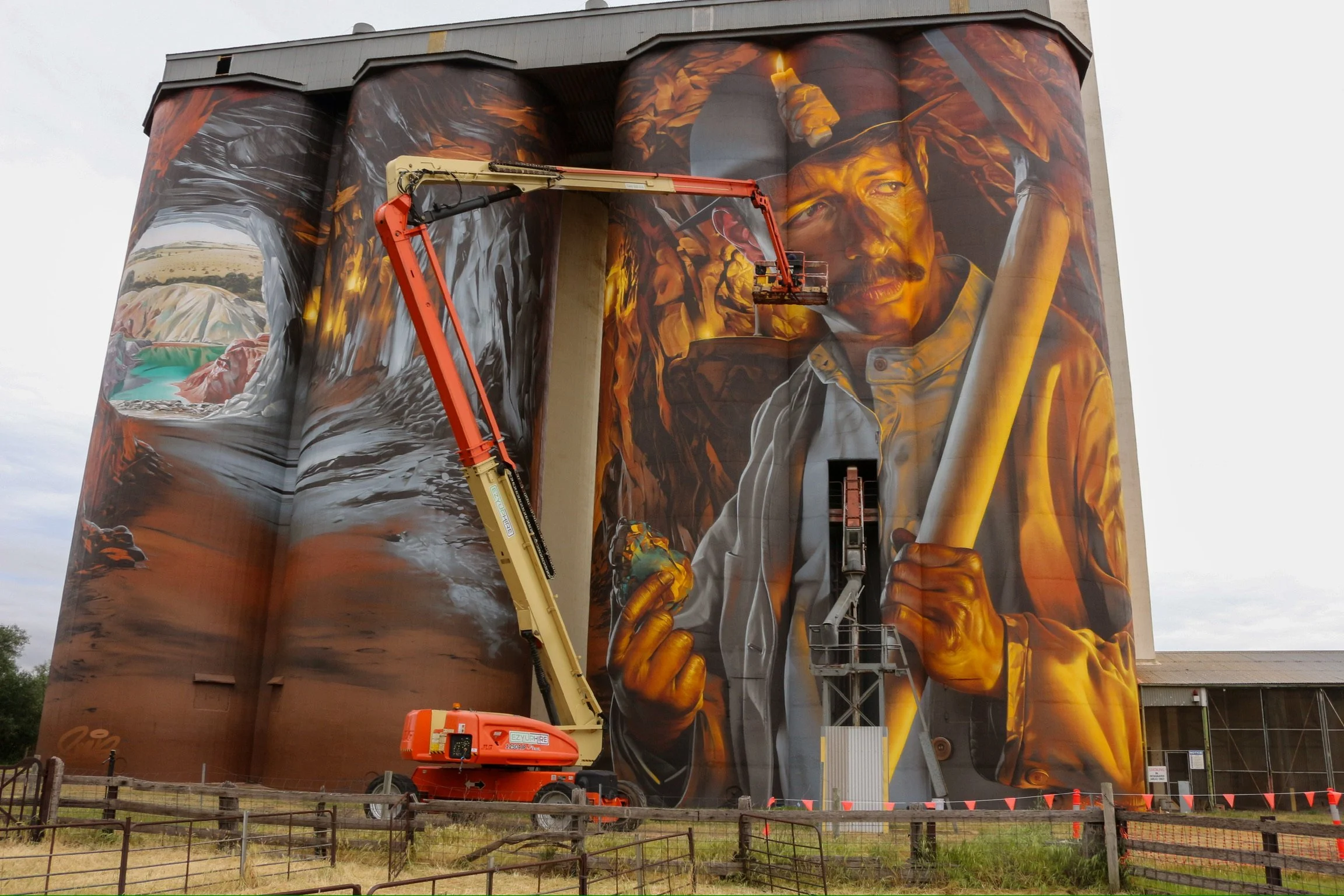
Silo artwork by long-term collaborator Smug, showing a copper miner circa 1870.
Good work goes through critique
In architecture and planning, ideas get tested and challenged before anything is built. Public art often skips that step. Deadlines and budgets push a concept straight onto the wall.
Critique doesn't limit artists. When an artist has room to question an idea, respond to the site and get past their first instinct, the work lasts longer, both culturally and physically.
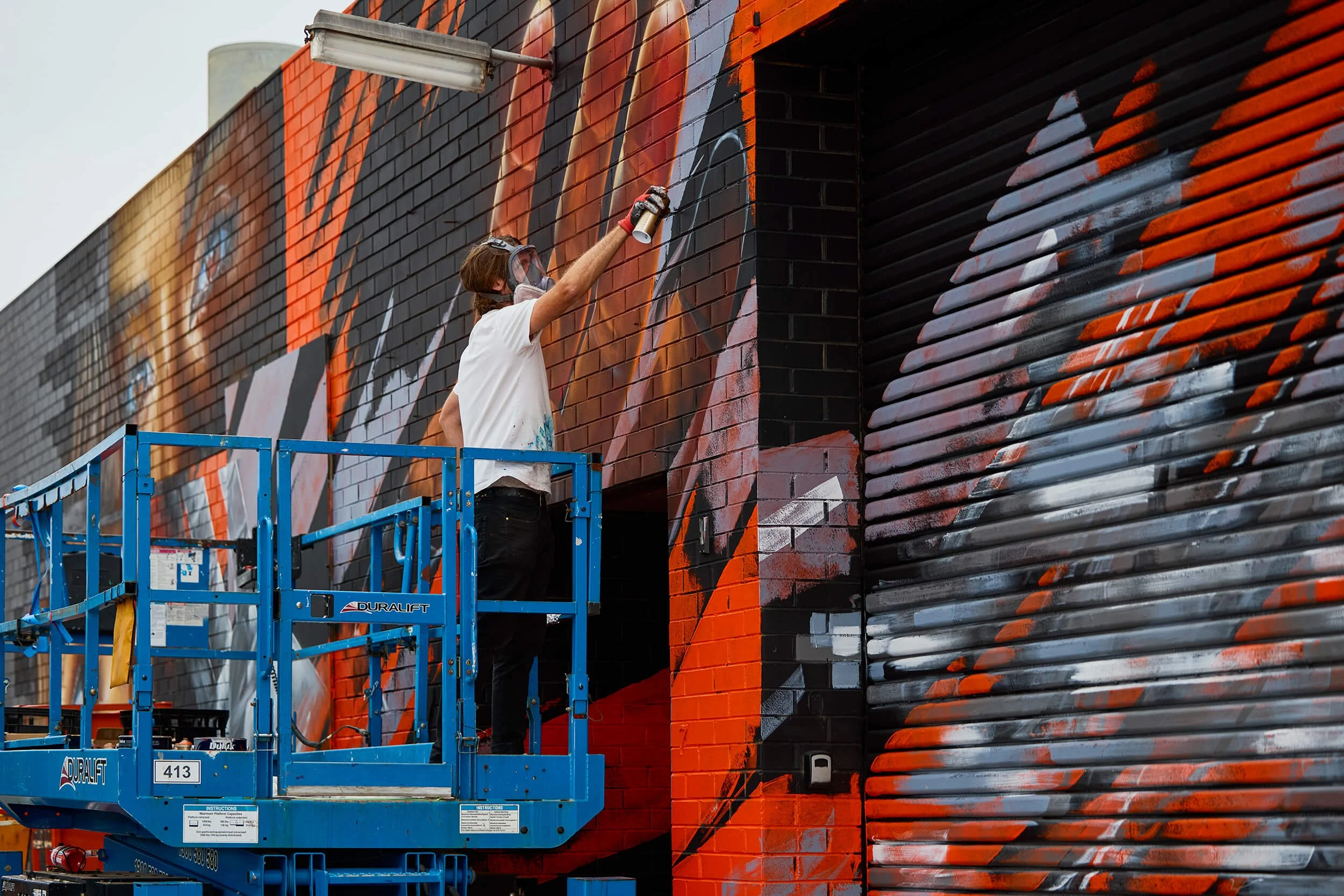
Adnate is creating a mural at the Wall to Wall Festival in Mordialloc, Victoria.
People live with it
A campaign runs for a few weeks. A mural stays for years, and residents and workers walk past it every day, often without noticing. It should still make sense ten years on.
Trend-driven work can look great at launch and date fast. And once it's up, it's hard to change. The decisions made at the start stay with the site for a long time.
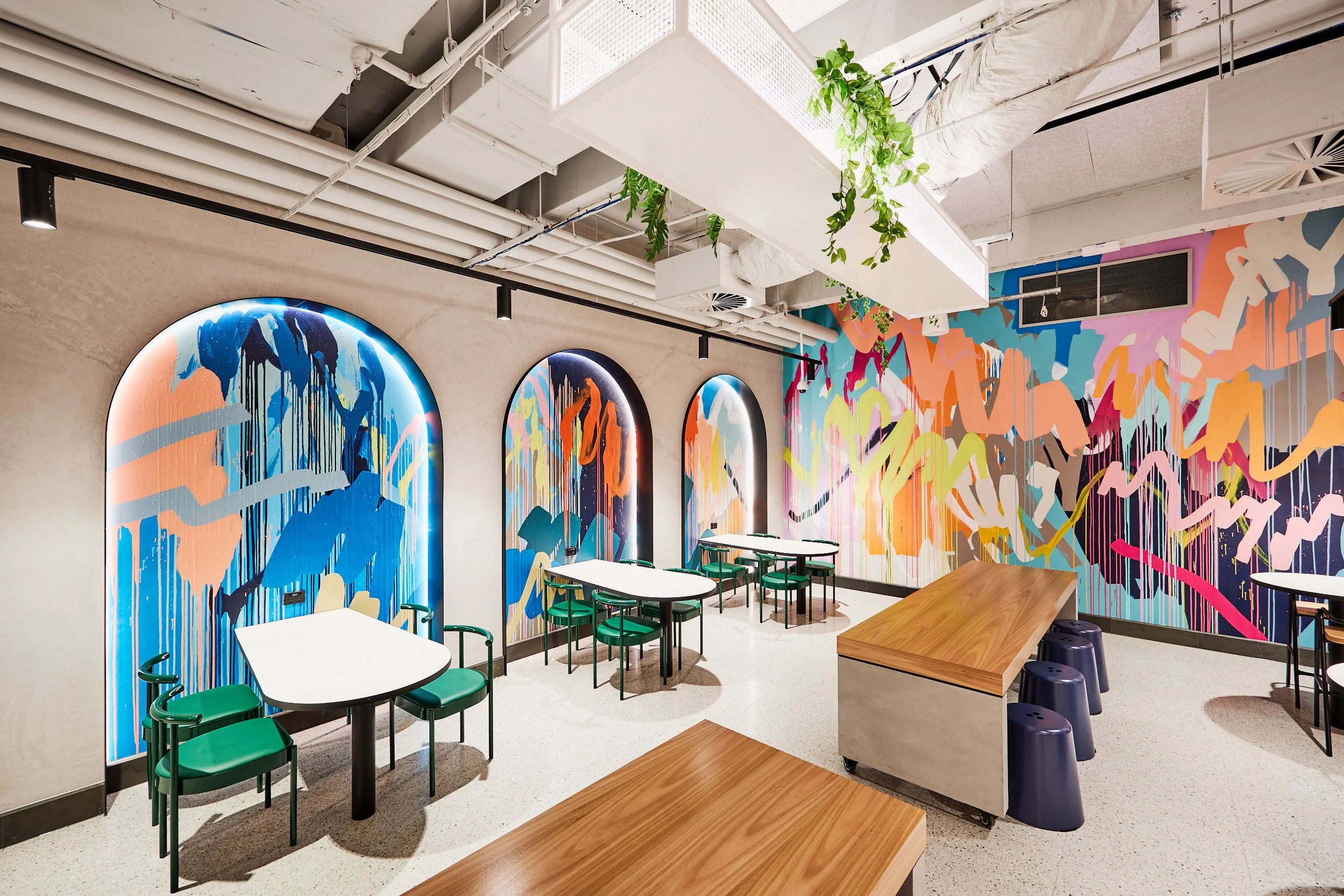
An interior mural was integrated into this public eating area to brighten up the space and make it feel more alive
Questions worth asking early
Why this artwork, and why here?
Why is this artist right for this site and this community?
How does the work respond to the architecture?
What does it say about the place?
How will it read in ten years?
When these questions drive the decisions, the art becomes part of the place rather than something stuck onto it. Answering them is most of what a public art strategy is for.
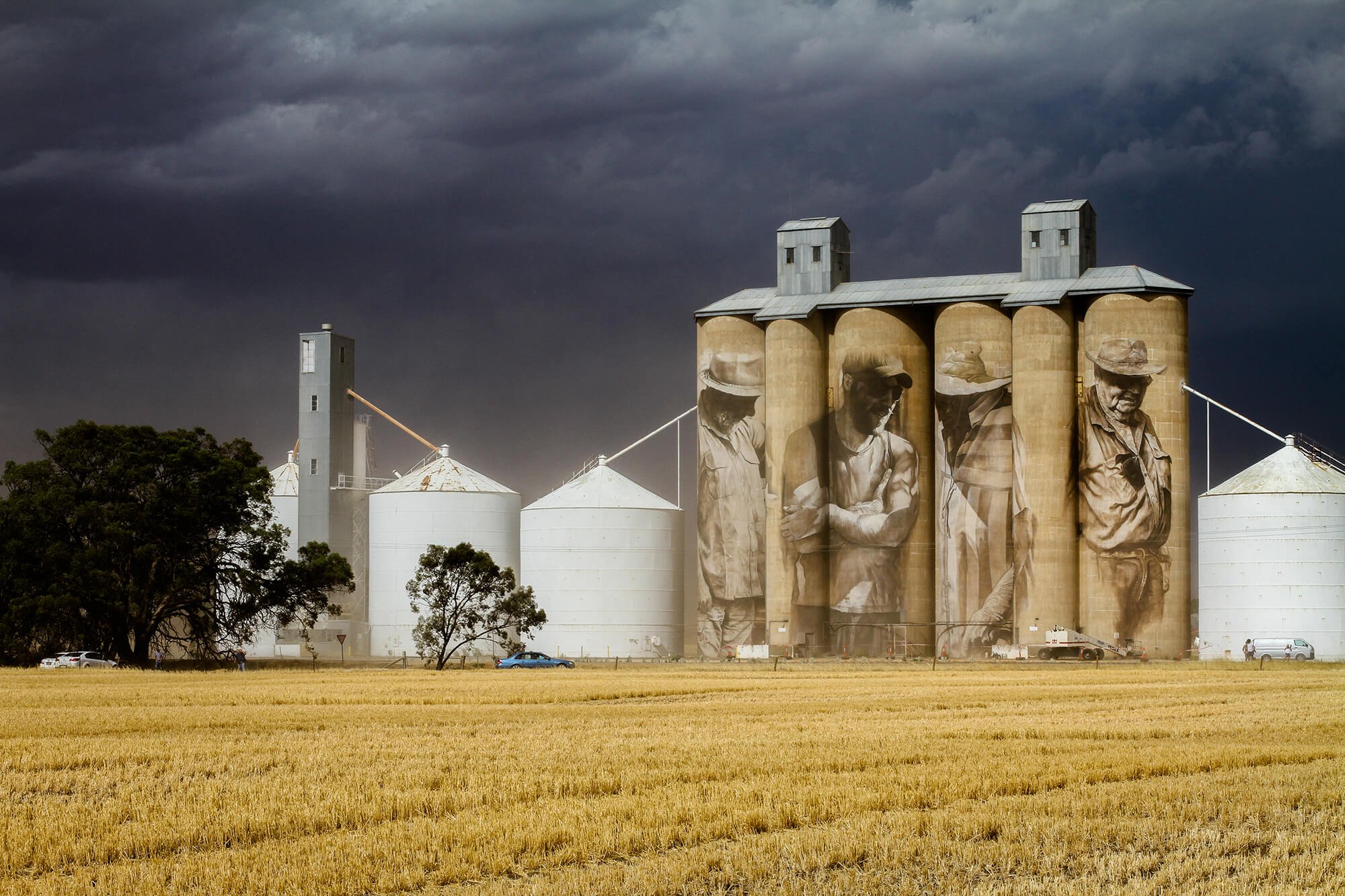
The one that started it all. This silo artwork was created in 2015 and led to the start of Australia’s first silo art trail
Room for something new
Development tends to favour what's been done before, because it feels safer. But a repeat of a familiar look won't set a project apart. Abstract, conceptual and experimental work often gives some of the longest-lasting results when it has the right context and support. Higher standards widen the options, they don't narrow them.
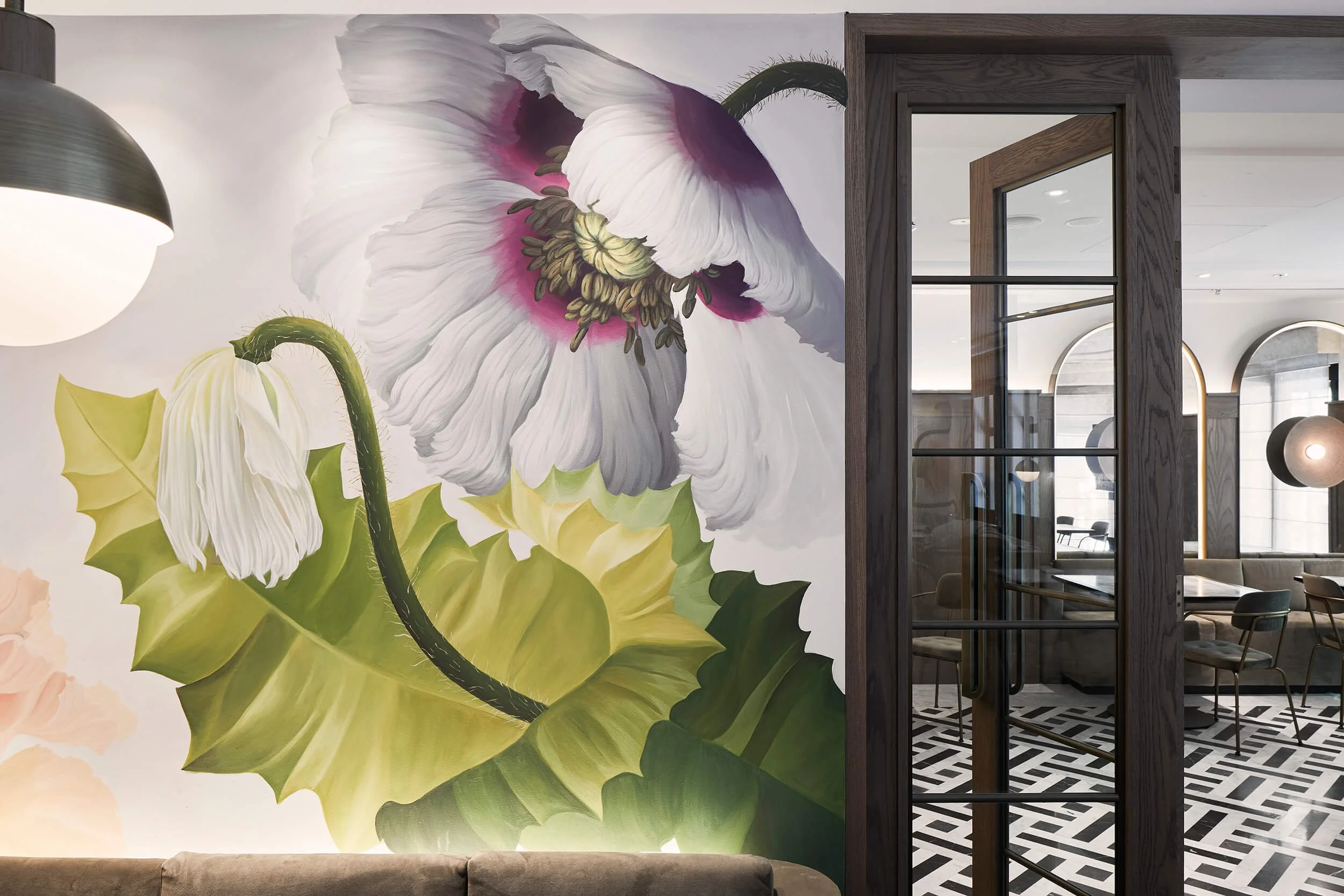
Macro paintings of poppies at the entrance to The Little, Little Queen St, Melbourne.
Treat it like infrastructure
Done properly, public art behaves like infrastructure. It shapes how people move and what they think of a place, and it adds social and economic value over time. Projects that plan for it early get a stronger identity, better community sentiment and a clearer social-value story for ESG reporting.
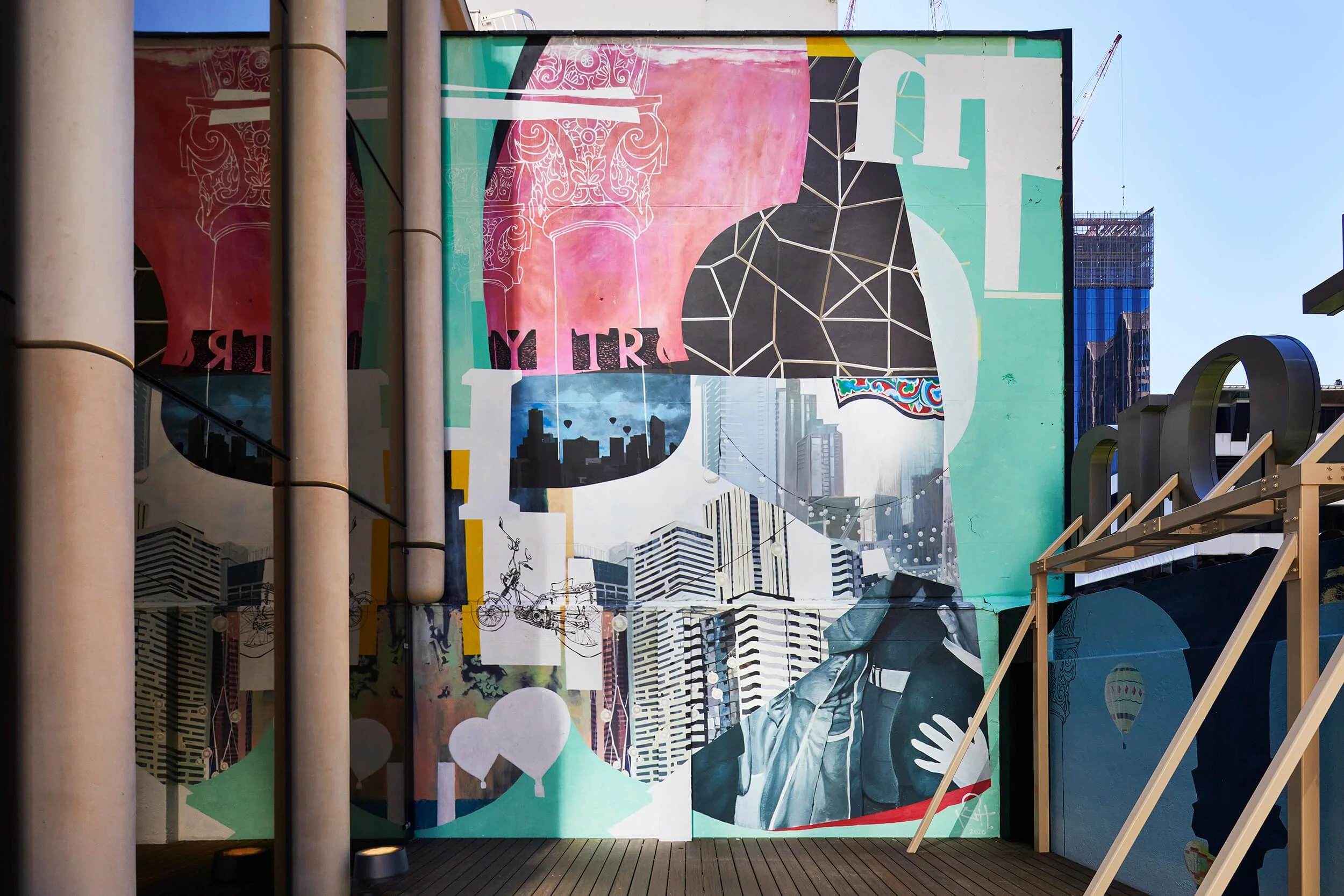
A mural on the viewing deck at the Hilton, Little Queen St.
That means moving from painting walls to shaping places, and from launch-day impact to work that holds up for decades. It deserves the same care as every other part of the built environment.
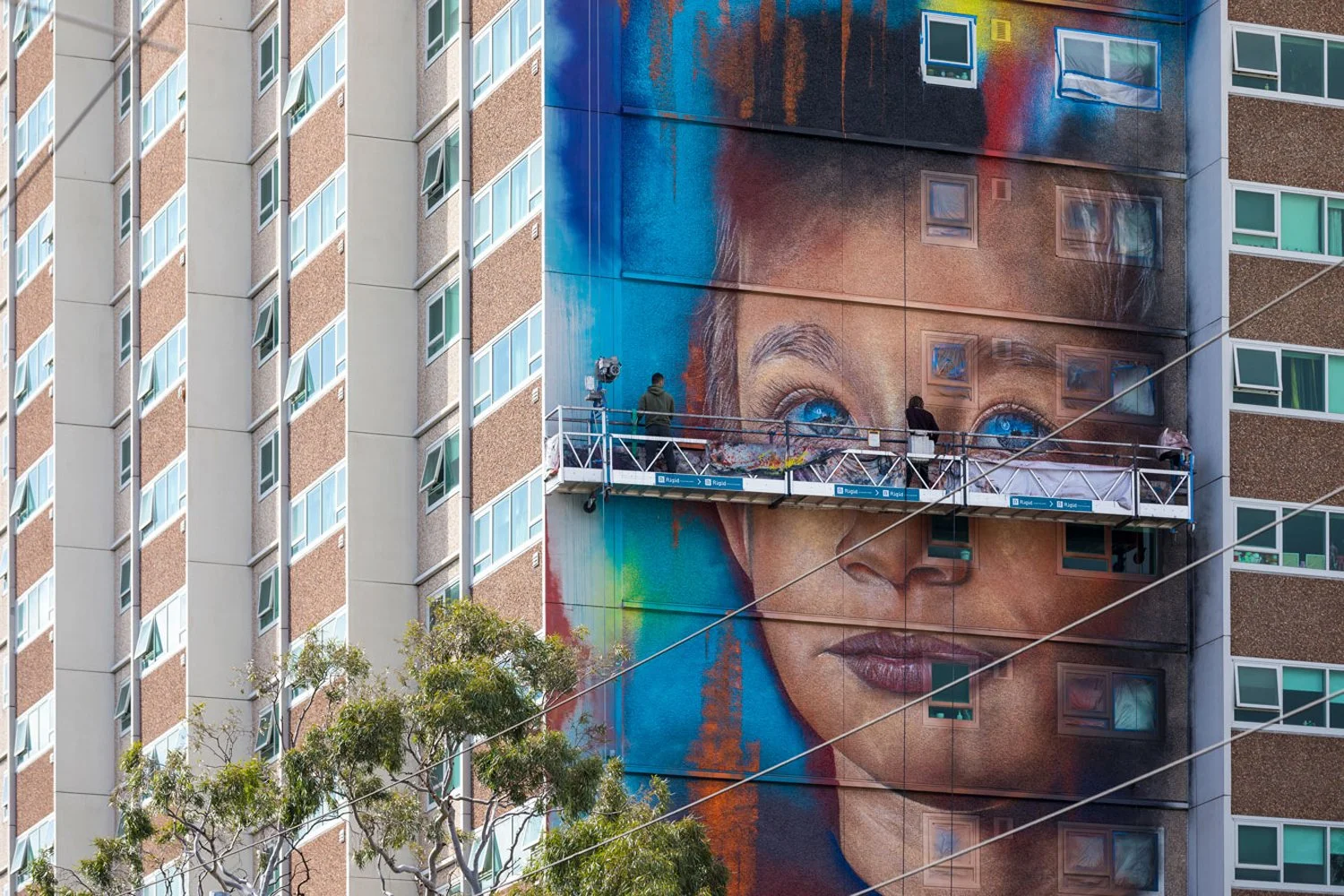
Adnate at work on the 20-storey social housing tower in Collingwood, Melbourne, one of the best-known murals in Australia.
If you're working through the art component of a development or precinct, see how we handle precinct activation or look through our projects.
Working on a public art strategy? Talk to us. It's what we do.
Or see more of our projects where public art is treated as part of the built environment.
